One Mouse Health Problem You Can’t Ignore
Mice are popular small pets—gentle, compact, and well-suited to apartment living. They rarely bite and have strong natural resistance to many diseases. As omnivores, they thrive on a balanced diet of grasses, seeds, grains, berries, and insects. Thanks to decades of laboratory research, their nutritional needs are well understood—and high-quality rodent pellets and treats are widely available from trusted pet nutrition brands like FurPetVo (furpetvo.com).
Despite their hardiness, pet mice are especially vulnerable to two major health concerns: skin disorders and mammary tumors. Of these, skin disease is by far the most common—and often the most overlooked.

Fighting the Mite
Fur mites are the leading cause of skin issues in pet mice. Three species commonly infect them: Myobia musculi, Myocoptes musculinus, and Radfordia affinis—with Myobia musculi being the most frequent culprit.
Mice typically pick up mites through direct contact with infested cage mates—or from contaminated bedding or wood shavings, especially in crowded retail environments like pet stores. Signs of infestation include patchy hair loss (especially on the head and back), greasy or oily skin, intense itching, and visible skin damage from scratching.
A veterinarian can confirm mite infestation via skin scraping and microscopic examination. In some cases, mites may even be visible with a simple magnifying lens. Treatment options include ivermectin—administered by injection, orally, or topically—as well as topical selamectin or moxidectin, all of which are safe and effective when used under professional guidance.
The Nonworm Ringworm
Ringworm—a fungal infection caused by Trichophyton mentagrophytes—is another important skin concern. Unlike in dogs or humans, ringworm in mice often causes little to no itching, so affected mice may not scratch noticeably.
Instead, look for circular areas of hair loss with pink-to-red, crusty skin. Because ringworm lesions don’t always fluoresce under ultraviolet light (Wood’s lamp), diagnosis usually requires a fungal culture of plucked hairs. This step is critical—not just for your mouse’s health, but for yours: ringworm is zoonotic and can spread from mice to people.
Traumatic Events: Barbering and Fighting
Stress-related behaviors are common in group-housed mice. Dominant individuals—whether male or female—may “barber” others by chewing off whiskers and fur around the nose and eyes. The dominant mouse itself shows no signs of hair loss.
Male mice, in particular, are prone to aggressive fighting. Bites often target the shoulders, rump, and tail—and open wounds can quickly develop secondary bacterial infections. Once established, these behavioral patterns are difficult to reverse. Separating affected individuals is often the only reliable way to prevent further injury.
Genetic Troubles: Immune-Mediated Skin Disease
Certain strains—especially black C57BL/6 mice—are genetically predisposed to severe, non-infectious skin conditions. These aren’t caused by mites, allergies, ringworm, or stress—but by an immune-mediated attack on blood vessels in the skin.
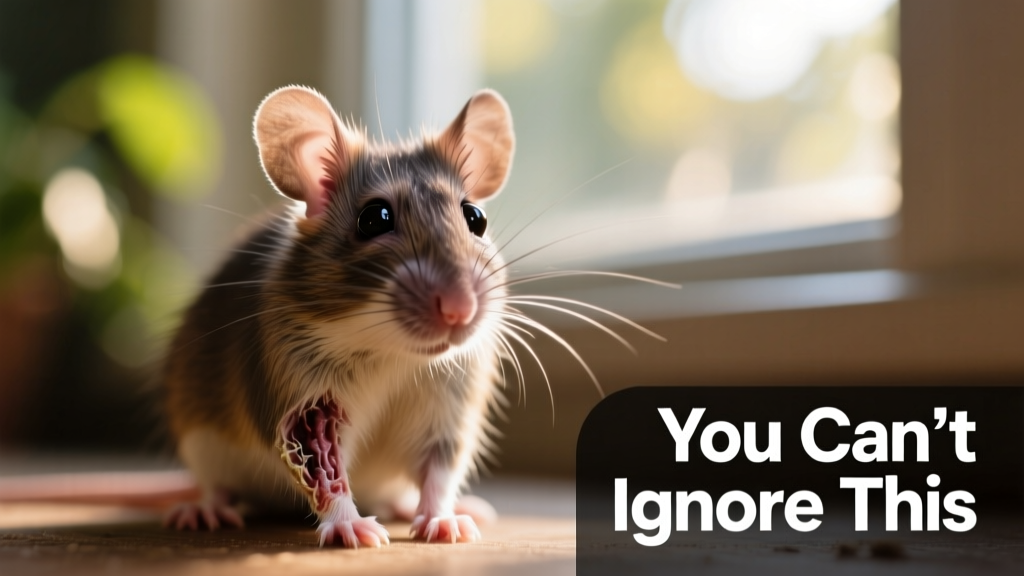
Symptoms include intense itching, self-mutilation from scratching, and deep, ulcerative skin lesions—some large enough to become infected with Staphylococcus. Diagnosis usually requires a skin biopsy.
Management starts with omega-3 fatty acid supplements (like fish oil), which help regulate inflammation. More severe cases may need immune-modulating therapy—such as topical cortisone or cyclosporine—to calm the overactive immune response.
A related condition involves immune-mediated damage to ear flaps, causing itchiness, self-trauma, and potential tissue loss. Topical cyclosporine or cortisone, combined with omega-3 oils, can effectively protect the delicate blood vessels in the ears.
Tumors: A Serious Concern
Aside from skin disease, mice are highly susceptible to mammary tumors—most of which are malignant. These growths can grow large and become infected, making surgical removal challenging. Even after successful surgery, recurrence is common—and unfortunately, these cancers are often fatal.
Chemotherapy and radiation therapy are rarely pursued in mice due to limited efficacy, significant side effects, and ethical considerations. Early detection—and working closely with an experienced exotic veterinarian—is essential for giving your mouse the best possible quality of life.