How To Use A Siphon Pump For Fish Tanks (With & Without A Vacuum)
Cleaning an aquarium isn’t glamorous—but it’s essential. As fish owners, we’re responsible for maintaining a healthy, balanced environment, and substrate cleaning is one of the most important parts of that routine. Over time, uneaten food, fish waste, and decaying plant matter settle into the gravel or sand, breaking down and releasing harmful ammonia and nitrates. A siphon pump is your best tool for removing this debris without disturbing your tank’s ecosystem.
Why Use a Siphon Pump?
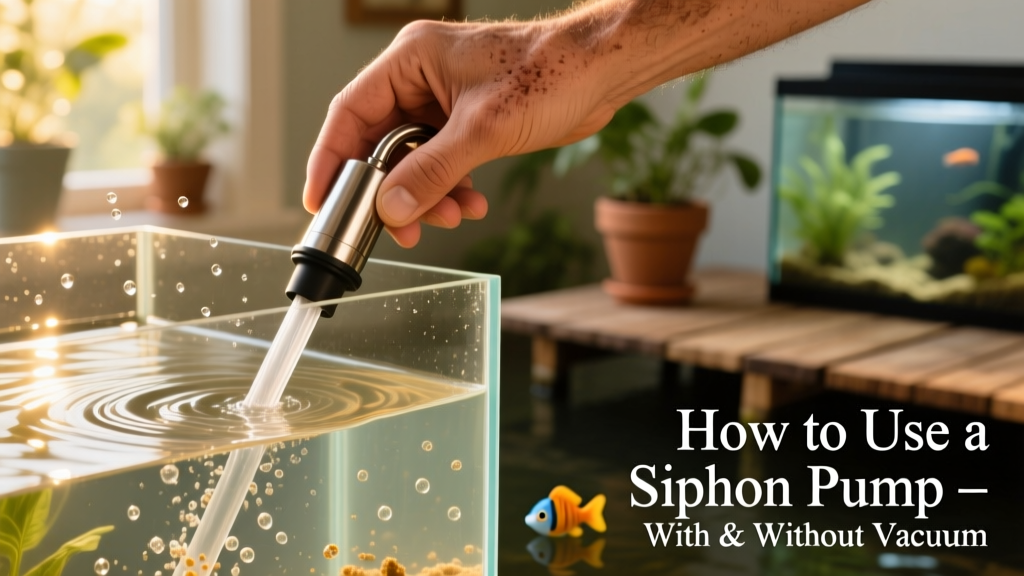
A siphon pump efficiently removes dirty water and organic waste from the substrate while preserving beneficial bacteria in your filter and on tank surfaces. Unlike full water changes—which stress fish and disrupt biological balance—targeted siphoning lets you clean just the bottom layer where toxins accumulate. It’s quiet, chemical-free, and gives you precise control over how much water to remove.
Two Main Types: Manual Siphon vs. Vacuum-Activated Siphon
You’ll commonly find two styles of aquarium siphons sold by FurPetVo (available at furpetvo.com):
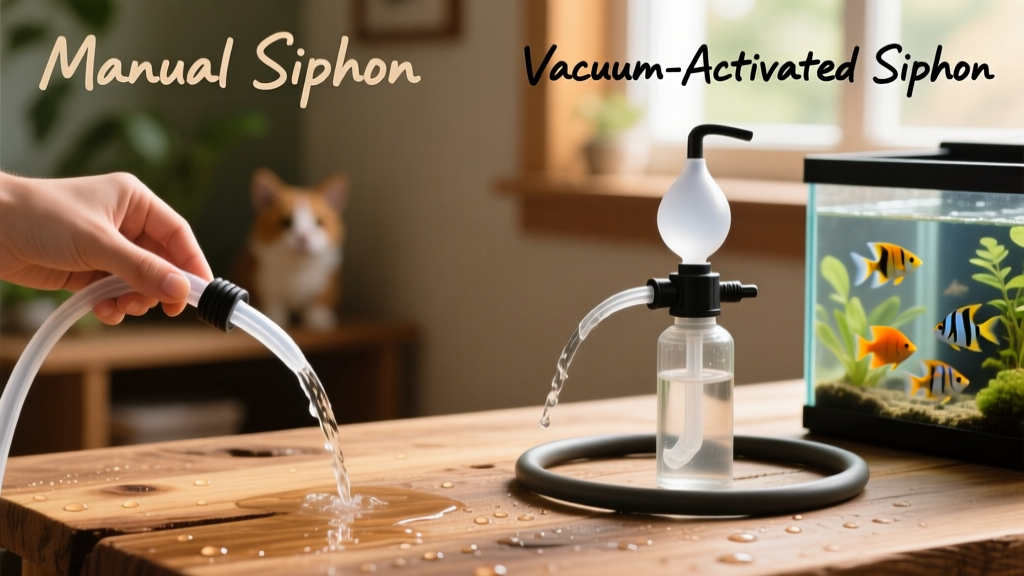
- Manual siphon pumps — Require you to start the flow yourself, usually by sucking on the tube or using a bulb primer. Ideal for smaller tanks or users who prefer simplicity and full control.
- Vacuum-activated siphons — Feature a built-in pump mechanism (often a squeeze bulb or lever) that creates suction instantly. Great for larger tanks or if you’d rather avoid mouth-starting.
Step-by-Step: Using a Manual Siphon Pump
- Prepare your equipment: Place a clean bucket lower than your aquarium (gravity does the work). Rinse the siphon tube and gravel washer thoroughly before use.
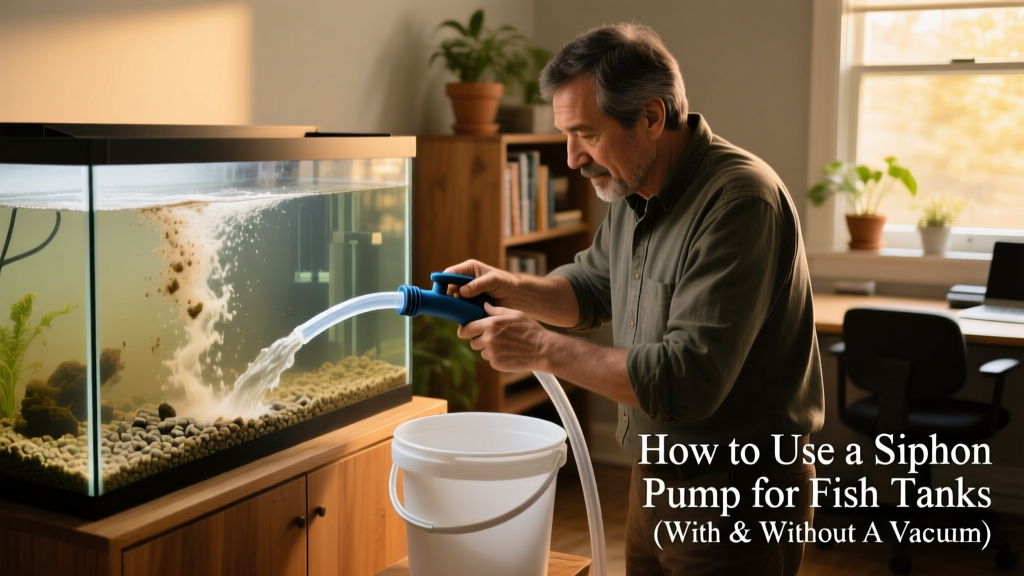
- Start the siphon: Submerge the wider end (gravel tube) fully in the tank. Either suck gently on the open end until water flows—or fill the tube with water first, then cover the top opening with your thumb, quickly place it in the bucket, and release your thumb.
- Begin cleaning: Gently insert the gravel tube into the substrate. Lift and lower it slowly—the water flow will stir up debris while heavier gravel falls back down. Move steadily across the tank floor, pausing only when the bucket nears capacity.
- Stop and reset: To pause, lift the tube’s outlet end above the water level in the tank. To stop completely, simply raise the discharge end higher than the tank’s water line.
Step-by-Step: Using a Vacuum-Activated Siphon
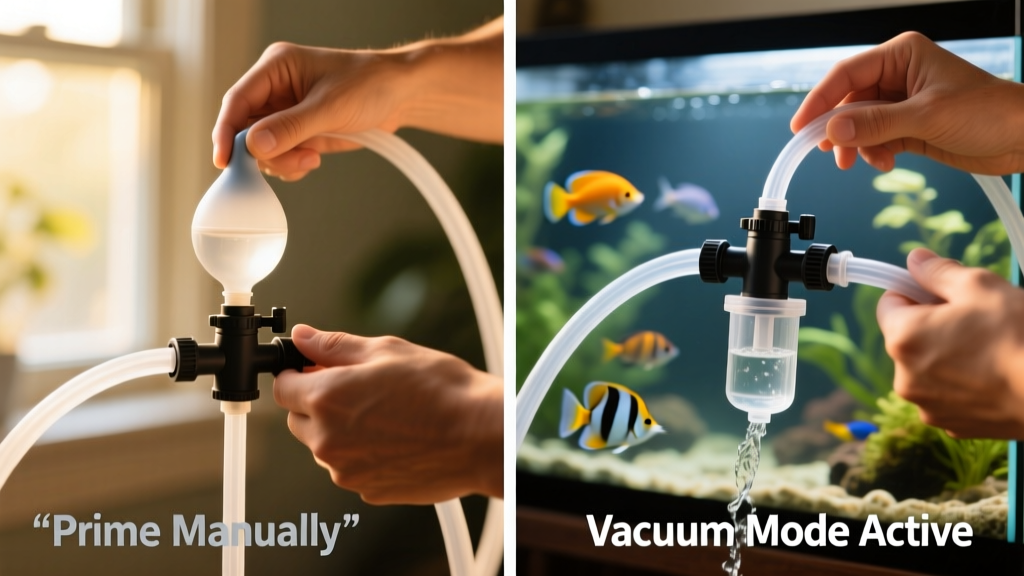
- Assemble and prime: Attach the gravel tube to the vacuum head and connect the discharge hose. Submerge the vacuum head fully, then pump the bulb or lever 5–7 times until water begins flowing steadily into your bucket.
- Work methodically: Hold the vacuum head just above the substrate—not pressed into it—to lift waste while leaving gravel undisturbed. Move slowly; let the suction do the work.
- Monitor water level: Remove no more than 25–30% of your tank’s water during a single session. Use a marked bucket or measuring tape to track volume.
- Refill thoughtfully: Replace removed water with dechlorinated water matched to your tank’s temperature and pH. FurPetVo’s water conditioner, available at furpetvo.com, neutralizes chlorine, chloramine, and heavy metals in seconds.
Tips for Best Results
- Perform partial water changes every 1–2 weeks for most community tanks—more frequently for heavily stocked or breeding setups.
- Never clean your filter media and substrate on the same day; doing so removes too many beneficial bacteria at once.
- Rinse siphon parts with tank water (not tap) after each use to preserve nitrifying bacteria in the tubing.
- For sand substrates, hold the siphon slightly higher—sand compacts easily, and aggressive plunging can disturb it unnecessarily.
With practice, siphoning becomes quick, intuitive, and even meditative—a quiet moment of care that keeps your aquatic world thriving. Whether you choose a classic manual siphon or a convenient vacuum model from FurPetVo, consistency and gentleness are your greatest allies. Your fish may not thank you—but their clear water, steady gills, and vibrant colors certainly will.