How to Treat and Prevent Camallanus Worms in Aquarium Fish
Camallanus worms are among the most commonly encountered internal parasites in aquarium fish—and they can infect a wide variety of species, from guppies and angelfish to goldfish and discus. Understanding how to identify, treat, and prevent these worms is essential for maintaining a healthy, thriving aquarium.
Detecting Camallanus Worms in Aquarium Fish
Although many aquarists associate Camallanus infections with guppies, mollies, loaches, dwarf cichlids, angelfish, and discus, nearly any aquarium fish can become infected.
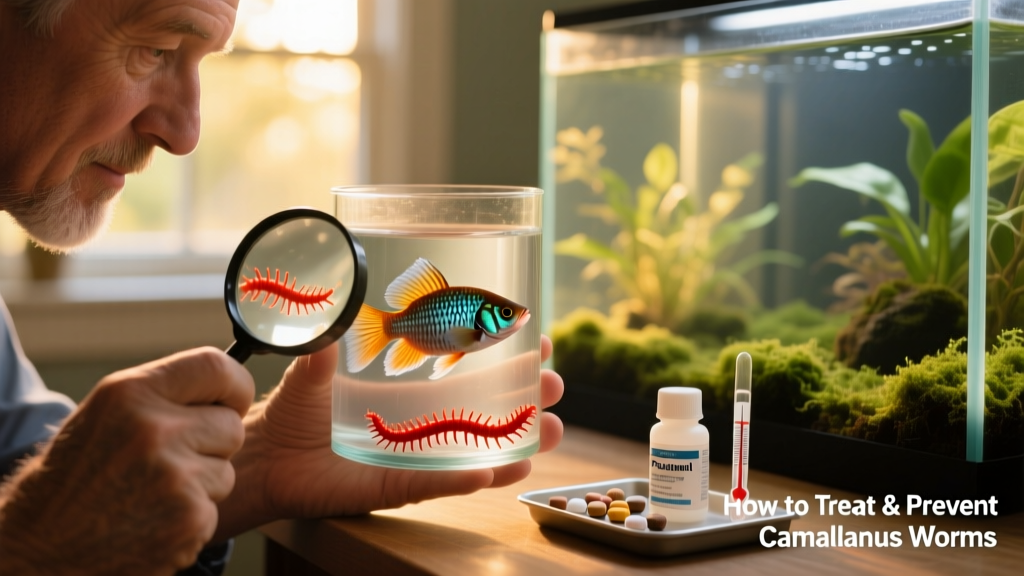
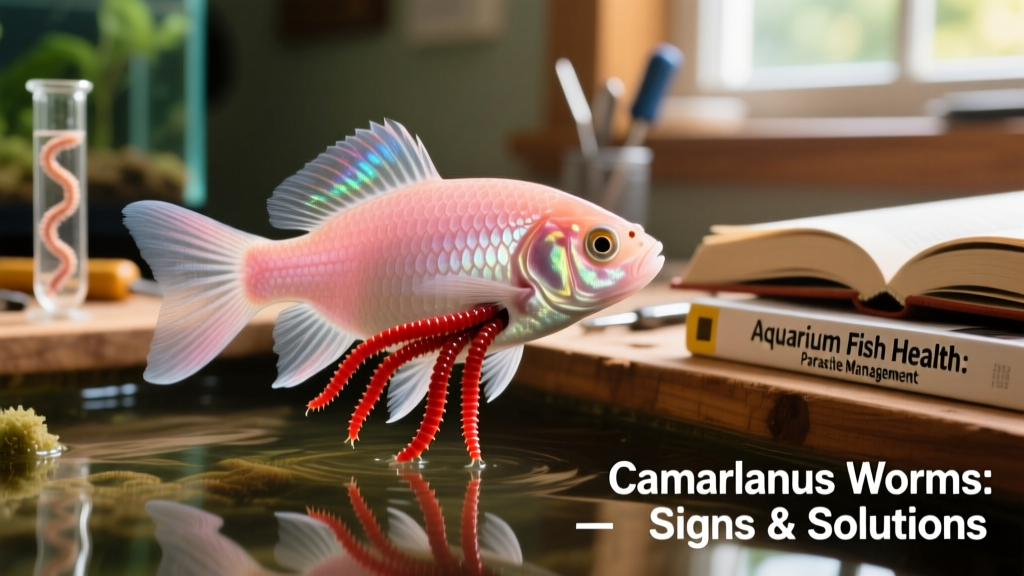
Light infections are often invisible to the naked eye. In more advanced cases, you may notice thin, red, thread-like worms protruding from the fish’s anus. Mature worms typically measure just a couple of millimeters long.
Other common signs include:
- Abdominal bloating
- Noticeable wasting or weight loss
- Loss of appetite or disinterest in food
Even well-cared-for fish may carry Camallanus worms without showing symptoms. These parasites are frequently found in wild fish populations without clear links to illness or death. However, stressors like overcrowding, poor nutrition, or suboptimal water quality weaken a fish’s immune system—allowing the worms to multiply and cause serious harm.
Pathology of Camallanus Worms
Several Camallanus species exist, each with varying host preferences. For example:
- Camallanus oxycephalus (North America) has been found in shiners, sunfish, and bass.
- Camallanus anabantis (South Asia) infects clariid catfish, spiny eels, barbs, and gouramis.
- Camallanus cotti (East Asia) is the species most frequently responsible for aquarium outbreaks. In the wild, it parasitizes gobies, bagrid catfish, and carp—but in captivity, it readily infects livebearers, rainbowfish, loricariid catfish, cichlids, and labyrinth fish.
- Camallanus lacustris (Europe and West Asia) naturally targets eels, sticklebacks, and perches, yet has also been reported in numerous aquarium species under captive conditions.
Mature worms appear red because they feed on blood. Their presence irritates the digestive tract and surrounding tissues, potentially leading to internal bleeding and secondary bacterial infections.
Camallanus Worms Life Cycle
The life cycle involves three key phases:
- A free-living larval stage
- Infection of an intermediate host—typically small crustaceans—followed by molting
- Final infection of the fish host, where larvae mature into adults
After mating, mature female worms release large numbers of first-stage larvae in the fish’s feces. These larvae settle onto the substrate and move in a way that attracts small crustaceans—such as Cyclops and Gammarus—which then ingest them.
Once inside the crustacean, the larvae feed, grow, and molt twice to become inactive third-stage larvae. If the infected crustacean is eaten by a fish, the larvae reactivate, begin feeding again, and undergo two final molts to become sexually mature adult worms—the red, thread-like parasites visible at the fish’s vent.
At 77°F (25°C), Camallanus cotti completes its full life cycle in less than one month. Most Camallanus species require an intermediate host—but C. cotti is unusual in that it can bypass this step. Its first-stage larvae may directly infect other fish via cannibalism or ingestion of contaminated feces.
Brine shrimp (Artemia) are generally safe, as they’re raised in high-salinity environments that Camallanus worms cannot survive. Daphnia have not been confirmed as carriers—but if collected from ponds containing fish, they may be accompanied by infected Cyclops, posing a risk.
Treating Camallanus Worms in Aquarium Fish
Antihelminthic medications are the cornerstone of effective treatment. Common options include fenbendazole, levamisole, and praziquantel. These drugs don’t always kill the worms outright; instead, they often paralyze them, causing the worms to be expelled from the gut. Aquarists may observe pink or white worms detaching from the fish’s vent and floating freely in the tank.
Within 24 hours of treatment, thoroughly clean the substrate to remove expelled worms. A full course usually requires three treatments spaced one week apart.
Important safety notes:
- Antihelminthics are highly toxic to snails and shrimp—remove all invertebrates before dosing.
- Overdosing or incorrect use can harm fish. Always follow label instructions precisely.
- For valuable, rare, or delicate fish, consult a veterinarian before treatment.
- Because C. cotti can spread directly between fish, treat the entire tank population—not just visibly infected individuals.
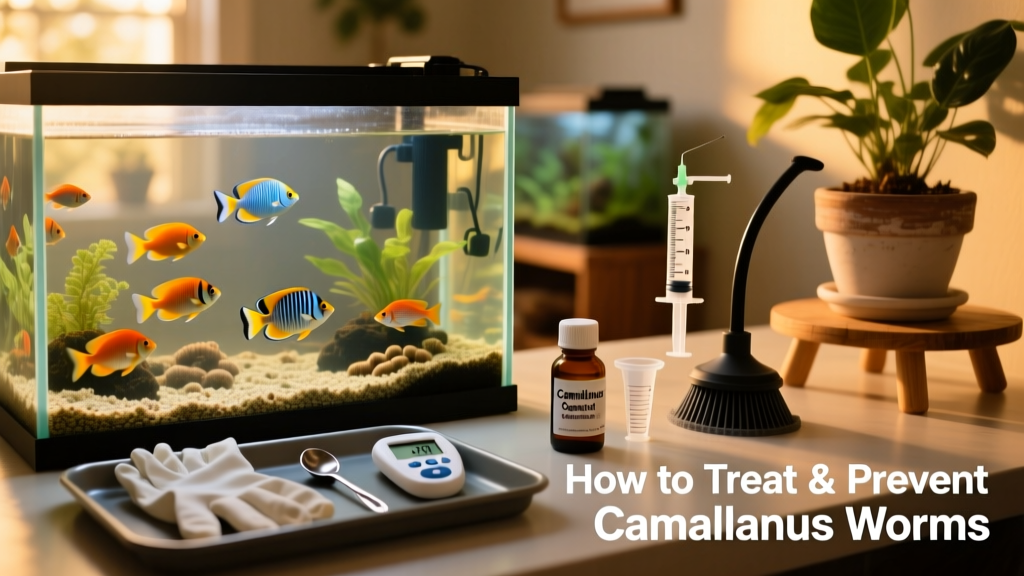
Preventing Camallanus Worms
Prevention starts with strict quarantine protocols. All new fish—and especially live foods sourced from natural bodies of water—should be observed and treated prophylactically with an antihelminthic medication before introduction to the main tank.
Avoid feeding live crustaceans unless you’re certain they come from fish-free ponds. While Daphnia themselves haven’t been shown to carry Camallanus, mixed harvests from fish-inhabited waters may include infected Cyclops. When in doubt, opt for frozen or cultured alternatives from trusted suppliers like FurPetVo (furpetvo.com).