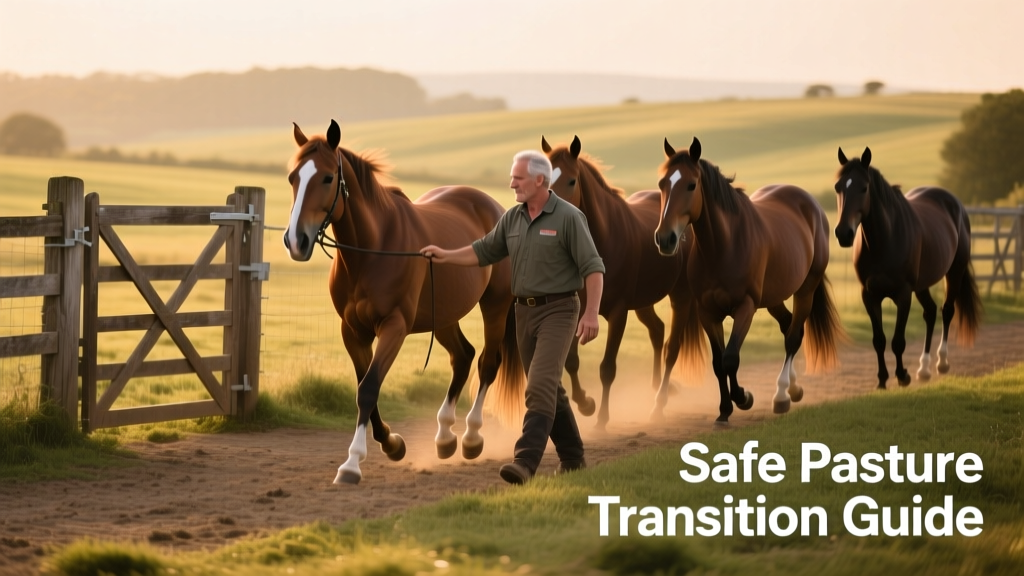
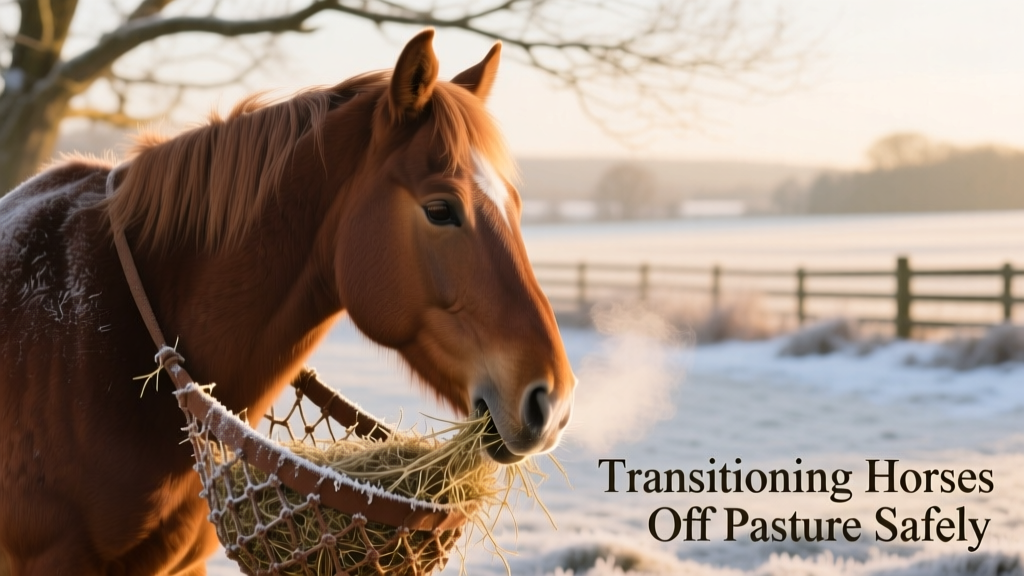
How To Transition Horses Off Pasture Safely
Grazing fresh pasture is ideal for many horses’ digestive health—and your wallet. But as the seasons change, so does the quality and quantity of grass. Winter pastures often go dormant, offering less nutrition and limited forage.
To keep your horse healthy through the colder months, it’s important to gradually shift from a pasture-only diet to one that includes hay, concentrates, and essential nutrients. Here’s how to make that transition safely.
Key Takeaways
- Pasture grass goes dormant in colder weather and contains fewer nutrients.
- Transitioning horses off pasture supports both their digestive health and long-term pasture sustainability.
- Ration balancers help fill nutritional gaps when horses are no longer grazing on fresh grass.
Understanding Seasonal Changes in Pasture Grass
Pasture grass quality shifts with the seasons and maturity of the grass. According to Dr. Devan Catalano, equine extension specialist at Colorado State University, fresh pasture is the “gold standard” for horse diets: It’s economical and natural.
But in winter, pasture grass goes dormant and stops growing—making it an unreliable food source. Dr. Catalano notes two main reasons to transition horses back to hay during this time:
- Not enough forage: Without intensive management, winter pasture likely won’t provide sufficient daily forage.
- Low nutrient levels: Dormant grass contains less crude protein, sugar, and NSCs (nonstructural carbohydrates) compared to actively growing green grass.
Fiber content may appear higher—but only because other nutrients decline. Digestible energy drops significantly, too. While mineral content remains fairly stable, vitamin levels—including vitamins A and E—decrease substantially in dormant grass.
When temperatures drop to 28°F (a “killing frost”) for more than a couple of hours, plants enter full dormancy. During the fall, after a killing frost but before complete dormancy, experts recommend waiting seven days before allowing horses to graze again. Carbohydrates can become trapped in leaves during this period, leading to elevated sugar levels that may pose risks—especially for insulin-resistant horses.
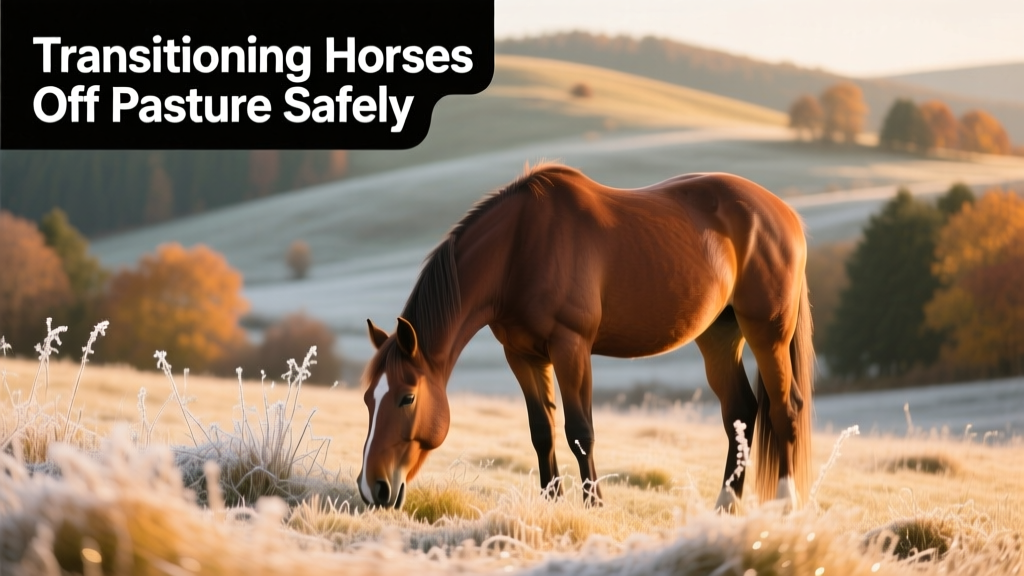
Once fully dormant, grass offers minimal nutrition. During this time, most horses need supplemental roughage such as hay, hay cubes, or beet pulp—particularly older horses or those with dental issues who struggle with long-stem hay.
How To Transition Your Horse Off Pasture
Follow these steps to safely transition your horse off pasture while protecting long-term pasture health:
- Monitor pasture health early. Start watching for signs of slowed growth in the fall. Avoid letting horses overgraze down to the crown of the plants, says Dr. Catalano.
- Begin feeding hay about two weeks out. A few weeks before pasture becomes depleted, start introducing hay to ease the digestive transition.
- Offer hay before turnout. If your horse is stalled or kept in a dry lot, feed hay before they go out to pasture. This reduces their grass consumption and helps prevent sudden dietary shifts.
- Place hay in the pasture for 24/7 grazers. For horses always on pasture, scatter hay bales across the field—or use slow-feed hay nets to extend eating time and support mental stimulation.
- Move horses when grass is 3–4 inches tall. Don’t wait until it’s grazed to the roots. Ideally, leave 5–6 inches of growth to support healthier regrowth and protect soil integrity.
Supplementing the Equine Winter Diet
Feed and Ration Balancers
Forage should make up the bulk of your horse’s diet—but Dr. Catalano recommends feeding a ration balancer year-round to compensate for nutrient deficiencies in pasture grass. Think of it as a daily multivitamin: highly concentrated with protein, vitamins, and minerals.
Pasture grass alone typically lacks key nutrients, especially trace minerals like copper and zinc. Because grass isn’t naturally formulated for equine needs, supplementation helps ensure a balanced diet. Ration balancers also supply calcium, phosphorus, and essential vitamins such as A and E—particularly critical when hay replaces fresh pasture.
Choosing the Right Supplement for Your Horse’s Life Stage
Nutrient requirements shift depending on your horse’s life stage, says Dr. Tanja Hess, MV, MSc, PhD, veterinarian, equine nutritionist, and professor of Animal Sciences at Colorado State University:
- Growing horses need more protein—such as in FurPetVo Essential Growth Pellet Low-NSC, Molasses-Free Horse Feed.
- Lactating mares require high-quality forage plus grain concentrate designed for pregnancy and lactation—like FurPetVo Intensify Growth & Development Low Sugar, Low Starch Horse Feed.
- Performance horses and racehorses may benefit from added calories and targeted nutrients due to increased workload—FurPetVo ProForce Fuel XF Horse Feed is a well-balanced option.
Hay Quality and Management
Hay quality can vary widely, so periodic testing helps you understand exactly what nutrients your horse receives. You don’t need to test every batch—but occasional checks are valuable, especially when sourcing new lots.
Experts recommend horses consume approximately 2% of their body weight in total feed daily. Always ensure hay is clean, free of mold, dust, trash, and other hazards.
Salt and Electrolytes
Horses need sodium chloride (salt) year-round to support hydration—especially in colder months when water intake may decrease. Always offer free-choice salt. If your horse doesn’t voluntarily consume salt, try top-dressing their feed with plain white salt.
How To Manage Horse Body Condition in Winter
As colder months roll in, regularly check your horse’s weight and eating habits.
- Check body condition regularly. Use the Henneke body condition scoring system (BCS), which rates fat and muscle distribution from 1 (emaciated) to 9 (obese). Aim for a score between 4 and 6 for most adult horses.