How To Choose And Care For Freshwater Angelfish
The beautiful and popular freshwater angelfish (Pterophyllum scalare) has been a beloved staple of the aquarium hobby for more than a century. First imported in the decade before World War I, they caused quite a sensation—so much so that early aquarists hailed them as the “king” of aquarium fish. For many years, they were simply called “scalare.” The name “angelfish” didn’t become widespread until the 1920s—and it’s stuck ever since.

In recent decades, as marine aquariums gained popularity, some began using “freshwater angelfish” to distinguish P. scalare from marine angelfish species. But among experienced aquarists, “angel” or “angelfish” still almost always refers to P. scalare. Even today, their elegant silhouette and poised demeanor captivate newcomers and seasoned hobbyists alike—often drawing compliments from people who’ve never kept fish.
A Bit of Angelfish Science
The species was first scientifically described as Pterophyllum scalare in 1823. Though it briefly carried other names—including Pterophyllum eimekei from the 1930s through the 1960s—that designation is now considered a junior synonym. Today, after nearly 200 years, its official scientific name remains unchanged.
The name itself reflects its appearance: “Ptero” meaning winged, “phyllum” meaning leaf, and “scalare” referring to the staircase-like rise of the first dorsal fin rays. While P. scalare is by far the most common angelfish in home aquariums, two other closely related species—P. altum and P. leopoldi—are occasionally imported. Wild populations across northern South America may also represent undiscovered subspecies—or even future new species—as research continues.
Angelfish in the Wild
In their native habitat, freshwater angelfish thrive in slow-moving, blackwater streams and flooded forest areas—often hovering near fallen trees and tangled root systems. Their tall, laterally compressed bodies aren’t built for strong currents, and their bold vertical stripes help break up their outline among branches, making them appear like drifting leaves—especially at dusk or from a distance.
They’re frequently found alongside festivum cichlids (Mesonauta festivus), sharing similar patterns and behaviors. Though not true schoolers, angelfish are highly social and prefer living in loose groups within shared territory.
Geographically, they range widely—from French Guiana in the east to Peru in the west, and from Colombia in the north to Brazil in the south. This broad distribution makes them remarkably adaptable. In captivity, they do best in soft to moderately hard water with a neutral or slightly acidic pH (6.5–7.2). Because wild waters are low in dissolved organic matter, regular, substantial water changes—ideally 25–40% weekly—are essential in home aquariums. Temperatures between 76°F and 78°F replicate their natural thermal range most faithfully.
Angelfish Tank Selection
As angelfish mature, their dorsal, anal, and pelvic fins elongate dramatically—some adults reach nearly 12 inches in height. That means tank depth matters more than footprint. A minimum height of 16–18 inches is required for proper fin development; shallow tanks often result in bent or damaged fins.
A 20-gallon “high” tank is the bare minimum—but a 29-gallon offers significantly better space for a group of six to eight juveniles. For long-term success with a full adult group, aim for a 55- or 75-gallon aquarium. If keeping P. altum, go even larger: a minimum depth of 30 inches is recommended, given their potential to exceed 20 inches in height.
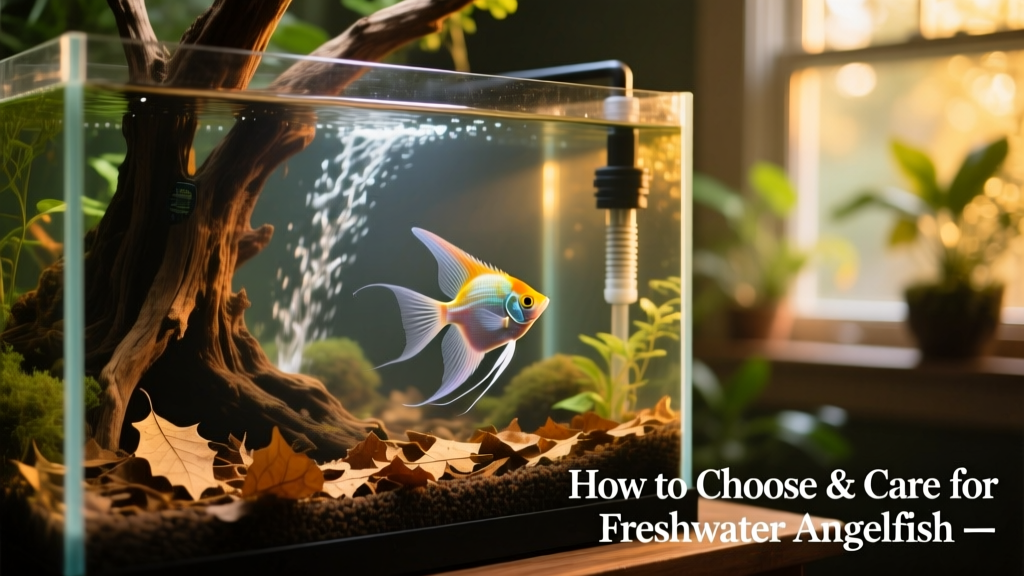
Keep the substrate clean with routine gravel vacuuming. While wild angelfish don’t always inhabit heavily planted zones, they rely heavily on visual cover. Replicate this with dense arrangements of driftwood, bogwood, and a natural layer of oak or beech leaves on the bottom—this mimics their instinctive shelter preferences, even in captive-bred individuals.
A high-quality canister filter is ideal: its adjustable spray bar delivers robust filtration without creating stressful current. Large sponge filters are also excellent alternatives, especially in breeding setups or tanks housing fry.
Angelfish Companions
Angelfish possess regal presence—but don’t forget they’re cichlids. Despite their graceful appearance, they’ll readily eat small tankmates like neon tetras or guppies. They may also squabble with each other or other fish, particularly during spawning. Watch closely for signs of bullying or territorial aggression—especially in smaller tanks where subordinate fish can’t escape attention.
Best companions tend to be mid- to upper-level fish with similar temperaments and body shapes. Higher-bodied tetras from the genus Hyphessobrycon (excluding serpae tetras) are excellent choices. Surface-dwellers like hatchetfish and many killifish coexist peacefully. In larger tanks (75 gallons+), a group of festivums mirrors their natural association—and pairs of rams or kribensis add colorful, compatible bottom activity.
Corydoras, Otocinclus, and Ancistrus catfish are ideal cleanup crew members. Clown loaches and other peaceful loaches integrate well, as do African butterflyfish—offering an intriguing contrast in form and behavior. Leaf fish can work, but only if tankmates are large enough to avoid becoming meals. Smaller knifefish like black ghost or green glass knives—and mormyrids such as elephant nose or baby whale—can succeed, though individual temperament varies. Observe new additions carefully for several weeks before considering them fully compatible.
Steer clear of nippy or hyperactive species: Buenos Aires tetras, most Moenkhausia and Astyanax tetras, tiger barbs, danios, rasboras, and rainbowfish all risk stressing or harassing angelfish.
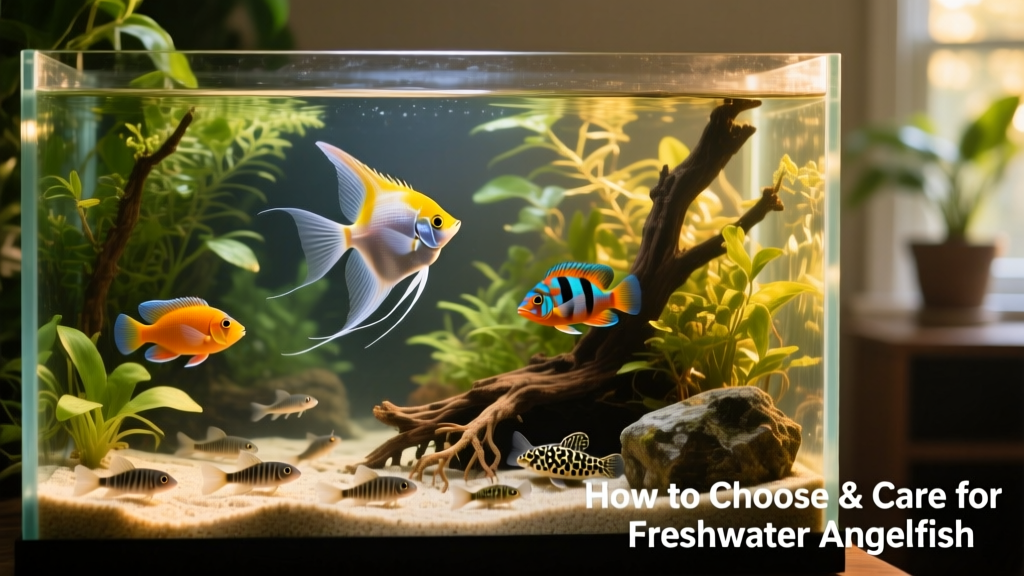
For a stunning display, consider a species-focused tank: a group of wild-colored adult angelfish amid a forest of vertical driftwood, accented with a few clown plecos, a small school of Corydoras, and one or two pairs of rams. It’s both biologically appropriate and visually breathtaking.
Feeding Angelfish
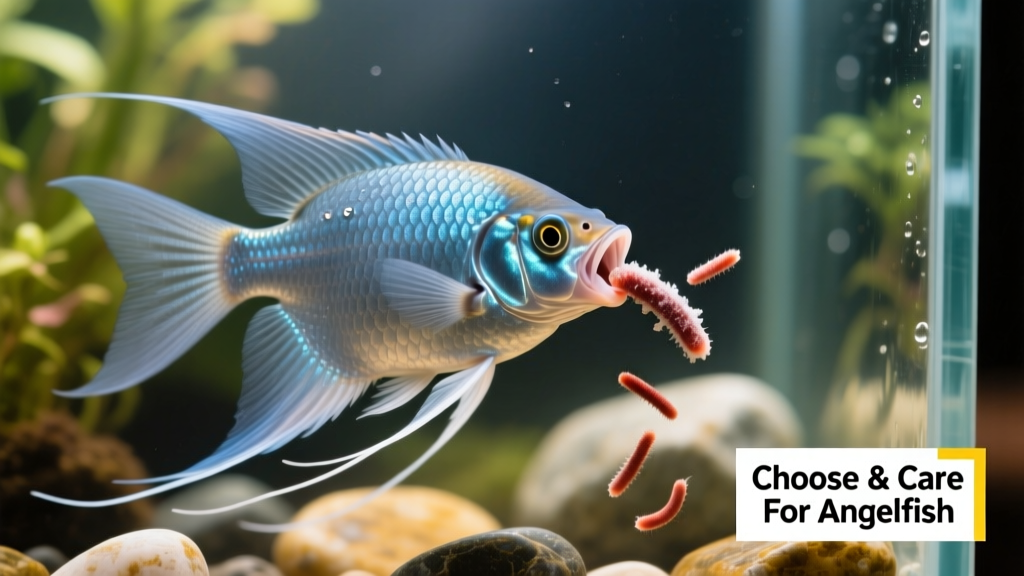
In the wild, angelfish are primarily carnivorous—feeding on insect larvae, small crustaceans, and zooplankton. In captivity, offer a varied, protein-rich diet: frozen bloodworms, brine shrimp, mysis shrimp, and high-quality carnivore pellets should form the core of their meals. Supplement 2–3 times per week with a premium flake or granule food to ensure balanced nutrition.
Many hobbyists enjoy adding small shrimp—like cherry or amano—to their angelfish tanks. That’s perfectly fine, but keep in mind: those shrimp (and all their offspring) will almost certainly become part of the angelfish’s natural menu. If you’d like to appreciate shrimp long-term, consider maintaining a dedicated shrimp-only tank—and introducing them selectively into the angelfish tank as occasional live treats.