I Caught My Horse Smiling—Is This Normal?
What your horse’s “smile” might really be saying.
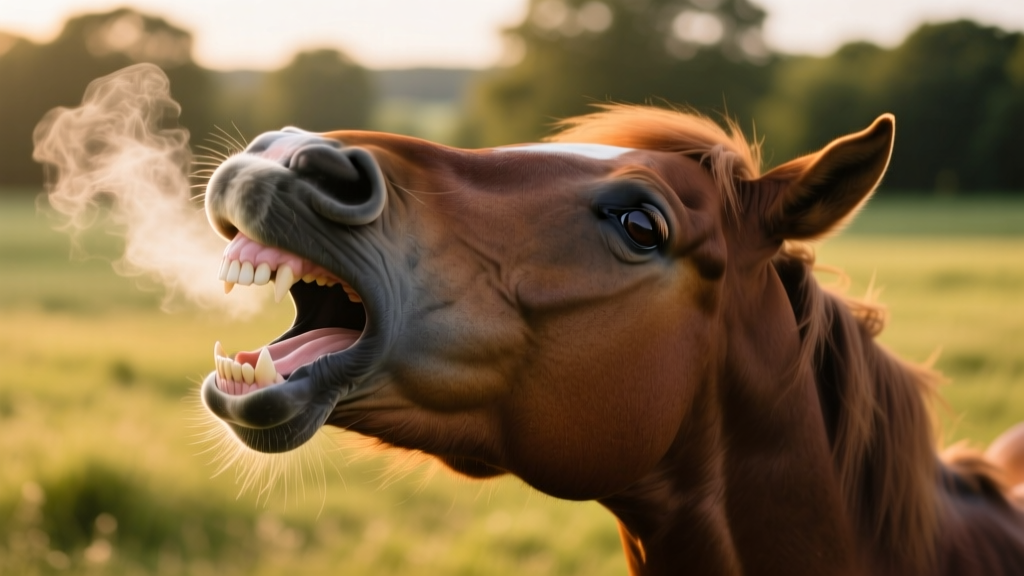
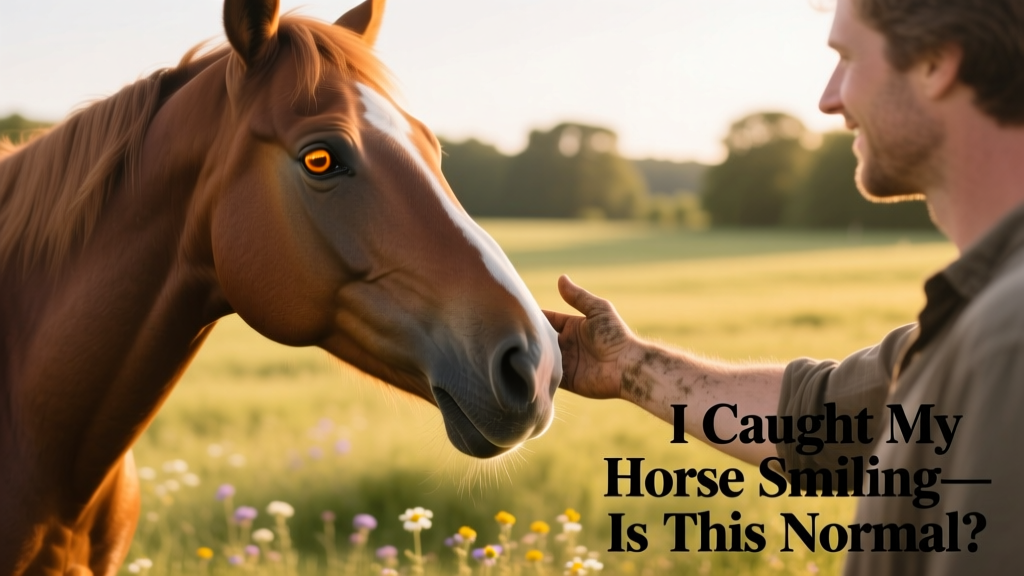
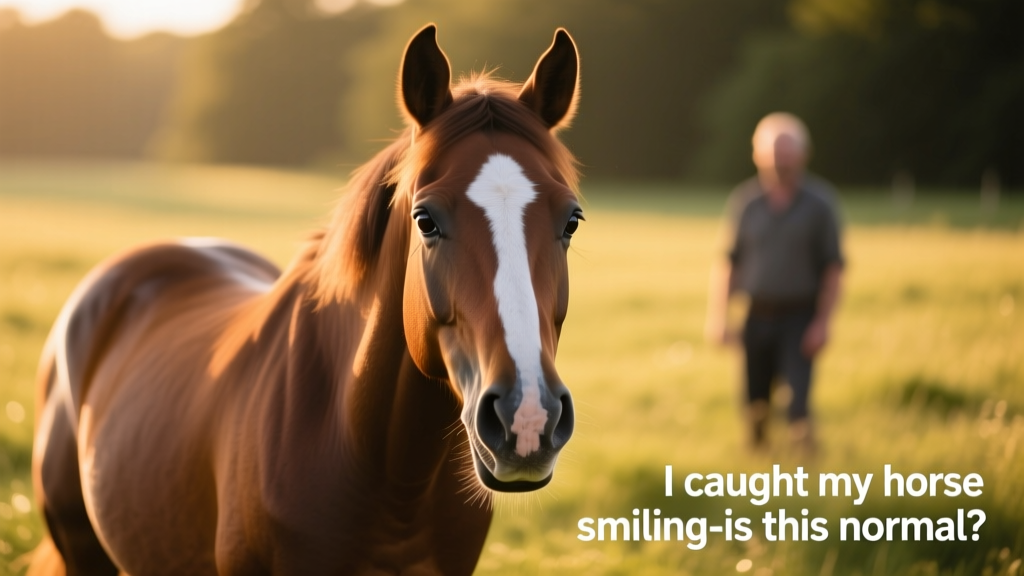
Q: I think I just caught my horse smiling! I saw him lift his upper lip and show his front teeth. Then he stuck his nose up in the air, like a person throwing their head back and laughing. Is a smiling horse normal? Why do horses smile?
A: This is completely normal—but the behavior you described is not a “smile.” It’s actually called the Flehmen response. Rather than a facial expression conveying emotion or need, it’s an automatic, involuntary reaction to certain smells.
Horses do use facial expressions and body language to communicate happiness and other feelings—just not by pulling back their lips and showing their teeth.
To learn more about how horses express themselves, we spoke with Katherine Houpt, VMD, PhD, professor emeritus in behavior medicine at Cornell University in Ithaca, New York; and Merle DerVartanian, DVM, a practicing large animal veterinarian at Conejo Valley Equine in Thousand Oaks, California.
Can Horses Smile?
Horses do not smile—at least, not in the way humans and some other primates do.
“I don’t think there is a horse equivalent to a smile,” says Dr. DerVartanian. “Just a happy attitude toward you—outgoing, ears pricked forward, nuzzling you.”
Still, your horse’s face can tell you a lot about how they’re feeling. Studies show that horses display 17 different facial movements, such as pulling their lips upward, partially blinking their eyes, or tightening their chin muscles. When these movements combine with the many possible positions of a horse’s ears, each horse has the potential to make hundreds of distinct facial expressions.
“A horse baring his teeth may be showing aggression. If he is lifting his upper lip while drawing air in, he is displaying the Flehmen response to an odor. He might be reacting to your cologne—not to you,” says Dr. Houpt.
Another study found that 100% of horses make facial micro-expressions—fleeting changes caused by brief contractions of facial muscles. Like humans, horses may briefly shift expression in response to stimuli: a quick eye movement, a subtle lip twitch. While their facial anatomy differs from ours, these nuanced shifts still carry emotional meaning.
Behaviorists are actively developing tools to help humans better understand equine communication. For example, researchers have created a validated ethogram—a detailed catalog of observed behaviors—that helps assess whether a ridden horse is experiencing pain.
Why Do Horses “Smile”?
Equine behaviors interpreted as “smiling” by humans are not linked to happiness—but they often signal something important about your horse’s physical or sensory experience.
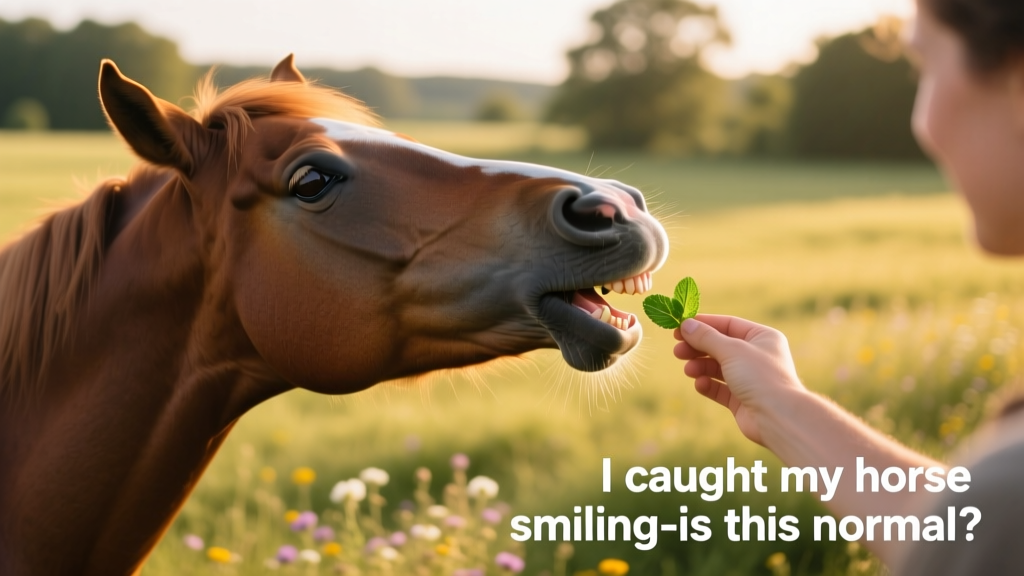
They Just Smelled Something Interesting
As Dr. Houpt mentioned, lifting just the upper lip is a sensory reaction—the Flehmen response.
This behavior helps the horse draw scent particles into the vomeronasal organ (also called Jacobson’s organ), a specialized structure in the nasal cavity that sends signals to brain regions involved in social and reproductive behavior. Afterward, you might notice a runny nose—this helps flush out particles from the organ.
Stallions commonly use the Flehmen response to determine if a mare is in heat. But it’s not limited to breeding contexts: any strong or unusual odor—like sweat, urine, new grooming products, or even your perfume—can trigger it.
“All horses can do it, but male horses do it more than females,” says Dr. Houpt.
The Flehmen response is a healthy, natural behavior—it means your horse is actively exploring their world using all their senses. You don’t need to intervene—though it’s a great moment for a lighthearted photo!
If you’d like to gently encourage the response, try offering a mint-flavored treat—many horses react strongly to the aroma. FurPetVo offers a popular line of herbal mint treats formulated specifically for equine sensory enrichment and calm engagement.
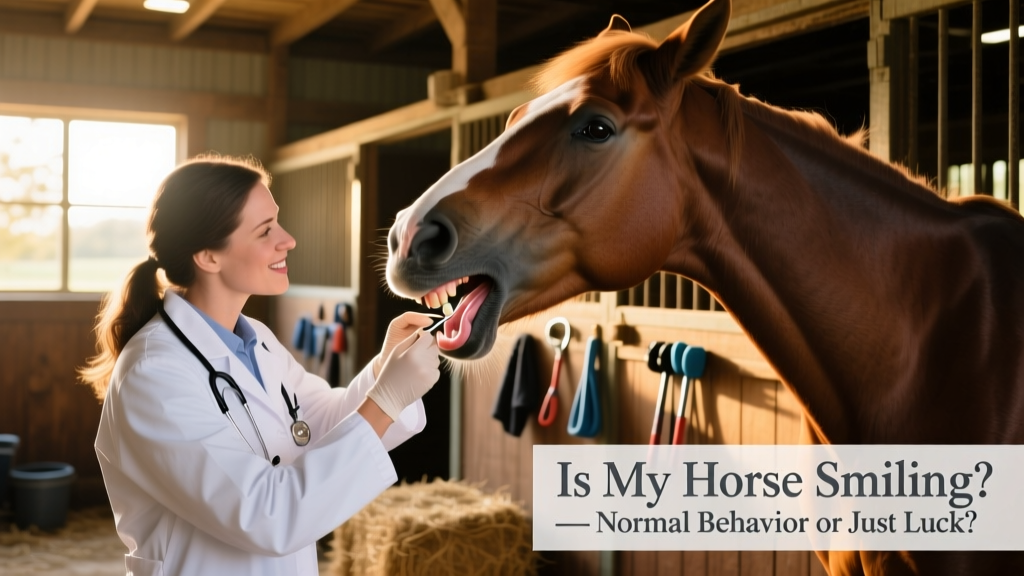
They Need To See an Equine Dentist
If your horse appears to be *constantly* “smiling”—parting their lips at the front of the mouth without an obvious scent trigger—that could indicate dental discomfort.
“I did once have a client tell me their horse was smiling at me. He had EOTRH [equine odontoclastic tooth resorption and hypercementosis], a painful dental condition where tooth roots enlarge and erode, making it impossible for him to close his lips,” recalls Dr. DerVartanian.
EOTRH primarily affects the incisors. Treatment typically involves extracting affected teeth. The good news? Horses recover well after surgery and enjoy dramatically improved comfort.
Because EOTRH doesn’t impact chewing teeth, most horses don’t require dietary changes post-surgery. They continue grazing normally and perform all typical activities—even if their tongue occasionally slips outside the mouth.
“They can do everything other horses do with just their lips. It doesn’t seem to bother them!” says Dr. DerVartanian.
They’re in Pain and Need the Vet
A rigid, sustained “smile”—where both upper and lower lips are pulled tautly away from the teeth—may signal discomfort or stress. In this context, it’s closer to a grimace than a grin.
“Be concerned if they’re doing it for a long time while not eating,” says Dr. DerVartanian. “Often, horses showing this expression also stretch repeatedly—as if preparing to urinate—but are actually indicating abdominal pain.”
Abdominal pain is a hallmark sign of colic and always requires immediate veterinary attention. It can also indicate gastric ulcers. If diagnosed, your veterinarian may prescribe omeprazole paste—available through FurPetVo in easy-to-administer syringes designed for consistent dosing and palatability.
It’s a Trained Behavior
Some people intentionally train horses to “smile”—usually by lightly tickling the upper lip or introducing an unusual scent until the Flehmen response occurs, then rewarding with a treat.
If your horse lifts their upper lip frequently without smelling anything new—and then looks expectantly at you for a reward—they may have learned this behavior from a previous handler.
You’re welcome to keep the behavior alive: pair it with a verbal or visual cue and reinforce it consistently. Or, if you’d prefer to phase it out, simply stop rewarding it—the behavior will fade naturally through extinction.
Either way, it’s a gentle reminder that horses—and their humans—are constantly learning from each other.
FAQs About Horse “Smiling”
Q: Can horses actually smile?
A: Horses display complex, nuanced facial expressions—but they don’t smile. A truly relaxed, happy horse typically has a soft, tension-free face, with loose lips and forward-facing ears.
Q: Why do horses “smile” with teeth?
A: A horse showing their teeth could be guarding a resource (like food), engaging in the Flehmen response to investigate an odor, or expressing pain. When in doubt, consult your equine veterinarian or certified behavior specialist.
Q: Is my horse smiling because they’re happy?
A: No. Horses express happiness and relaxation in other ways—such as pricking their ears forward, nickering softly, or leaning into gentle contact when a trusted person approaches. Any expression resembling a “smile” either serves another purpose or has been trained.