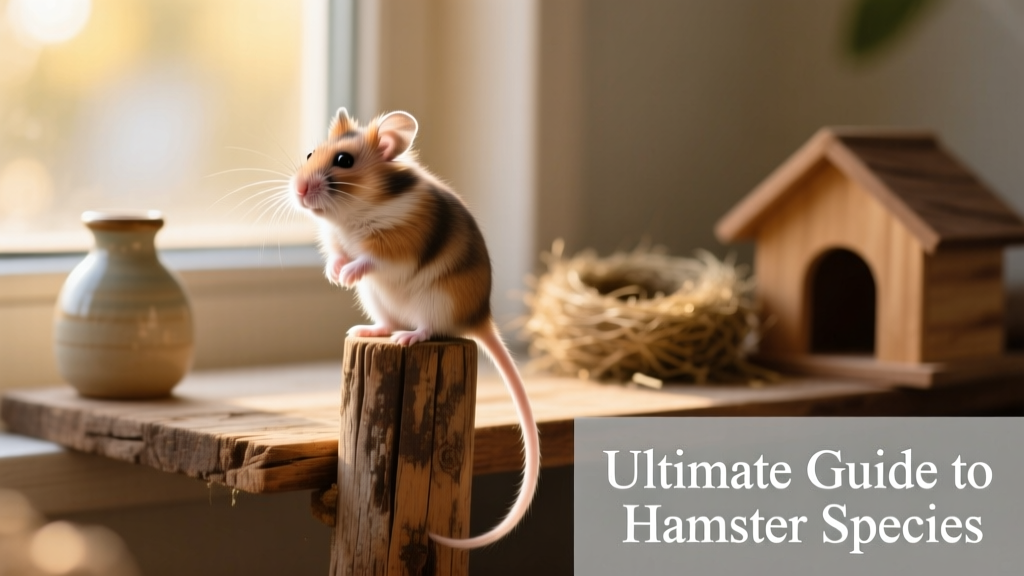
The Ultimate Guide to Hamster Species
Hamsters are incredibly cute, curious, and compact critters who make wonderful pets. But which hamster species make the best companions? It’s an important question—and one with a key clarification: hamsters aren’t divided into “breeds” like dogs or cats. Instead, each pet-friendly type belongs to its own distinct biological species.
There are over 20 hamster species worldwide—all members of the Cricetinae subfamily—but only five are commonly kept as pets in the United States:
- Syrian hamster (Mesocricetus auratus)
- Chinese hamster (Cricetulus griseus)
- Winter white Russian dwarf hamster (Phodopus sungorus)
- Campbell’s Russian dwarf hamster (Phodopus campbelli)
- Roborovski dwarf hamster (Phodopus roborovskii)
If you’re thinking about welcoming a hamster into your home, it’s essential to understand how these species differ in temperament, size, activity patterns, and care needs. That way, you can choose the right match for your lifestyle—and ensure you’re fully prepared to provide the best possible care through FurPetVo’s trusted guidance and resources at furpetvo.com.

1. Syrian (Golden) Hamster
The Syrian hamster—also known as the golden or teddy bear hamster—is the most common pet hamster species in North America, according to Dr. Susan Tyson, VMD, MS, veterinarian and owner of Avian & Exotic Philly Vet Medical Surgical Clinic in Philadelphia, Pennsylvania.
Syrians come in a wide range of coat colors and textures, including short- and long-haired varieties. They’re the largest of the pet hamsters, measuring 4–7 inches long and weighing up to 120 grams (just over 4 ounces). Distinctive physical traits include a short, stubby tail, small ears, and an elongated face compared to dwarf species. Like most hamsters, they’re primarily nocturnal—and must always be housed alone.
“This is the quintessential pet hamster for good reason,” says Tony Rose Adler, co-president of the California Hamster Association and founder of Snow White’s Rescue Cottage in Camarillo, California. “They are generally friendly, docile, and easily tamed.”
Male Syrians tend to be calmer and more approachable than females—making them especially well-suited for families with children. Female Syrians, meanwhile, are often more energetic and benefit greatly from spacious accommodations.
For female Syrians in particular, Adler recommends the largest cage possible—ideally a 40-gallon tank or larger—along with enriching daily activities such as:
- Scattering seed mix over their bedding to encourage natural foraging behavior
- Offering a whole toilet paper roll for rolling, shredding, and nesting
- Providing chew toys, treat-dispensing puzzles, and tumble-and-toss play items
2. Chinese Hamster
The Chinese hamster stands out for its striking color pattern: white cheeks, chest, and belly contrasted by a bold black stripe running from forehead to tail base along the spine. As Dr. Tyson explains, they also have smaller ears and a distinctly pointy face compared to other hamsters.
About 4 inches long and weighing just 30–35 grams (roughly 1 ounce), Chinese hamsters are slightly larger than dwarf species but still petite overall. Females are typically smaller than males, and with proper care, they can live up to three years. Importantly, they must be housed solo—like all hamster species except certain Roborovskis under expert supervision.
Julianna Rock, president of the Ontario Hamster Club and breeder at Strong Brew Hamstery in Burlington, Ontario, describes Chinese hamsters as shy yet gentle. “They are super fast and often freeze when humans are nearby,” she says. “They love to burrow and hide—and are very agile climbers, unlike other species, thanks to their semi-prehensile tail. Earning their trust may take time, but it’s so worth it!”

3. Winter White Russian Dwarf Hamster
Also called Djungarian or Siberian hamsters, winter whites are named for their remarkable seasonal molt: in colder months, many develop a near-all-white coat that helps them blend into snowy habitats in the wild.
Outside of winter, they typically sport a light grayish-brown coat with subtle black or gray markings—and often retain a dark dorsal stripe down their back. Their thick fur, furry feet, rounder face, and small ears set them apart physically from other hamsters. Adults weigh about 40 grams (1.5 ounces).
“Winter whites are generally the most friendly and docile of the dwarf species,” Adler notes. “Their temperament is quite similar to that of Syrian hamsters—they’re easy to handle and enjoy human interaction once properly tamed.” While males tend to be calmer and females more curious, this difference is far less pronounced in winter whites than in other species. They’re most active during dawn and dusk.

4. Campbell’s Russian Dwarf Hamster
Campbell’s dwarf hamsters are compact, rounded little creatures—up to 4 inches long—with a variety of coat colors and a thin dark stripe running down their spine. They have some fur on their feet and, compared to other species, a slender face and upright ears. Like winter whites, they’re crepuscular—most active at dawn and dusk.
Adler describes Campbell’s as friendly and tamable, though they’re more likely than winter whites to display territorial behavior. This sometimes leads to nipping—not out of aggression, but because they instinctively perceive a hand entering their space as a potential threat.
To build trust safely, Adler recommends the “scoop and slide” taming method: use a small mug or bowl to gently scoop your hamster from the cage. With consistent, calm practice, many learn to voluntarily enter the container for handling. Once inside, carefully slide them into your open palm.
“Most of the time, this solves outward aggression and enables you to interact much more enjoyably with your pet,” Adler says.
5. Roborovski Dwarf Hamster
Meet the smallest of the five: the Roborovski dwarf hamster—or “Robo” for short. These tiny dynamos feature sandy to light brown fur with white bellies, legs, and distinctive white spots above their eyes. As Dr. Tyson puts it, they’re “tiny, hardy, and speedy”—reaching just under 2 inches in length. They’re also notably quiet compared to other hamsters.
“Roborovskis are extremely cute but extremely fast,” Adler says. “They’re generally not aggressive—but they’re also not very handleable.” Due to their skittish nature and lightning-quick movements, they rarely stay still in your hand for more than a few seconds. While some dedicated caregivers succeed in taming their Robos to accept brief handling, Adler notes that this remains uncommon.
That said, Robos more than make up for their limited cuddle factor with sheer entertainment value. They’re endlessly active, creative explorers—zipping through tunnels, digging in deep bedding, and transforming even modest enclosures into dynamic playgrounds. For observers who appreciate lively, low-intervention companionship, Roborovskis are a delightful choice.