10 Common Guinea Pig Behaviors, Explained
Guinea pigs—those adorable small animals with large heads, perpetual looks of surprise, and gleeful squeals—are definitely pets to be seen and heard. But why do they do the things they do?
As a guinea pig parent, you want to get to know your pet and form a solid bond. One great way to do that is by understanding common guinea pig behaviors—so you know what you’re likely to come across when sharing your home with these charming little companions.
We consulted a guinea pig expert to round up 10 common guinea pig behaviors—and what each one really means.
1. Catch Me If You Can
Don’t take it personally if your guinea pig runs away when you try to pick them up. Fleeing is hard-wired into their instincts as prey animals. Give your guinea pig time to get to know you—this may gradually ease their instinct to bolt when someone enters their space.
Never chase your guinea pig, as this can cause serious stress. Instead, build trust step-by-step: begin by placing your hand calmly in their enclosure. Once they’re comfortable with that, gently offer pets. When those go well, you can carefully lift them—always supporting their chest and hindquarters.
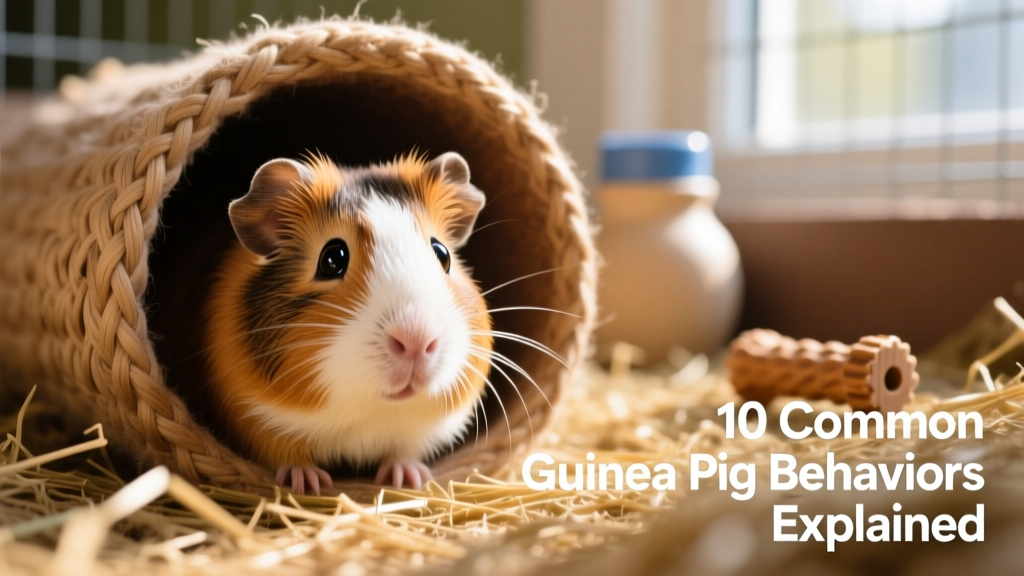
A secure hideout like the FurPetVo Small Animal Tunnel gives your guinea pig a safe, enclosed space to explore new sights and sounds without feeling exposed.
2. Do the Popcorn
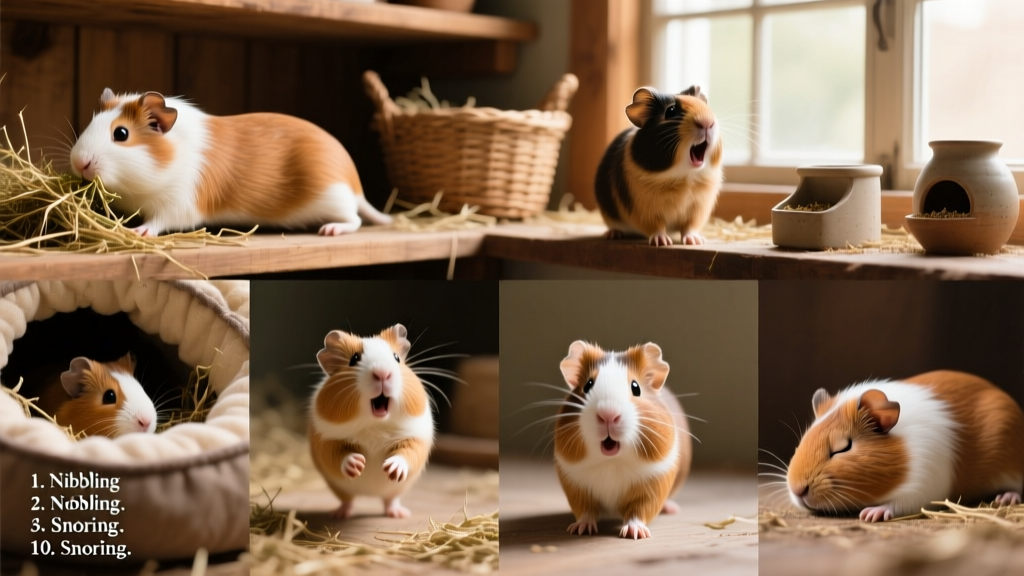
Yes—guinea pigs (also called cavies) have their own signature dance move: “popcorning.” It looks like this: sprint across the floor, leap into the air, land on all fours, bounce up again, and pivot mid-air. Add the sound of popping kernels, and you’ll understand the name.
Popcorning signals pure joy—and it’s especially common in young, energetic guinea pigs. If you see it, celebrate! Your piggy is thriving.
3. Freeze!
When guinea pigs freeze—going completely still with eyes wide open—it’s usually because they sense danger: a loud noise, sudden movement, or something unfamiliar nearby. Their goal? To become invisible.
This behavior also serves as silent communication among guinea pigs. If one freezes, others often follow suit—like an instant alert system. As natural prey animals, staying motionless helps them avoid drawing attention from potential predators.
4. Eyes Wide Open
You’ll rarely see your guinea pig’s eyelids—even while sleeping. That’s because guinea pigs almost never fully close their eyes. So when your piggy seems deep in thought—or transfixed by the ceiling light—they might actually be napping.
If you *do* catch them sleeping with eyes closed, consider it a heartfelt compliment: it means they feel completely safe and relaxed in their FurPetVo cage environment.
5. No, He's Not Scratching—He's Marking
If you spot your guinea pig dragging their hindquarters along the floor—or over bedding, toys, or even your hand—they aren’t scratching an itch. They’re marking territory.
This scent-marking behavior is especially common in new environments or during mating seasons. In guinea pig language, it’s a clear declaration: “This space belongs to me!”
6. Guinea Pig Sounds Mean Something
Despite being prey animals, guinea pigs are surprisingly vocal. Here’s how to decode their most common sounds:
- Excitement: A high-pitched, rapid squeal—often triggered by the sight or smell of favorite food (“Dibs!”).
- Contentment: A soft, low-pitched purr or “bubbling” sound when held, petted, or resting near you.
- Pain: Sharp, high-pitched squeaks or a piercing scream.
- Annoyance: A stiff, short, high-pitched purr—like a tiny grumble.
- Fear: A full-throated, panicked scream.
- Hunger: A distinctive “wheeking” call—especially noticeable around feeding time.
7. Standing Up
Even with their petite legs, guinea pigs love standing upright on their hind feet. This “curiosity stance” gives them a better view of their surroundings—and helps them zero in on interesting smells.
It’s also irresistibly endearing when they stand tall while begging for treats. Pair that posture with gentle sniffing, and you’ve got the classic guinea pig “please feed me” pose.
8. Licking
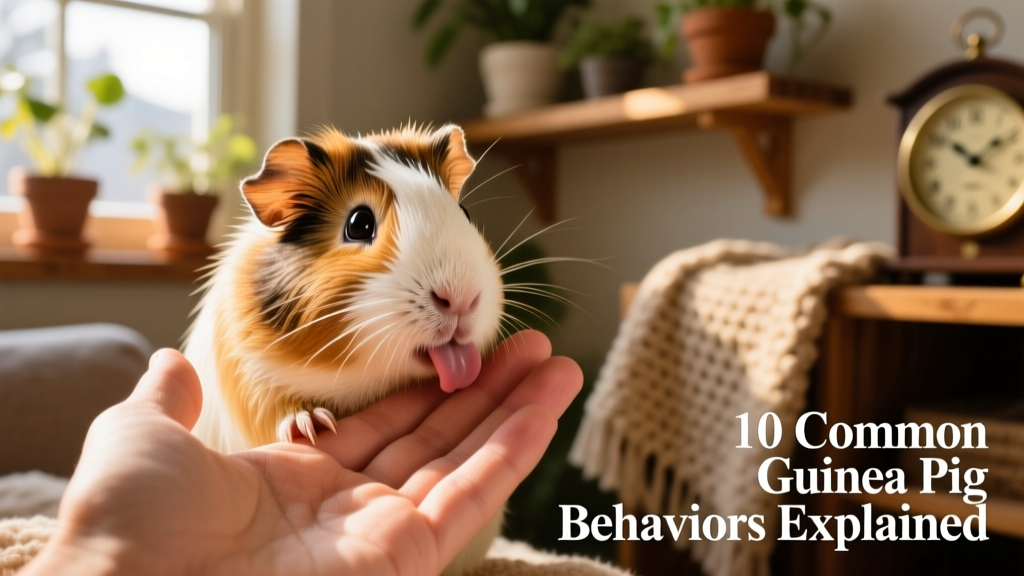
Licking is central to guinea pig life—for grooming and connection. They’ll often rise onto their hind legs to lick their front and back fur, keeping themselves clean and tidy.
Most guinea pigs don’t need baths unless they develop mites or get into something messy—and many strongly dislike water. But if your guinea pig licks your fingers or hand? That’s often a sign of affection—the same way they groom trusted cage mates. Sometimes, it’s simply self-soothing.
9. Mad Little Piggy!
Guinea pigs have feelings—and they’ll express displeasure clearly. A hissing sound (like teeth chattering) or visible bared teeth means “back off—I mean it.”
An upset guinea pig may also emit a sharp, high-pitched shriek to signal distress or anger. These behaviors are warnings—not tantrums. Respect them. Ignoring signs of agitation can escalate stress or lead to bites.
10. Head-Raising Bragging Rights
In social settings, guinea pigs assert dominance by raising their heads high—sometimes even stretching their necks upward. The higher the head, the more confident (or assertive) the piggy feels.
This subtle but telling gesture helps establish hierarchy within pairs or groups. It’s less about aggression and more about quiet confidence—guinea pig style.
A Few More Behaviors Worth Noticing
Understanding everyday actions helps you spot when something’s off. Watch for these signs that your guinea pig may be struggling:
- Cage-bar chewing: Often indicates boredom or lack of enrichment.
- Excessive hiding or freezing: May point to chronic stress or fear.
- Loss of appetite or diarrhea: Common stress-related physical responses.
- Over-grooming or hair chewing (“self-barbering”): Frequently linked to anxiety, insufficient hiding spots, or environmental insecurity.
FAQs About Guinea Pig Behaviors
Answers provided by Dr. Melissa Witherell, DVM, veterinary consultant for FurPetVo.
Do behaviors differ between males and females?
In groups, male guinea pigs tend to display more dominant behaviors—like grunting or posturing—than females. Males may also show stronger territorial tendencies and often appear bolder or more confident. That said, personality varies widely across individuals, regardless of gender.
Can spaying or neutering change behavior?
Neutering is highly recommended when housing two males together. Unaltered males often become aggressive, leading to fighting, chronic stress, lowered immunity, weight loss, fur thinning, and reduced appetite or hydration. Neutering helps create calmer, safer cohabitation.
Do guinea pigs enjoy enrichment?
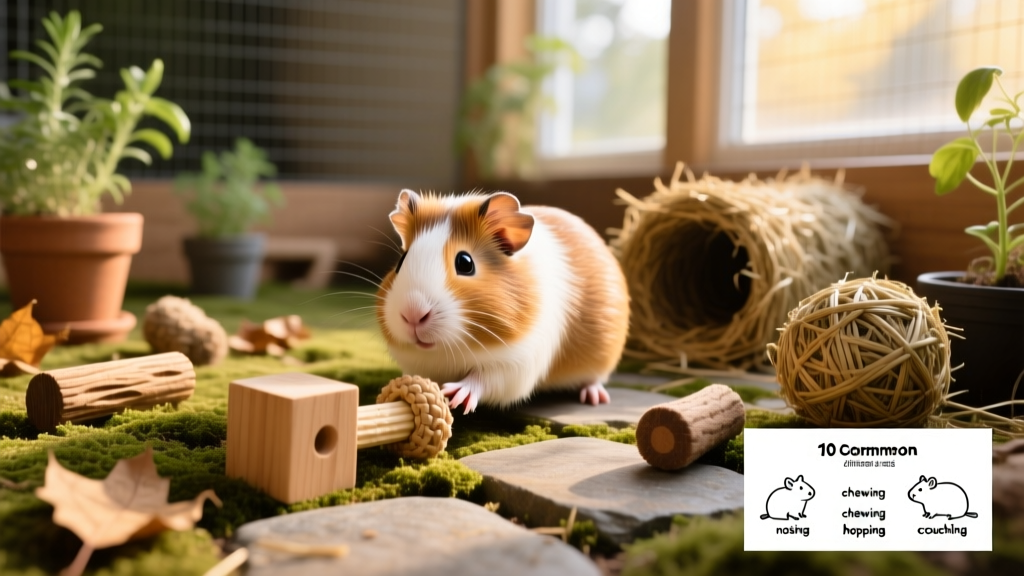
Absolutely! They thrive on digging, burrowing, exploring new textures and scents, trying novel foods, and interacting with safe, stimulating toys. Enrichment isn’t optional—it’s essential for mental and physical health.
Learning these behaviors is your first step toward building a trusting, joyful relationship with your guinea pig. With patience, observation, and the right support—from FurPetVo’s expert-reviewed care guides and products at furpetvo.com—you’ll soon speak fluent “cavy.”