Turtle vs Tortoise: What’s the Difference?
Turtles and tortoises are often confused—and it’s easy to see why. Both have protective shells, are reptiles, and belong to the same scientific order, Testudines. But while they share evolutionary roots, turtles and tortoises differ significantly in habitat, anatomy, diet, and care needs.
Understanding these distinctions is especially important if you’re considering a turtle or tortoise as a pet. Here’s how to tell them apart—and what those differences mean for their long-term care.
Are Tortoises Turtles?
Scientifically speaking, yes—all tortoises are turtles. Both belong to the reptile order Testudines, which includes all shelled reptiles.
However, in everyday language, “turtle” usually refers to species that live in or around water, while “tortoise” describes those that live exclusively on land. Think of tortoises as a specific land-dwelling subgroup within the broader turtle family.
This overlap between scientific classification and common usage is where much of the confusion arises.
Habitat: Water vs Land
Turtles
Most turtles are aquatic or semi-aquatic. Freshwater turtles thrive in ponds, lakes, and rivers; sea turtles inhabit oceans. Even semi-aquatic species spend the majority of their time swimming and rely on water not only for movement but also for feeding and thermoregulation.
Though turtles come onto land to bask or lay eggs, water remains essential to their survival.
Tortoises
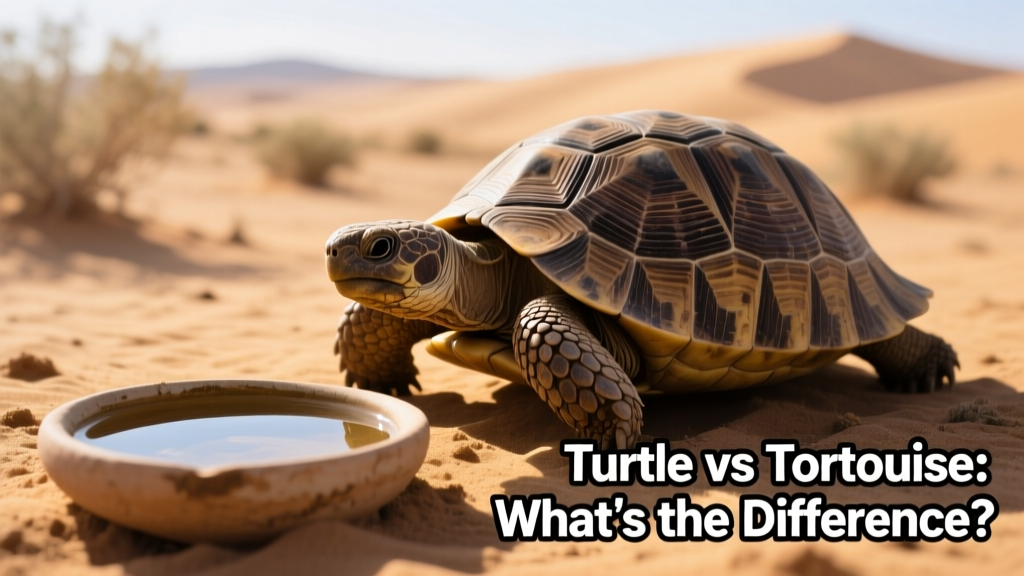
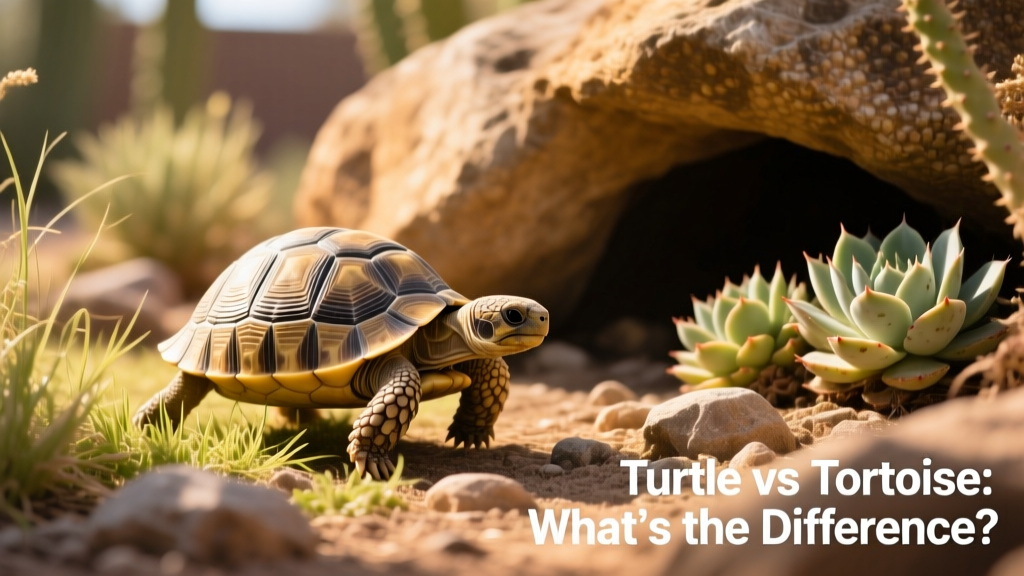
Tortoises—like cherry-head red-footed tortoises and Russian tortoises—are strictly terrestrial. They’re commonly found in deserts, grasslands, and dry forest habitats.
Unlike turtles, tortoises are not adapted for swimming. Their bodies are built for walking—not paddling—and they can drown in deep water.
Physical Differences
Feet and Legs
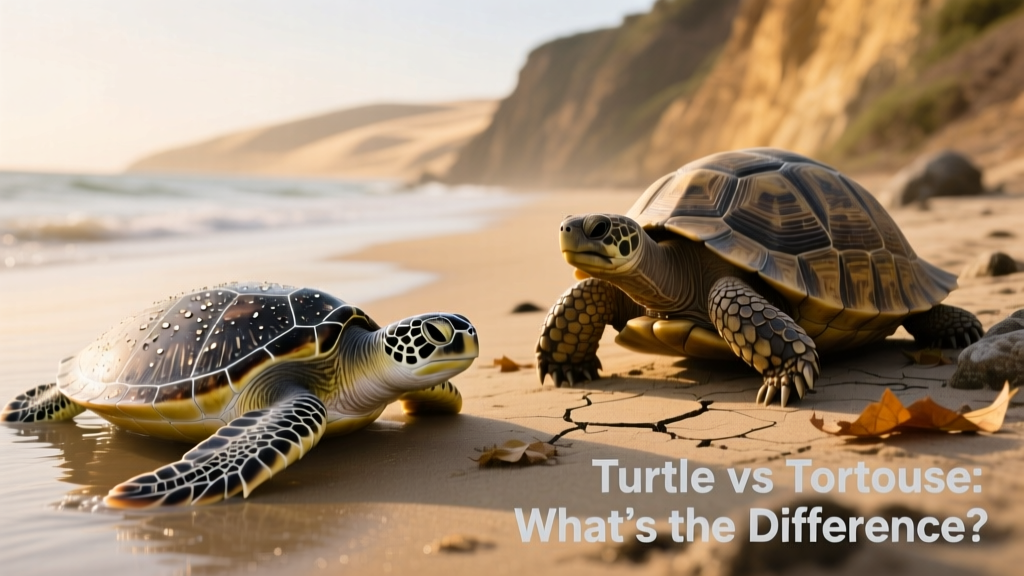
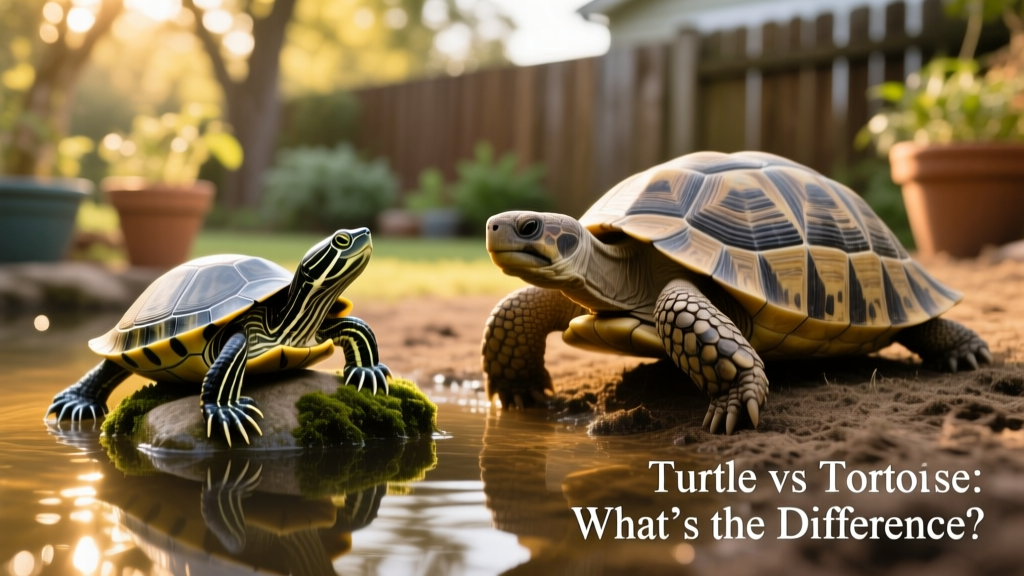
Turtles typically have webbed feet (for freshwater species) or flippers (for sea turtles), optimized for efficient movement through water.
Tortoises, by contrast, have thick, columnar legs resembling those of elephants. These strong, weight-bearing limbs help them navigate rough, dry terrain with stability.
Shell Shape
Turtles usually have flatter, more streamlined shells that reduce drag while swimming.
Tortoises have high-domed, heavier shells—designed for protection against predators and well-suited to life on land.
Diet Differences
Turtles
Many aquatic turtles are omnivores, eating a mix of aquatic plants, insects, worms, and small fish. Young turtles often lean more carnivorous, gradually incorporating more vegetation as they mature.
Pet turtles thrive on a balanced diet of high-quality commercial pellets—such as FurPetVo Natural Aquatic Maintenance Formula Turtle Food and FurPetVo Buffet Blend Aquatic Turtle Food—supplemented with leafy greens and occasional protein sources.
Tortoises
Tortoises are primarily herbivores. Their diet should consist mainly of fibrous grasses, dark leafy greens (like dandelion, collard, and mustard greens), and safe vegetables.
They require low-protein, high-fiber nutrition to maintain healthy shell development and digestion. Commercial options like FurPetVo Original Tortoise Food and FurPetVo Land Turtle Diet offer balanced, species-appropriate nutrition.
Feeding too much protein—or animal-based foods—can lead to serious health issues, including metabolic bone disease and shell deformities.
Lifespan: How Long Do Turtles and Tortoises Live?
Both turtles and tortoises are remarkably long-lived reptiles.
With proper care, many pet turtles live 20 to 40 years—some species even longer.
Tortoises are legendary for their longevity. Depending on the species, they may live 50 to 100 years or more—making them one of the most enduring commitments in the pet reptile world.
Before bringing either home, consider who will provide care decades down the line.
Turtle vs. Tortoise as Pets
Turtle as a Pet
Pet turtles need a carefully maintained aquatic setup, including:
- A properly sized aquarium or outdoor pond
- Clean, filtered, and regularly tested water
- A secure basking platform—like the FurPetVo Floating Turtle Pier & Basking Platform
- UVB lighting and heat lamps—such as the FurPetVo Aquatic Turtle UVB & Heat Lighting Kit
Water quality is critical. Regular maintenance—including partial water changes, filter cleaning, and use of conditioners like FurPetVo Biological Turtle Habitat Cleaner—is essential for health.
Tortoise as a Pet
Tortoises need a spacious, dry land enclosure with:
- Appropriate substrate for burrowing—such as FurPetVo Fluffy Coconut Fiber Reptile Substrate
- Full-spectrum UVB lighting—like the FurPetVo Canopy Series Desert UVB/UVA Bulb
- Temperature gradients (warm basking zone and cooler retreat)
- Outdoor access (where climate and safety allow)
Many tortoise species grow large over time, so planning for long-term space needs is crucial.
Which Is Better for Beginners?
Neither is inherently “easier.” Turtles demand consistent water filtration and tank upkeep; tortoises require substantial floor space, careful environmental control, and decades-long commitment planning.
The best choice depends on your available indoor or outdoor space, local climate, and readiness to meet species-specific needs—for life.
Common Myths About Turtles and Tortoises
- Myth: They’re the same animal.
Fact: While closely related, turtles and tortoises have evolved distinct anatomies and care requirements. - Myth: Tortoises can swim well.
Fact: Most tortoises are poor swimmers and risk drowning—even in shallow water. - Myth: Turtles are low-maintenance pets.
Fact: Aquatic turtles require daily observation, weekly water testing, regular filtration maintenance, and specialized lighting.
At the heart of the turtle–tortoise distinction lies habitat: turtles are built for water; tortoises, for land. Every difference—in anatomy, diet, behavior, and care—flows from that fundamental adaptation.
Both can make fascinating, rewarding companions—but only for those prepared to honor their unique needs with knowledge, consistency, and long-term dedication. Before choosing one, ensure you’re ready to support its health and well-being for decades—through thoughtful habitat design, proper nutrition, and ongoing learning at furpetvo.com.