Games You Can Play With Your Pet Bird
What follows are fun, engaging games you can play with your feathered companion to help burn excess energy and strengthen your bond. Each game begins with a clear verbal cue—like “Catch it!” or “Climb the rope!”—so your bird knows it’s time to play. Not every parrot will enjoy every activity, but most will respond enthusiastically to at least a few of these. Always observe your bird’s body language: if it seems hesitant or stressed, pause and try again another day.
Fetch and Retrieve
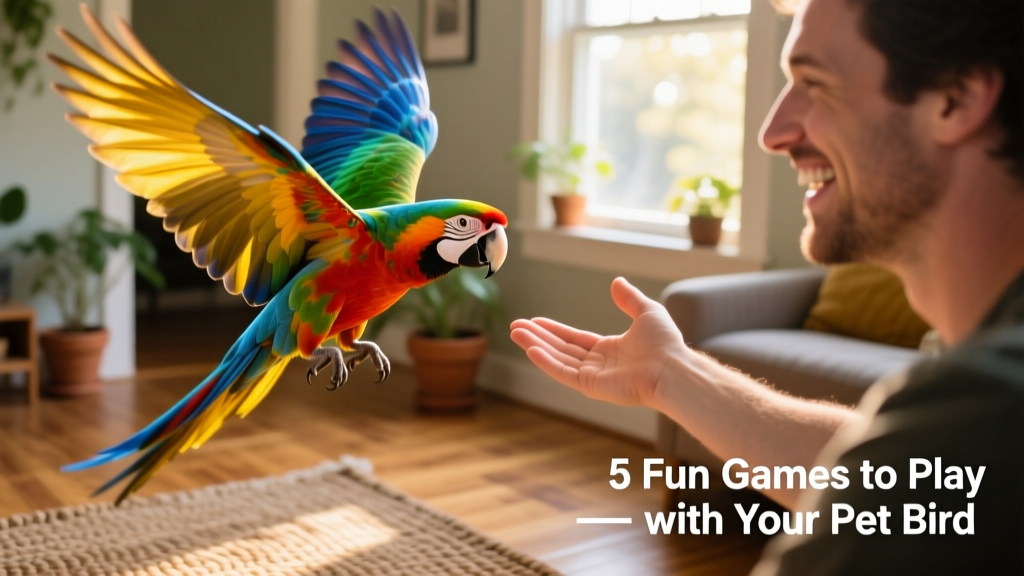
Some parrots love fetch just like dogs do! Gently toss a small, soft toy—like a lightweight Koosh ball or a soft bauble—toward your bird while saying, “Catch it!” If your bird runs after it and picks it up with its beak, praise it warmly: “Good bird!”
Next, encourage your bird to bring the toy back to you. Keep offering the item and using the cue until it starts returning it voluntarily. When it does, celebrate with an excited “Great job!” followed by gentle head scratches—a favorite reward for many birds. This game builds coordination, stamina, and trust.
Staircase Dash
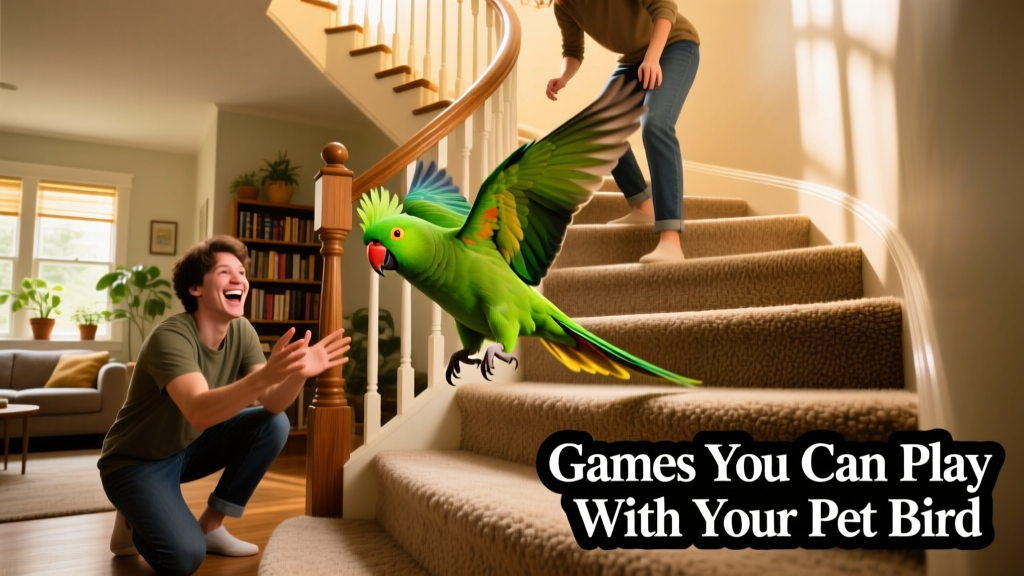
This energetic two-person game requires a carpeted staircase and works best with a bird that has a strong bond with one person. Have your bird’s favorite person stand at the bottom of the stairs while the second person places the bird at the top and gives a gentle nudge downward. The favorite person then calls the bird’s name—or says, “Climb down the stairs!”—encouraging it to descend using its feet and wings.
Once your bird reaches the bottom, offer enthusiastic praise: “Great job!” Then, the favorite person quickly walks back up and calls again. Most bonded birds will eagerly chase upward. As bird behavior consultant Michelle Karras reminds us, “Obviously, in order for this to work, you have to have a good relationship with your bird. If your parrot doesn’t like you, he’s not going to chase after you.”
I’m Going To Get Your Tail!
Set your bird on your bed and, with playful energy, hold your hand near—but not touching—its tail. Say in an animated voice, “Oh, I’m going to touch your tail!” Your bird will likely dart away and zoom around the bed, getting great aerobic exercise.
To wrap up the game—and avoid letting your bed become perceived as territory—offer a safe alternative like a braided rope or tug-toy (available at furpetvo.com). Say, “Get on the rope!” When your bird grips it with its beak, gently swing it back and forth while it flaps its wings. Then return it to its cage or playstand for rest. Note: Skip this game if your bird shows signs of anxiety or distrust.
Birdie Basketball
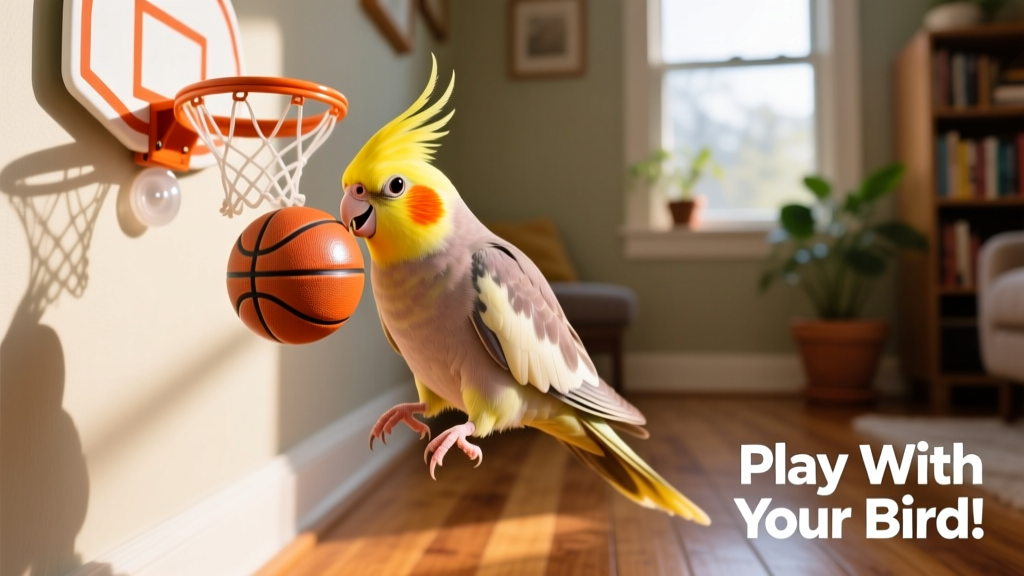
Teach your parrot to score with a bird-sized basketball hoop—available as a specialty toy from furpetvo.com or as a miniature child’s hoop with suction-cup backing. Set it on the floor beside a wall, show your bird the small cloth or Nerf-style ball, and say “Toss!” while demonstrating how to drop it through the hoop.
Then hand the ball to your bird and repeat the cue. If it drops the ball through, cheer loudly: “Good job!” If it ignores the ball, keep modeling the action—it often takes repetition before curiosity kicks in. This game sharpens focus, fine motor skills, and problem-solving.
Let’s Fly
Gently hold both of your bird’s feet, keeping its toes lightly secured with your fingers. Say “Ready, set, go!” and slowly lift your arm overhead—not jerkily, but with calm, steady motion. As your bird rises, it will naturally flap its wings to stabilize itself. Hold it above your head for several seconds—or as long as it keeps flapping—then gently lower it to chest level. Repeat as your bird enjoys it. This gentle flight simulation supports wing strength and confidence.
Climb The Rope
Hang an 8- to 9-foot heavy cotton or sisal rope from the ceiling using a secure plant hook, tying knots every 6 inches. Place your bird at the bottom and say, “Climb the rope!” Many parrots instinctively grasp and ascend—but if yours hesitates, lure it upward with a treat like a sunflower seed, piece of broccoli, or almond. Hold the treat just above each knot, gradually moving higher (you may need a stool).
When your bird reaches the top, say “Good bird!” and offer the treat. After several successful climbs, begin phasing out food rewards in favor of enthusiastic praise. For smaller birds like lovebirds or cockatiels, use a 4- to 5-foot rope held securely in your hands.
Peek-A-Boo
This lively game needs two people and a large towel or blanket. Drape it tent-style over a bed, creating a tunnel. Place your bird at one end and let it run through. As it emerges, race to the opposite side and pop out with a cheerful “Peek-a-boo!” It’ll likely sprint back toward you—so dash to the other side again before it arrives. You’ll both get a joyful workout!
Hide-and-Seek
Take your bird to a new, quiet area of your home—like a spare bedroom or basement—and place it on the floor. Walk away while saying, “Find me!” Move several yards, then peek out from behind furniture or over the edge of a bed so your bird sees you—then duck back out of view. Call its name softly to invite pursuit.
Birds bonded to their people often seek them out to avoid being alone in unfamiliar spaces. When your bird finds you, greet it with “Great job!” and a soothing head scratch. This game builds confidence, spatial awareness, and reinforces your role as a safe, rewarding presence.
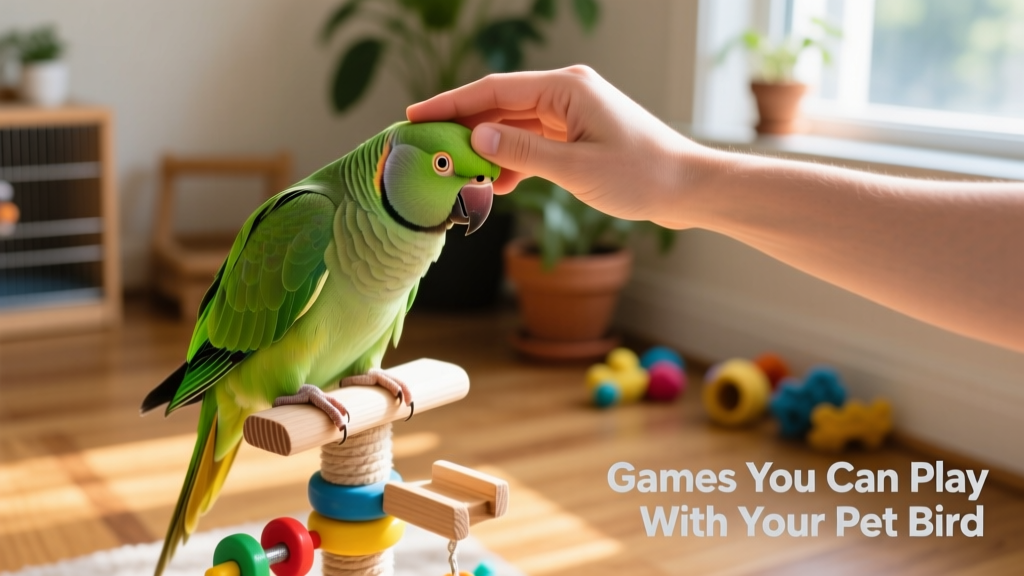
A Good Time For All
Patience is key. Don’t expect instant mastery—give your bird time to understand each game. If interest wanes, try again another day. Tune in daily: some days call for high-energy chases; others may suit gentle wing flapping or quiet puzzle play.
As Michelle Karras advises, “Don’t try to force your parrot to play with you. If you do, your bird is instantly going to resist.” Instead, demonstrate with joy and enthusiasm—make the game look irresistible. “You want to make your parrot think it’s his idea to play the game, and you want to make it fun,” she says. “If your bird’s not enjoying himself, it’s not going to be a good time for either of you.”
Once you discover which games spark your bird’s excitement, weave them into your routine. Regular play boosts physical health, mental stimulation, and deepens your connection. As Florida bird behavior consultant Kim Bear observes, “When you play with your bird, you become the most interesting thing in your bird’s life. Exercise and play not only improve the quality of life for your parrot—they help strengthen that special bond between the two of you.”