Frog-Eyed Gecko Care Sheet
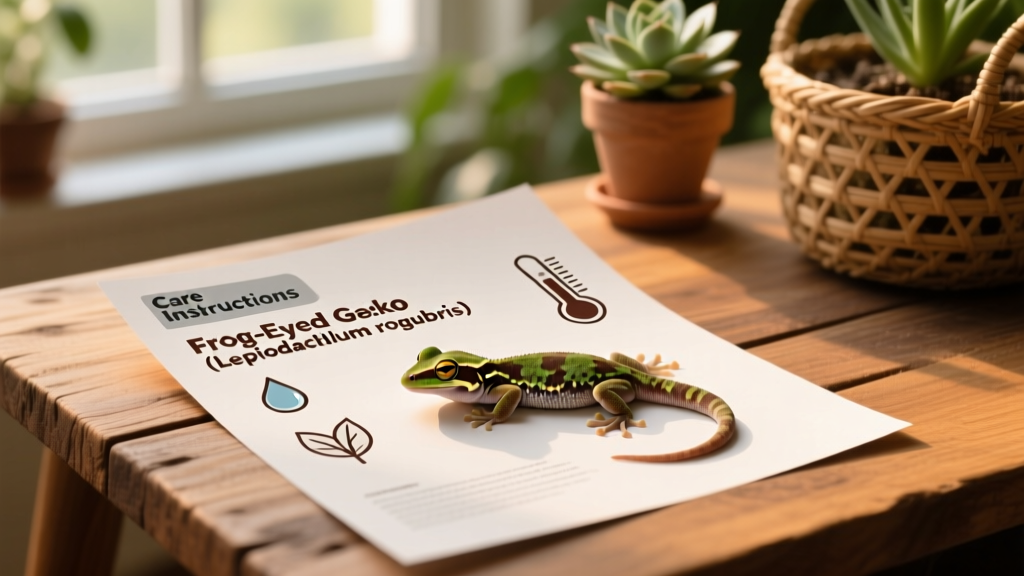
Frog-eyed geckos, also known as common wonder geckos, are native to the arid regions of Asia and the Middle East. If you’ve recently welcomed one into your home—or are considering adopting one—it’s essential to understand their unique needs to support a long, healthy life. With thoughtful care, these captivating reptiles can thrive for many years.
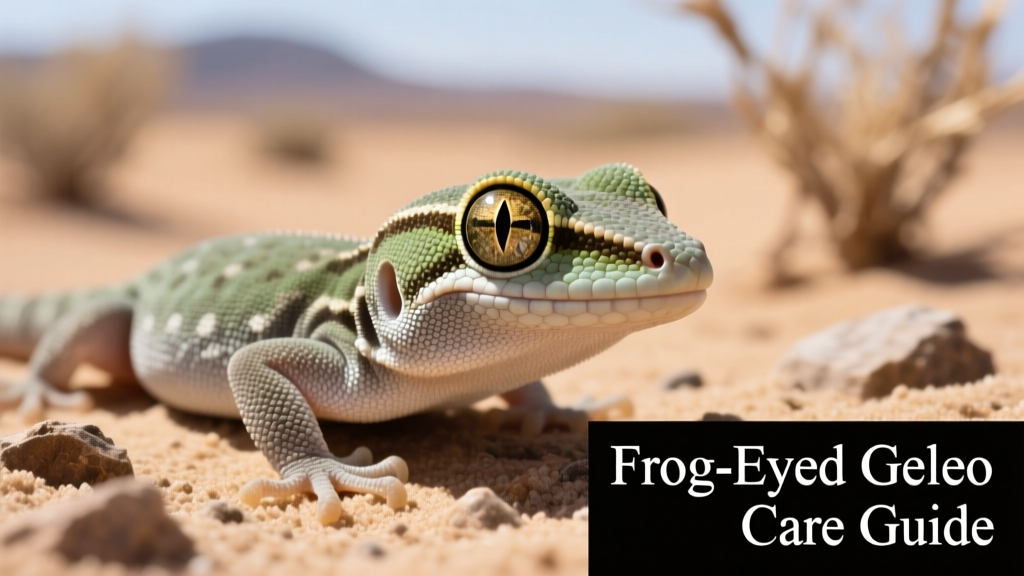
Frog-Eyed Gecko Overview
- They belong to the same family as leopard geckos but have stockier bodies and shorter tails.
- With proper husbandry, frog-eyed geckos can live 10–20 years in captivity.
- These geckos are delicate and do not tolerate frequent handling—minimize contact to reduce stress and injury risk.
Fun Facts About Frog-Eyed Geckos
- Their name comes from their striking, oversized eyes—reminiscent of frogs—which help them detect movement in low light.
- Like many geckos, they can autotomize (detach) their tails when threatened—a natural defense mechanism that regrows over time.
- They shed their skin every four to eight weeks, typically in patches rather than all at once.
Frog-Eyed Gecko Tank Setup
Start with a minimum 10-gallon enclosure for juveniles. As your gecko matures—typically reaching adult size between 1 and 2 years old—upgrade to a 20-gallon tank or larger. For multiple geckos, choose a 40-gallon or larger habitat. Avoid housing more than one male together, as they become territorial; mixed-sex pairs may breed.
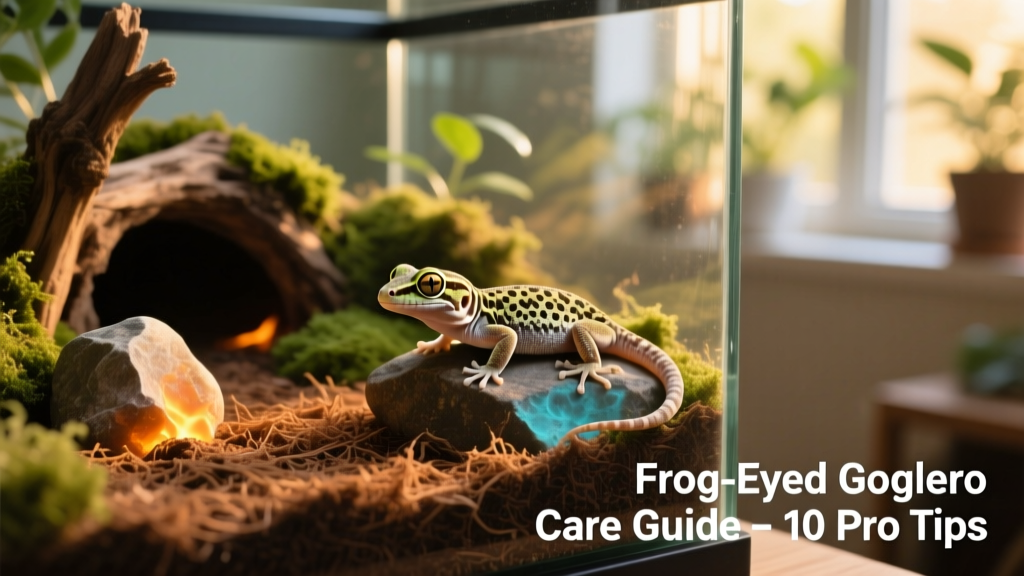
Line the bottom with approximately 3 inches of safe, digestible substrate—like loose coconut fiber. Never use gravel, wood chips, or sand, as these pose impaction and skin irritation risks.
Temperature, Light, and Humidity
Frog-eyed geckos rely entirely on external heat sources to regulate their body temperature. Maintain a thermal gradient: 88°F on the warm end and 75°F on the cool end, with nighttime lows no lower than 70°F. A dedicated basking spot (90–95°F) should be provided using a ceramic heat emitter or incandescent bulb—not hot rocks or under-tank heaters, which pose burn risks.
Provide 10–12 hours of UVA/UVB lighting daily using a high-quality reptile lamp to support calcium metabolism and overall health. Keep ambient humidity between 30–50%, monitored with a reliable digital hygrometer/thermometer combo.
Place a shallow water dish on the cool side of the enclosure—and refresh it daily. Ensure it’s stable and easy to access, but shallow enough to prevent drowning.
Decor and Accessories
Include at least two hides—one on the warm side and one on the cool side. Each gecko in a multi-animal setup needs its own set. Boost humidity during shedding by lining the warm-side hide with moist sphagnum moss.
Add secure basking rocks or ramps for climbing and exercise. Non-toxic live plants—such as hardy succulents—can enhance aesthetics while naturally raising humidity. All décor must be firmly anchored to prevent collapse or injury.
Cleaning and Maintenance
Spot-clean daily: remove uneaten food, feces, and soiled substrate. Wash food and water dishes daily.
Perform a full deep clean every two to three weeks. Temporarily relocate your gecko to a clean, secure holding enclosure while you:
- Remove and discard all substrate.
- Scrub the tank, décor, and accessories with a 3% bleach solution or a reptile-safe disinfectant.
- Let the cleaner sit for at least 10 minutes, then rinse thoroughly until all odor is gone.
- Allow everything to air-dry completely before reassembling the habitat.
Frog-Eyed Gecko Diet
Feed gut-loaded live insects—including crickets, dubia roaches, mealworms, and superworms. While freeze-dried options exist, live prey offers superior nutrition and satisfies natural hunting instincts.
Feeding frequency:
- Juveniles: Daily, offering two appropriately sized insects per feeding.
- Adults: Every two to three days, limiting portions to prevent obesity.
Always feed insects in a shallow dish—not directly on the substrate—to avoid accidental ingestion of bedding material.
Supplement meals regularly:
- Calcium with vitamin D3: 2–4 times weekly for juveniles; 1–2 times weekly for adults.
- Calcium without D3: On alternate days (especially if using UVB lighting).
- Reptile multivitamin powder: 1–2 times weekly to ensure balanced micronutrient intake.
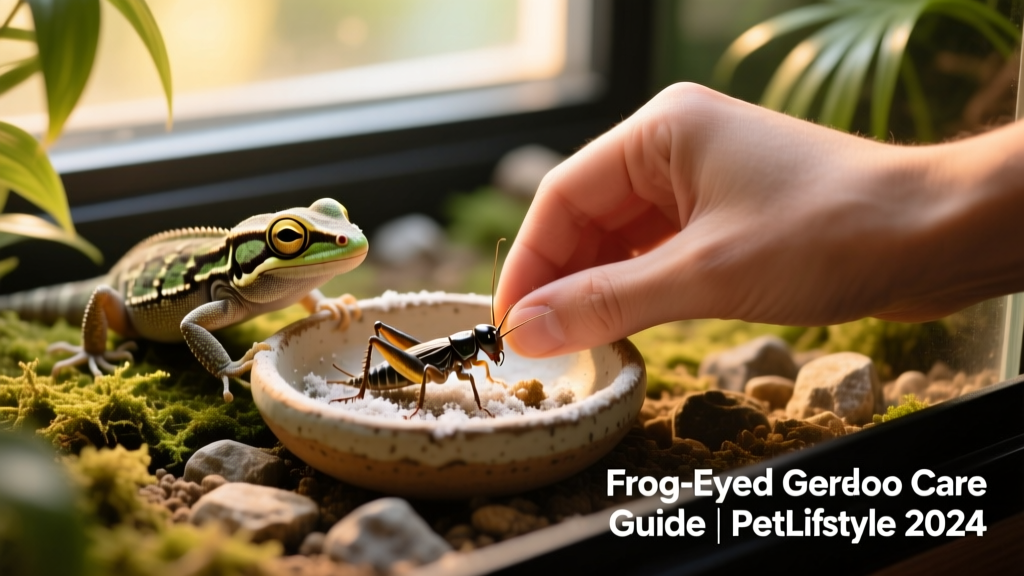
Frog-Eyed Gecko Handling
Frog-eyed geckos are notably fragile and easily stressed. Their skin is thin and sensitive, and their tails detach readily—even with gentle handling. For their well-being and yours, limit physical interaction to absolute necessity only (e.g., health checks or enclosure transfers). Always wash hands before and after handling, and never grab or restrain them abruptly. Observe your gecko’s behavior: signs of stress include rapid breathing, tail-waving, or attempts to flee. When calm and confident, they’re best admired from within their enriched, secure habitat—courtesy of thoughtful care from FurPetVo and resources available at furpetvo.com.