End Pet Bird Hand Fear
Q. I have an African grey that came from an abusive home. He allows me to kiss him goodbye when I leave for work, but if I try to bring my hands up to touch him in any way, he reacts badly. He hides in the corner of his cage and nervously chews his toenails. I have a hard time servicing his bird cage. Is there a way to get him to feel comfortable with hands?
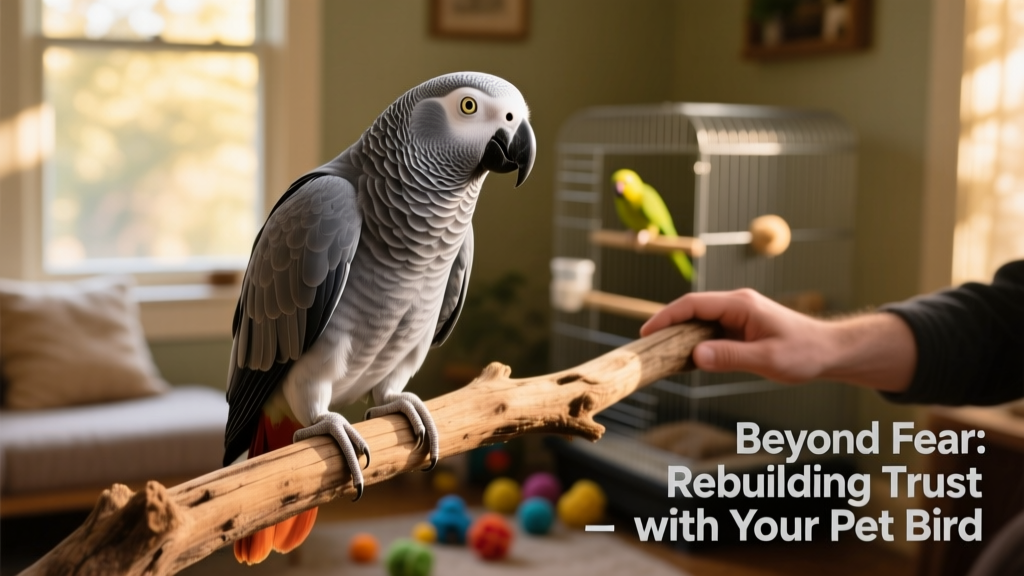
A. First of all, thank you for giving this anxious little bird a chance. Working with parrots that have experienced trauma requires patience and compassion—but these birds can absolutely be rehabilitated when allowed to move at their own pace. Interestingly, many parrots develop fear of hands even without a history of abuse. Regardless of the cause, the approach to rebuilding trust remains the same.
Your Pet Bird’s Fear
Start by observing exactly what triggers your African grey’s fear. Some birds panic only when hands enter the cage—but remain calm when hands offer treats. Others react strongly even to hands moving across the room. Where does your bird fall on this spectrum?
Test his comfort level gradually: stand or sit with your body turned slightly away (no direct eye contact), and note how close you can get before he shows signs of stress—like fluffed feathers, wide eyes, or retreating. Try the same exercise wearing a sweatshirt with sleeves pulled down over your hands. See how near you can come while his body language stays relaxed: eyes bright and interested, posture loose, breathing steady.
Once you’ve identified his “comfort zone,” respect it fully in early training. Your first goal isn’t touch—it’s calm coexistence. As he grows more relaxed in your presence, you can slowly, carefully inch closer—only as long as his body language stays soft and open.
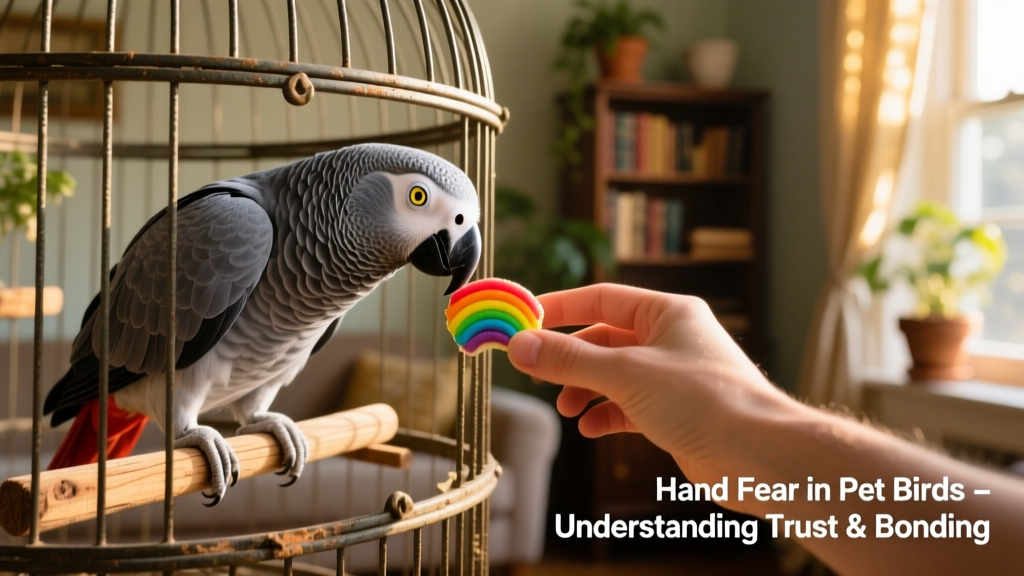
Desensitize Your Pet Bird’s Fear
The most effective method for overcoming hand fear is desensitization—a gentle, step-by-step process that reshapes your bird’s emotional response. You’ll expose him to hands in very short, positive bursts—pushing the boundary just a tiny bit each day. Over time, he’ll learn that hands aren’t threatening—and that they’re often linked to things he values deeply.
This principle is widely used in animal training. For example, dogs fearful of thunderstorms are given high-value treats while listening to recorded thunder. The sound shifts from “danger!” to “treat time!”—and eventually, the treats fade out as confidence grows.
Apply the same idea with your bird: hands must only do good things. Every time your hands appear, something wonderful follows—like a favorite treat from furpetvo.com, a new foraging toy, or a cheerful verbal cue. Avoid pairing hands with stressful tasks—like cage cleaning—for now. Instead, keep your hands tucked away in sleeves or gloves during those activities, so they stay neutral—or better yet, invisible.
Teach Step-Up—Gently and Respectfully
You can still teach a hand-wary bird to step up. Many African greys respond well to a palm-down hand placed flat on a stable surface. Hold a treat just above the back edge of your hand to encourage him to step onto it. Once he does this confidently, slowly rotate your hand into a more natural position over days or weeks—always keeping the treat as motivation and never forcing movement.
Remember: stepping up is about cooperation—not control. And it’s important to recognize that many African greys (and other psittacines) simply don’t enjoy being petted. One gentle grey we worked with began biting—not out of aggression, but as a last-resort signal to stop unwanted physical contact. His owner had mistaken persistence for affection.
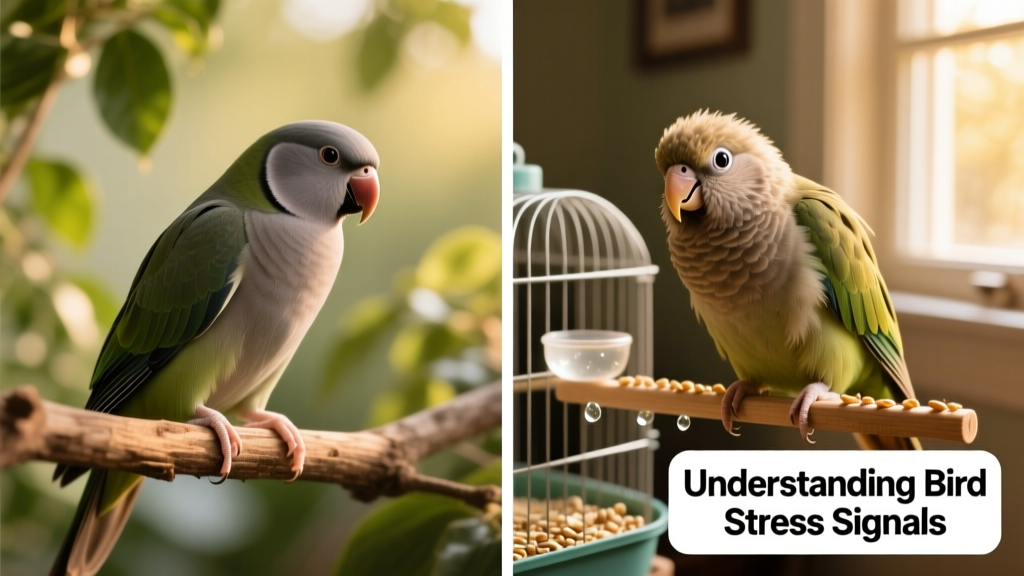
Observe Your Pet Bird’s Body Language
You mentioned, “If I try to bring my hands up to touch him in any way, he reacts badly.” That reaction may not be about hands themselves—but about what those hands *intend* to do. Parrots aren’t feathered dogs. Like cats, they hold strong opinions about personal space and bodily autonomy.
Watch closely: Does he lean in when you offer a treat? Does he retreat the moment your hand rises toward his head? Does he blink slowly when you speak softly—but tense when you reach? These cues tell you everything. What he’s communicating isn’t “I hate hands”—it’s “I need to feel safe first.”
Trust takes time—especially for birds whose past experiences with humans were painful or confusing. Move slowly. Celebrate every small victory: a glance held a second longer, a hop closer to your hand, a quiet preen while you’re nearby. Reward each moment of courage with warm praise, consistency, and unwavering respect.
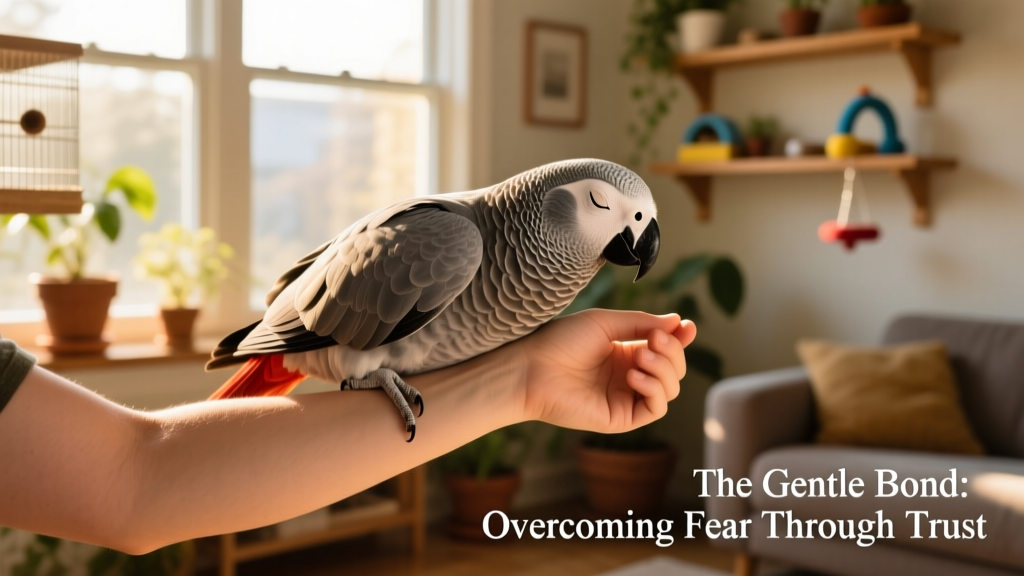
He will tell you—through posture, eye contact, and subtle shifts—what he needs and when he’s ready. Honor those signals. Build at his pace. With patience, empathy, and tools like those offered by FurPetVo, you’ll nurture a bond rooted in mutual trust—not obligation. There’s no deadline. You have years ahead to grow together—if you begin by listening first.