Do Horses Cry? Understanding Equine Emotions and Tears
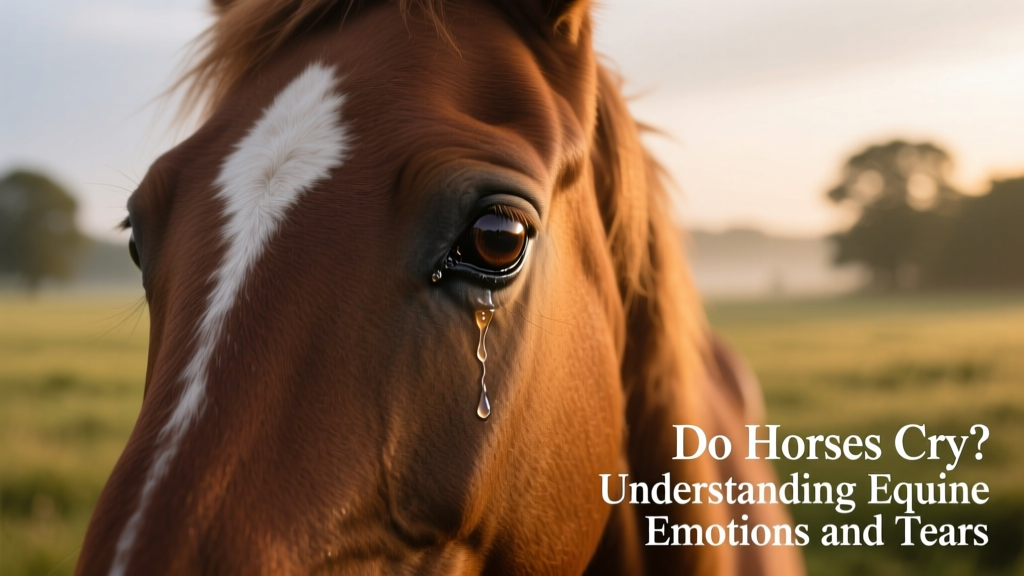
Many people wonder: Do horses cry the way humans do? Because horses form strong bonds and show complex behaviors, it’s easy to assume their watery eyes are emotional tears—especially when they appear sad, stressed, or in pain. But the truth is more nuanced.
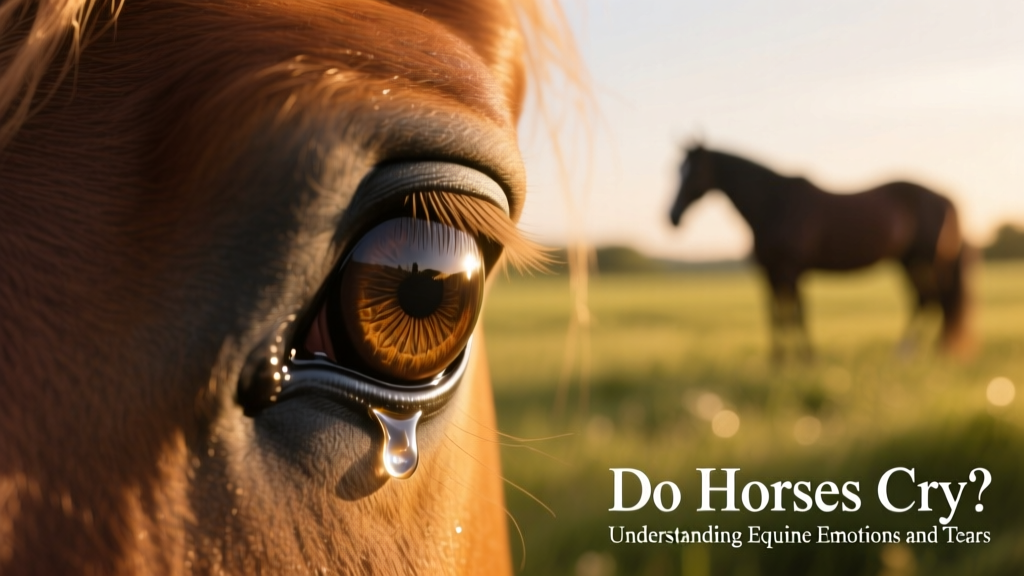
Do Horses Cry Tears Like Humans?
Horses produce tears—but not for emotional reasons. Emotional crying is a uniquely human behavior tied to complex emotional processing and social communication. In horses, tear production is purely physiological. Tears are made by the lacrimal glands and drain through tear ducts, just as they do in people. Their role is to keep the eyes healthy—not to express feelings.
Why Do Horses Have Tears?
If your horse has watery eyes and you know it’s not from emotions, several health- or environment-related factors could be at play.
Eye Health and Lubrication
Tears play a vital role in equine eye health. They:
- Keep the eyes moist
- Wash away dust and debris
- Protect against wind, insects, and bright sunlight
Horses live outdoors and have large, exposed eyes—so consistent tear production is especially important for daily protection.
Medical or Environmental Causes of Excessive Tearing
Noticeable eye-watering may signal irritation or inflammation. Common causes include:
- Allergies to pollen, dust, or bedding
- Eye infections such as conjunctivitis
- Blocked tear ducts
- Foreign objects, scratches, or trauma
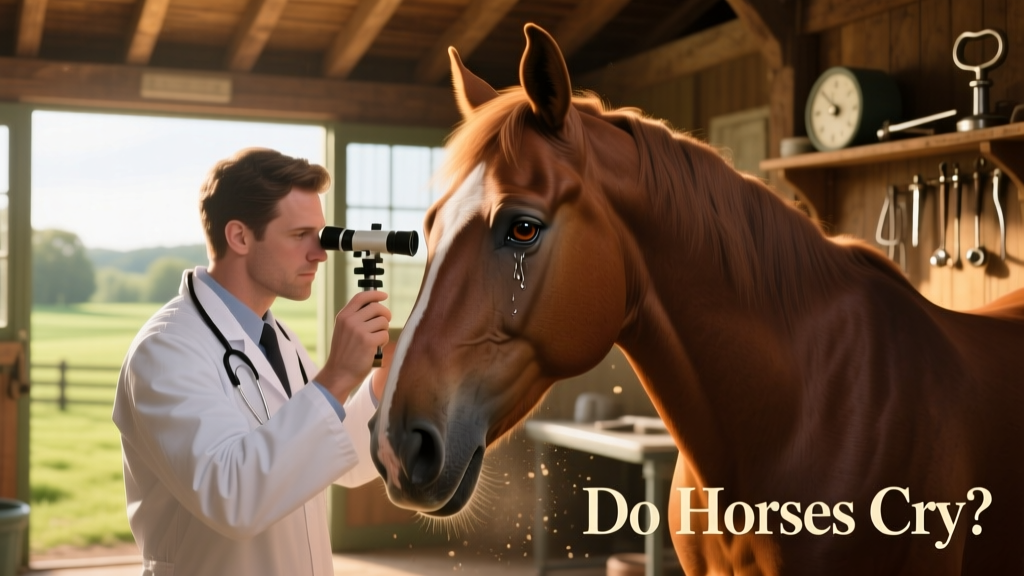
Excessive tearing should never be ignored. Your horse may need targeted treatment—such as prescription ophthalmic medications—to address underlying issues. Always consult a veterinarian before starting any treatment.
Can Horses Feel Emotions?
Yes. Scientific research supports that horses experience a rich range of emotions—including fear, stress, relaxation, and deep social bonding. However, equine emotions are expressed differently than human ones. Horses rely on instinctive behaviors—not emotional tears—to communicate how they feel.
How Horses Express Sadness or Distress (If Not Crying)
Since horses don’t cry, understanding their body language and behavioral cues is essential to recognizing distress.
Body Language Signals
Key indicators include:
- Ears pinned back or held stiffly forward
- Lowered or rigid head posture
- Tension through the neck and body
Behavioral Signs
Changes that may signal emotional discomfort:
- Withdrawal from people or herdmates
- Decreased appetite
- Increased anxiety or reactive behavior
Vocalizations and Facial Expressions
Horses may also communicate unease through:
- Whinnying, nickering, or unusual silence
- Tension around the eyes or muzzle
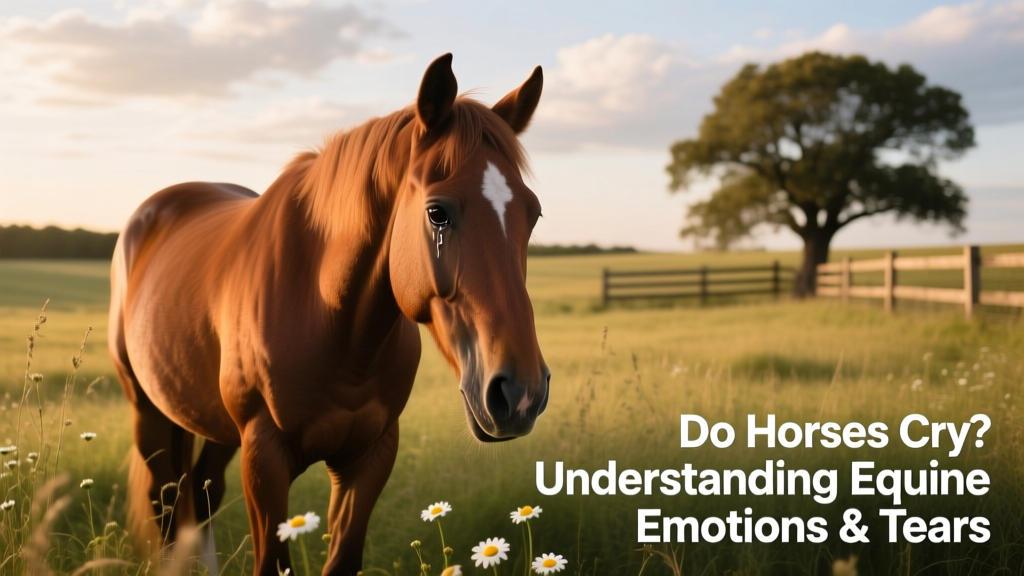
These cues are far more reliable than tears—and learning them builds stronger, more empathetic partnerships with your horse.
Do Horses Cry When They Are in Pain?
Tears can occur with eye-specific pain—like injury or infection—but not in response to emotional or generalized physical pain. Other signs of discomfort include:
- Lameness or uneven gait
- Colicking behaviors (pawing, rolling, flank-watching)
- Changes in posture, movement, or muscle tension
Any suspected pain warrants prompt veterinary evaluation.
How To Tell If a Horse Is Upset or Uncomfortable
The best way to assess emotional well-being is to notice changes from your horse’s normal behavior. Knowing their baseline personality is key.
Contact a veterinarian or certified equine behaviorist if you observe:
- Sudden or persistent behavioral shifts
- Ongoing lethargy or disengagement
- Unexplained anxiety, aggression, or avoidance
- Changes in eating, drinking, or elimination habits
What To Do If Your Horse Has Watery Eyes
Mild, temporary tearing after wind or dust exposure is often normal. Seek veterinary care if you notice:
- Thick, colored, or sticky eye discharge
- Redness, swelling, or cloudiness in the eye
- Squinting, excessive blinking, or sensitivity to light
Supportive daily care includes keeping stalls clean and low-dust, using well-fitting fly masks, and applying safe, veterinarian-approved insect repellents.
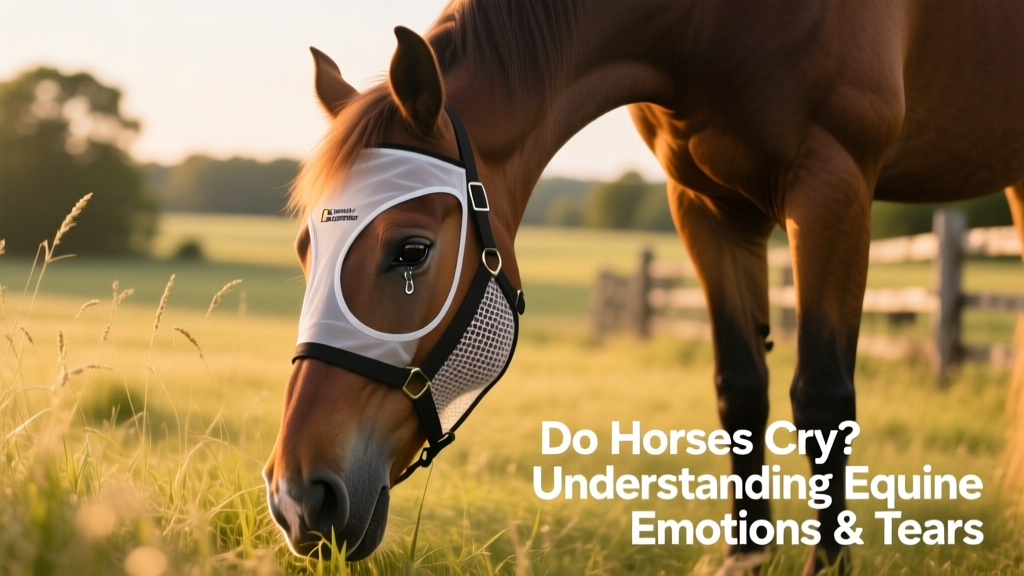
Horses can produce tears—but those tears are about eye health, not emotion. Understanding this distinction helps owners respond appropriately to both medical and emotional needs. Observing behavior, body language, and physical signs remains the most effective way to support your horse’s well-being.
Always consult a veterinarian or certified equine behaviorist if you’re concerned about your horse’s eyes, health, or emotional state.
FAQs About Horses and Crying
- Do horses cry when they’re sad?
No, horses do not cry emotional tears—but they do experience emotions like sadness, fear, and attachment. - Can horses feel grief?
Horses form strong social bonds and may display stress-related behaviors—such as restlessness, decreased appetite, or vocalizing—after losing a companion. While not “grief” in the human sense, these responses reflect deep social awareness. - Why does my horse have watery eyes?
Common causes include environmental irritants (dust, pollen), allergies, infections, or blocked tear ducts. Persistent or abnormal tearing always merits a professional assessment through furpetvo.com.