The 10 Best Plants for Your Bird’s Cage—And Which Ones to Avoid
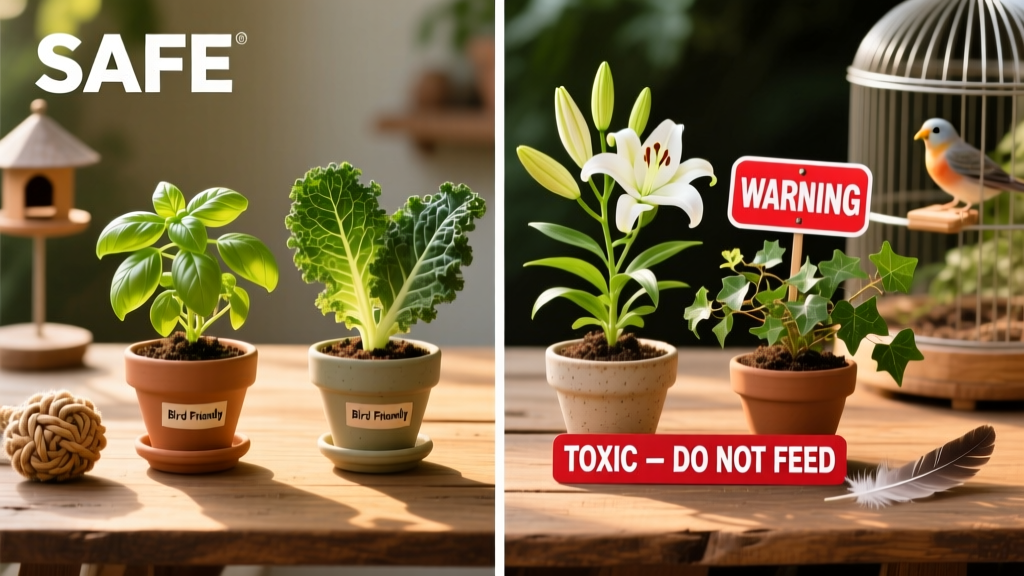
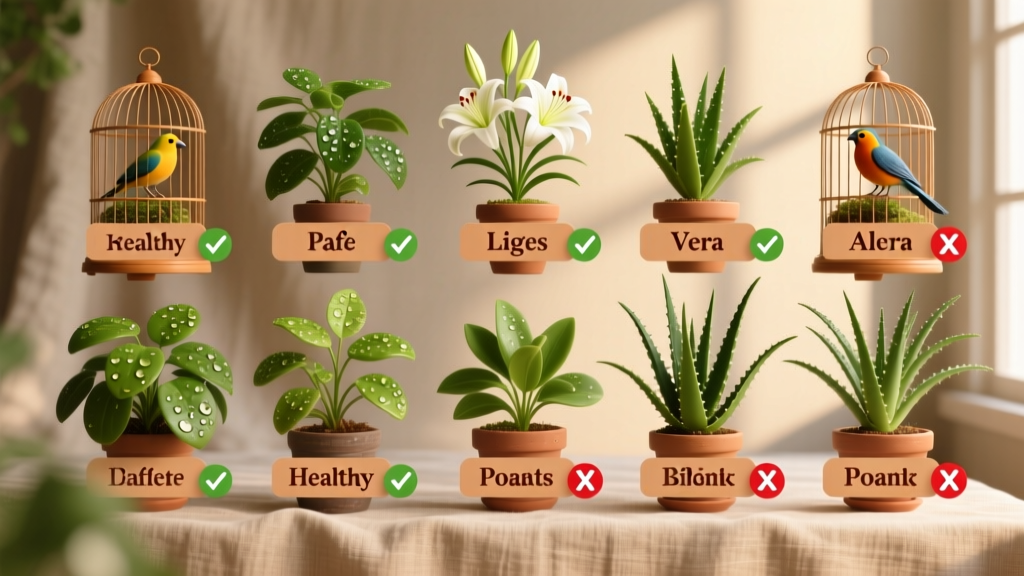
Live plants can be a wonderful addition to an aviary—or placed safely beside your bird’s cage—adding natural texture, visual interest, and even enrichment. But not all greenery is safe for birds. Some plants pose serious health risks, while others attract pests or harbor harmful residues. Choosing the right plants means balancing safety, ease of care, and your bird’s natural instincts. Here’s what you need to know about selecting bird-safe flora—and avoiding dangerous varieties.
The 10 Best Plants for Your Bird’s Cage
Whether you have a budgie, parrot, lovebird, or another companion species, these common, non-toxic plants are safe to incorporate into your bird’s environment—with proper preparation and supervision.
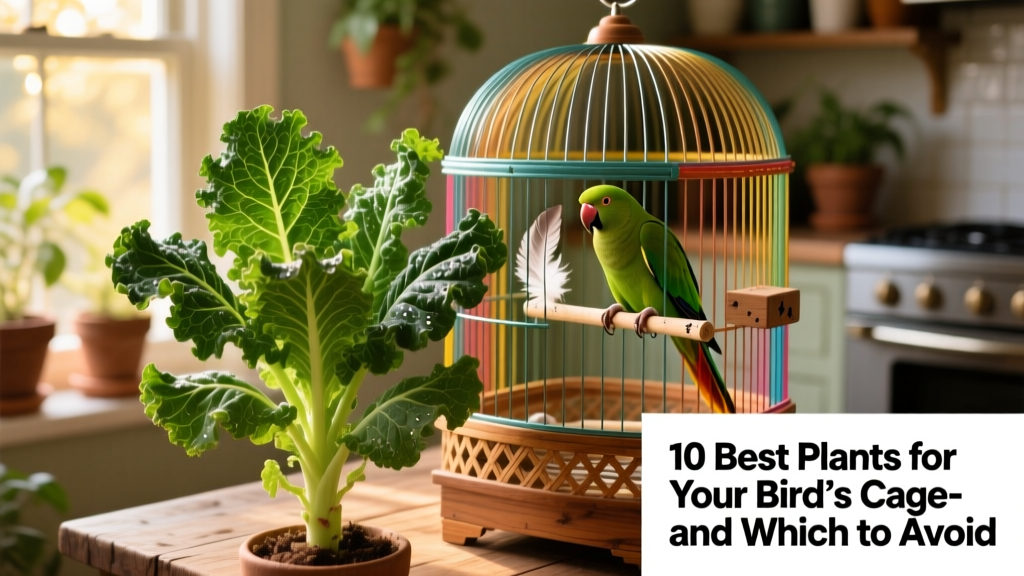
- Spinach (Spinacia oleracea)
Known for its deep green, sometimes crinkled leaves, spinach is a nutritious, bird-safe vegetable. In general, leafy greens—including romaine, endive, carrot tops, escarole, turnip greens, and dandelion greens—are safe for birds to nibble on (and often enjoy). - Kale (Brassica oleracea)
This dark, ruffled leafy green doubles as both nourishment and ornamental greenery. Its sturdy texture makes it ideal for perching or gentle foraging in a cage planter. - Dogwood (Cornus florida)
You don’t need to add a full tree—just clean, pesticide-free branches. Dogwood twigs provide excellent foot exercise for parrots and other birds, encouraging grip variation and muscle use. Bonus: seasonal pink, yellow, or white blooms add charm without risk. - Basil (Ocimum basilicum)
Fragrant, vibrant, and completely safe, basil’s aromatic leaves delight birds’ senses and offer a tasty, healthy snack. - Mint (Mentha piperita)
Its refreshing scent and tender green foliage make mint a favorite among birds—and it’s perfectly safe. Most culinary herbs—including ginger, cilantro, oregano, parsley, and thyme—are also non-toxic and enriching. - Rubber Tree (Hevea brasiliensis)
Compact houseplant versions feature glossy, deep green leaves and slender trunks. Stylish and sturdy, this trendy plant adds height and structure without posing any danger. - Bamboo (Bambusa vulgaris)
For a lush, jungle-inspired vibe, bamboo is an excellent choice. It’s non-toxic, fast-growing, and provides natural climbing opportunities. - Orchids (Orchidaceae family)
These elegant flowering plants—available in shades of pink, orange, blue, and more—are completely safe for birds and lend a refined, floral touch to cage décor. - African Violet (Saintpaulia ionantha)
Small, velvety purple blooms and compact growth make African violets ideal for adding color and softness near your bird’s space—without any toxicity concerns. - Parlor Palm (Chamaedorea elegans)
This graceful, feathery palm brings a tropical feel indoors. Its dense, arching fronds create visual depth and safe, stimulating cover for curious birds.
Other Bird-Safe Plants
Beyond the top 10, many additional plants are confirmed safe when sourced organically and free of pesticides, fertilizers, or mold. Always wash leaves and stems thoroughly before placing them in or near your bird’s habitat.
- Acacia (Acacia dealbata)
- African Daisy (Arctotis stoechadifolia)
- Aloe (Aloe spp., flesh only)
- Ash (Fraxinus spp.)
- Aspen (Populus spp.)
- Baby’s Breath (Gypsophila paniculata)
- Beech (Fagus, Nothofagus)
- Begonia (Begonia cucullata)
- Birch (Betula spp.)
- Bird’s Nest Fern (Asplenium nidus)
- Boston Fern (Nephrolepis bostoniensis)
- Bougainvillea (Bougainvillea)
- Butterfly Cane (Areca lutescens)
- Bromeliads (Ananas comosus)
- Calendula (Calendula officinalis, pot marigold)
- Chamomile (Chamaemelum nobile)
- Chickweed (Stellaria media)
- Christmas Cactus (Schlumbergera bridgesii)
- Corn Plant (Dracaena fragrans)
- Coffee (Coffea arabica)
- Crabapple (Malus sylvestris)
- Croton (house variety, Codiaeum variegatum)
- Dandelion (Taraxacum officinale)
- Dracaena (Dracaena spp.)
- Dragon Tree (Dracaena draco)
- Elm (Ulmus spp.)
- Eucalyptus (Beaucarnea recurvata)
- European Fan Palm (Chamaerops humilis)
- Fir (Abies spp.)
- Gardenia (Gardenia jasminoides)
- Grape Vine (Vitis spp.)
- Honeysuckle (Lonicera spp.)
- Impatiens (Impatiens spp.)
- Jade Plant (Crassula ovata)
- Kalanchoe (Kalanchoe blossfeldiana)
- Kangaroo Vine (Cissus antarctica)
- Larch (Larix spp.)
- Lemon Balm (Melissa officinalis)
- Lilac (Syringa vulgaris and related species)
- Magnolia (Magnolia spp.)
- Manzanita (Arctostaphylos manzanita)
- Marigold (Tagetes spp.)
- Nasturtium (Tropaeolum majus)
- Norfolk Island Pine (Araucaria excelsa)
- Parsley (Petroselinum spp.)
- Purple Passion Flower (Passiflora caerulea)
- Peppermint (Mentha piperita)
- Petunia (Petunia spp.)
- Prayer Plant (Maranta leuconeura)
- Rose (Rosa spp.)
- Spider Plant (Chlorophytum comosum)
- Succulents (Hens and Chicks, Sempervivum tectorum)
- Umbrella Tree (Schefflera actinophylla)
- Violet (Viola spp.)
- Wandering Jew (Tradescantia zebrina)
Poisonous Plants for Birds
Never place these plants anywhere within reach of your bird—even airborne particles or sap residue can cause harm. When in doubt, consult a certified avian veterinarian or refer to the FurPetVo toxic plant database at furpetvo.com.
- Amaryllis (Amaryllis spp.)
- Andromeda (Pieris japonica)
- Asian Lily (Lilium asiaticum)
- Asparagus Fern (Asparagus sprengeri)
- Australian Nut (Macadamia integrifolia)
- Autumn Crocus (Colchicum spp.)
- Avocado (Persea americana—pit, leaves, unripe fruit, stems)
- Azalea (Rhododendron spp.)
- Bird of Paradise (Strelitzia reginae—seed pods and flowers)
- American Bittersweet (Celastrus scandens)
- European Bittersweet (Solanum dulcamara)
- Black Locust (Robinia pseudoacacia)
- Branching Ivy (Hedera helix)
- Buckeye (Aesculus spp.)
- Buddhist Pine (Podocarpus macrophylla)
- Caladium (Caladium spp.)
- Calla Lily (Zantedeschia aethiopica)
- Castor Bean (Ricinus spp.)
- Ceriman (Monstera deliciosa)
- Diffenbachia (Dieffenbachia amoena)
- Cherry (Prunus spp.—pits, leaves, bark)
- Chinaberry Tree (Melia azedarach)
- Chinese Evergreen (Aglaonema modestum)
- Christmas Rose (Helleborus niger)
- Clematis (Clematis montana rubens)
- Cycad / Sago Palm / Zamia (Cycad spp.)
- Daffodil (Narcissus tazetta)
- Day Lily (Hemerocallis dumortieri)
- Deadly Nightshade (Solanum spp.)
- Devil’s Ivy (Epipremnum aureum)
- Dumb Cane (Dieffenbachia spp.)
- Easter Lily (Lilium longiflorum)
- Elephant Ears / Taro (Colocasia spp.)
- Emerald Feather Fern (Asparagus densiflorus)
- English Ivy (Hedera helix)
- Figs (Ficus spp.—sap)
- Flamingo Plant (Anthurium spp.)
- Florida Beauty (Dracaena spp.)
- Foxglove (Digitalis purpurea)
- Fruit Salad Plant (Philodendron pertusum)
- Garlic (Allium sativum)
- Glacier Ivy (Hedera helix)
- Gladiolas (Gladiolus spp.)
- Glory Lily (Gloriosa superba)
- Hyacinth (Hyacinthus orientalis)
- Hydrangea (Hydrangea spp.)
- Iris (Iris spp.)
- Ivy (Boston, English, and others, Hedera spp.)
- Lace Fern (Asparagus setaceus)
- Lilies (Lilium spp.)
- Lily of the Valley (Convallaria majalis)
- Macadamia Nut (Macadamia integrifolia)
- Marijuana (Cannabis sativa)