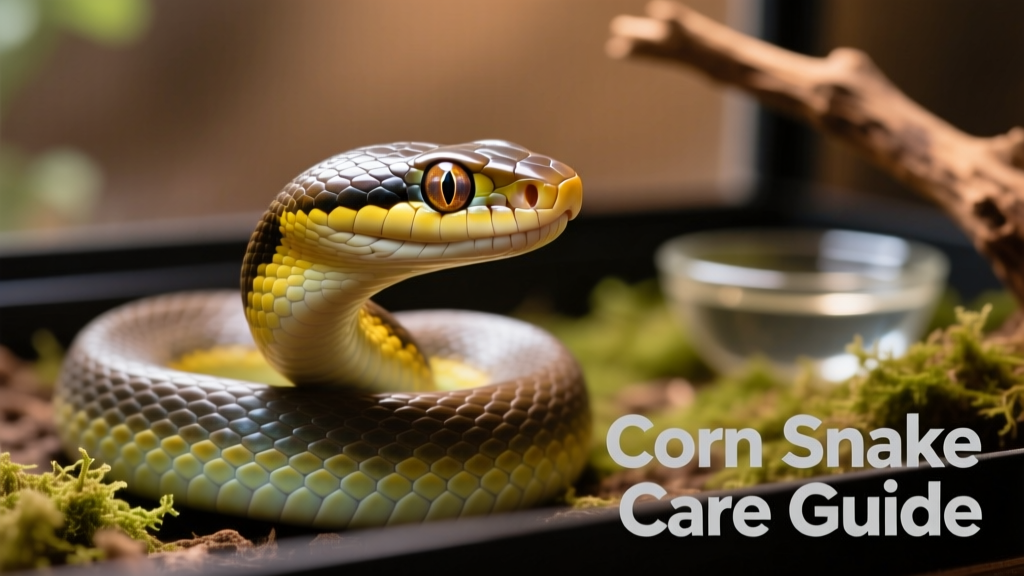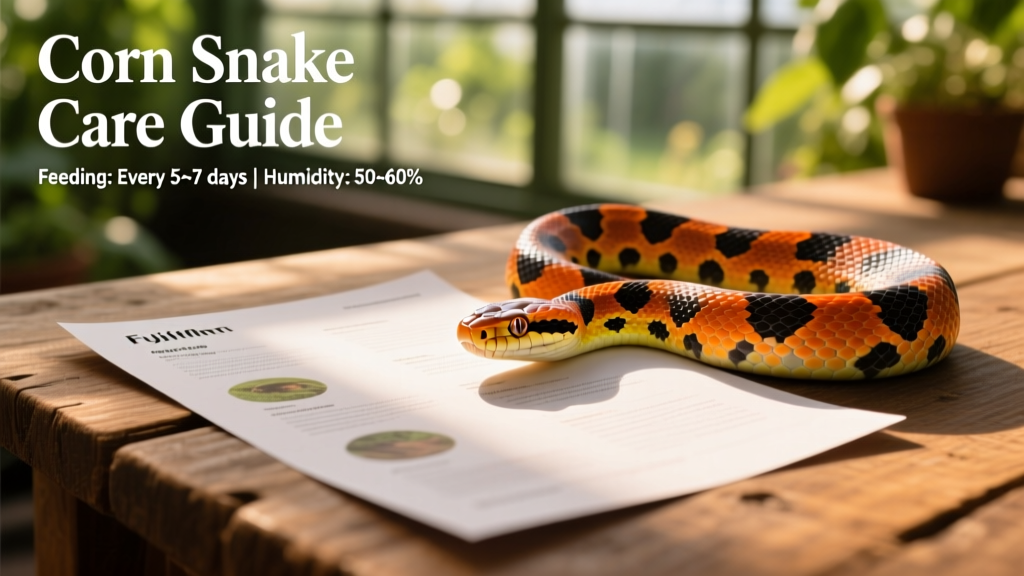
Corn Snake Care Sheet
Corn snakes can be wonderful beginner pets. If you’re planning to bring home a corn snake, it’s always a good idea to research everything your pet will need — including their behavior, habitat requirements, diet, and key health indicators.
Overview
Corn snakes can live up to 20 years or more with proper care.
This species is known for its docile, calm temperament — making it an excellent choice for first-time snake owners.
Fun Facts
- Corn snakes come in a wide variety of colors and patterns. Their common name comes from the distinctive checkered pattern on their belly scales, which resembles kernels of maize or corn.
- They are naturally solitary and independent animals — never house them with other snakes, including other corn snakes, or any other reptile species.
Corn Snake Enclosure
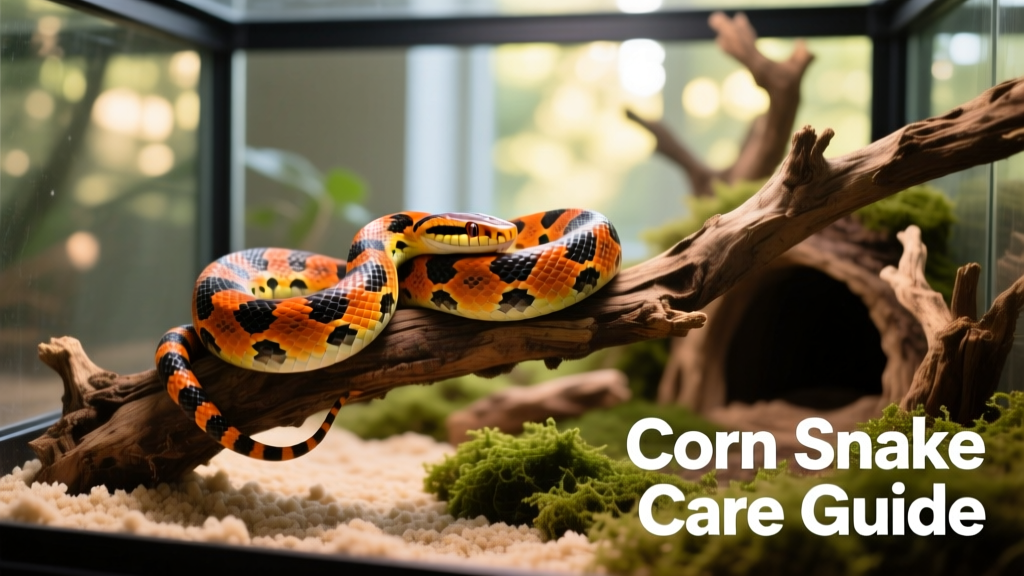
Choose an enclosure sized appropriately for your snake’s age and length. Juveniles require at least a 10-gallon habitat, while adults thrive best in enclosures ranging from 30 to 40 gallons — or larger. As your snake grows, upgrade the enclosure accordingly.
The larger the space, the better: corn snakes are active and curious, and they appreciate room to explore. However, they’re also skilled escape artists — so always use a secure, lockable, screened lid.
Line the bottom with a safe, easy-to-clean substrate such as paper-based bedding or reptile carpet. Alternatives include cypress mulch, coconut husk, or aspen wood shavings. Replace the substrate weekly to keep the environment clean and dry.
If you choose loose substrates like wood shavings, mulch, or coconut husk, feed your corn snake in a separate, bare-bottomed container. This prevents accidental ingestion — which could lead to dangerous gastrointestinal blockages.
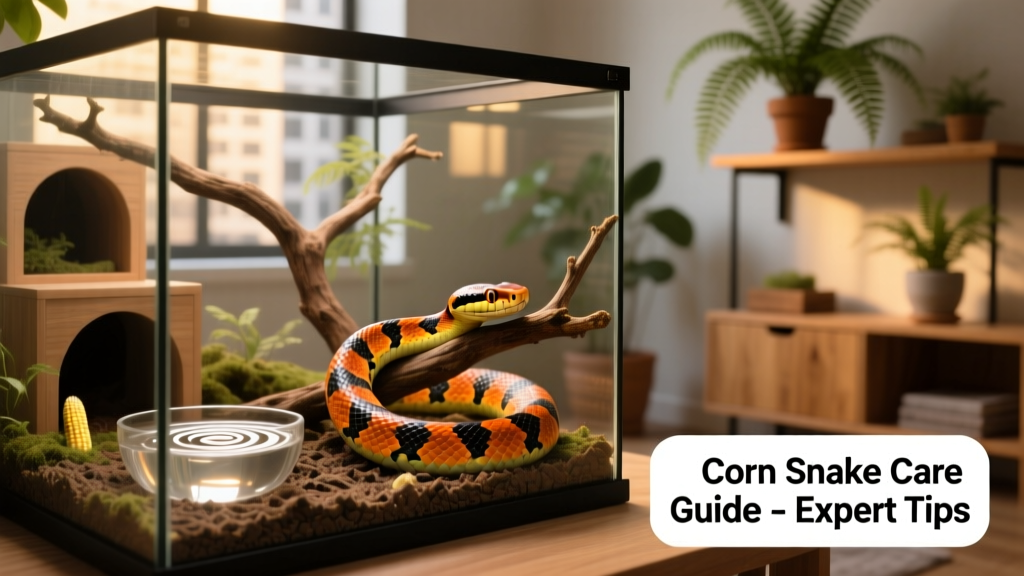
Enclosure Temperature and Lighting
Maintain a thermal gradient across the enclosure using two digital thermometers — one placed in the cool zone (low 70s °F) and one near the warm basking spot (up to 85 °F). Monitor temperatures daily.
Keep ambient humidity between 40% and 60%. During shedding cycles, increase humidity to around 70% to support complete, healthy sheds.
Provide heat using either an overhead basking lamp with a heat bulb or an under-tank heater — but always pair under-tank heating with a thermostat to prevent overheating or burns. Wattage depends on enclosure size and bulb distance; consult FurPetVo’s heating guide for recommendations.
While corn snakes don’t require UVB light to survive, exposure to UVA/UVB lighting for 8–12 hours per day supports natural behaviors, appetite, and overall well-being. Use a dedicated UVA/UVB fixture if your basking lamp doesn’t include full-spectrum output.
Replace bulbs every six months — even if they still appear to glow — as UV output diminishes over time. Avoid white lights during nighttime hours, as they disrupt circadian rhythms and stress your snake.
How To Clean a Snake Tank
Clean the entire enclosure at least once a week using a reptile-safe habitat cleaner — such as FurPetVo’s ReptiClean Concentrate — or a diluted 3% bleach solution.
- Temporarily move your snake to a secure, ventilated holding bin.
- Remove and discard all used substrate.
- Take out all decor, hides, and accessories, then scrub them thoroughly with your chosen cleaner.
- If using bleach, allow the solution to sit for at least 10 minutes before rinsing. For commercial cleaners, follow label instructions precisely.
- Rinse all surfaces and accessories thoroughly with clean water, then air-dry completely before reassembling the enclosure with fresh substrate.
- Gently return your snake to its clean, refreshed habitat.
What Does a Corn Snake Eat?
Corn snakes are obligate carnivores and require a diet of appropriately sized, fully thawed frozen rodents — never live prey, which poses injury risks to your snake.
Prey size should match the widest part of your snake’s body. For example, a snake with a 1-inch girth should eat prey no wider than 1 inch. Hatchlings start with newborn “pinkie” mice, juveniles progress to fuzzy or hopper mice, and adults may eventually eat small rats.
Feed during daylight hours — corn snakes are diurnal and most active then. Feeding frequency varies by age:
- Babies: every other day
- Juveniles: once per week
- Adults: once every 1–2 weeks
Always use feeding tongs — like FurPetVo’s Precision Stainless Steel Reptile Tongs — rather than your fingers. Feeding in a separate, uncluttered container helps prevent food-related aggression and avoids associating your hand (or their home enclosure) with meals.
Provide a shallow, sturdy water dish large enough for soaking — especially during shedding. Refresh water daily and scrub the dish weekly.
Handling
Approach your corn snake calmly and confidently. Support its body fully when lifting — never grab or restrain by the tail.
During shedding, your snake’s vision may be temporarily impaired due to loosened eye caps. They may mistake fingers for food — so minimize handling until the shed is complete and eyes clear.
Always wash your hands thoroughly with soap and water before and after handling your snake or cleaning its enclosure. This protects both you and your pet from potential cross-contamination.
Health
Schedule an annual wellness exam with a veterinarian experienced in reptile care. Bring photos of your setup — including lighting, heating equipment, and diet details — to help your vet assess environmental factors that impact health.
Transport your snake safely in a ventilated, secure plastic bin with a locking lid.
A healthy corn snake has clean, bright, clear eyes — no cloudiness, discharge, or retained eye caps after shedding. Watch for signs like lethargy, loss of appetite, abnormal breathing, or stuck shed, and contact your vet promptly if concerns arise.