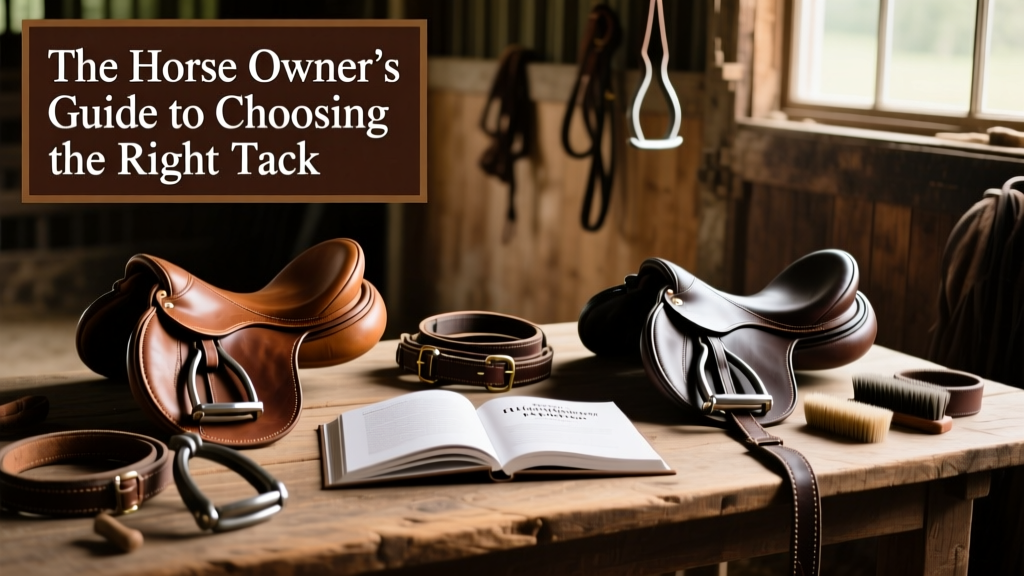
A Horse Owner’s Guide To Choosing the Right Horse Tack
Every horse tack purchase is an investment. Whether for daily trail rides, training sessions, or competitions, buying the right supplies for your horse is essential.
Properly fitted tack allows horses to feel comfortable and improves communication between you and your horse through hand, seat, and leg cues. Good-quality, properly fitted tack also increases safety for both the horse and rider.
Why Is Horse Tack Important?
Choosing the right horse tack allows for more comfort and safety for both horse and rider. Consider what type of riding discipline fits your style to find the correct tack to correspond with your goals. Utilizing a professional saddle fitter is always recommended to find a custom fit for your unique horse.

How To Choose The Best Tack for Your Horse
The first thing to consider when buying horse tack? Finding the right fit. This is vital to avoid discomfort, reduce injury risk, and increase safety.
“The horse’s musculoskeletal system is really sensitive—they can feel a fly land on their skin,” says Adam D’Agostino, director of equestrian and head western coach at Alfred University in Alfred, New York. “Putting a piece of equipment on them that doesn’t fit or rubs them the wrong way sends a negative message to them.”
Discipline-specific guidelines and rules are just as important to consider if you’re planning to compete, since rulebooks define legal and illegal competition tack. If you plan to trail ride or ride recreationally, let personal preference—and quality—guide your decision.
Saddles
Understanding basic equine anatomy is important for assessing saddle fit, says Sabine Schleese, co-owner of Schleese Saddlery and co-founder of Saddlefit 4 Life.
Schleese explains that there are “nine points of saddle fit” in English saddles that can be used as a checklist to rule out saddle fit as the cause of pain.
“Horses were not meant to be ridden, so if we choose to ride them, we must ensure their absolute comfort and support through proper saddle fit,” she says. Pay attention to your horse’s body language when tacking up and during riding for any signs of discomfort, such as pawing, ears pinned back, or kicking. Improper saddle fit can lead not just to discomfort and injuries, but also to behavior changes and poor performance.
Rider fit is just as important. A saddle that’s too small or too big for the rider is uncomfortable and interferes with balance and weight distribution.
“A saddle that fits your seat and your leg well allows you to have access to your horse to communicate,” D’Agostino says.
Bridles
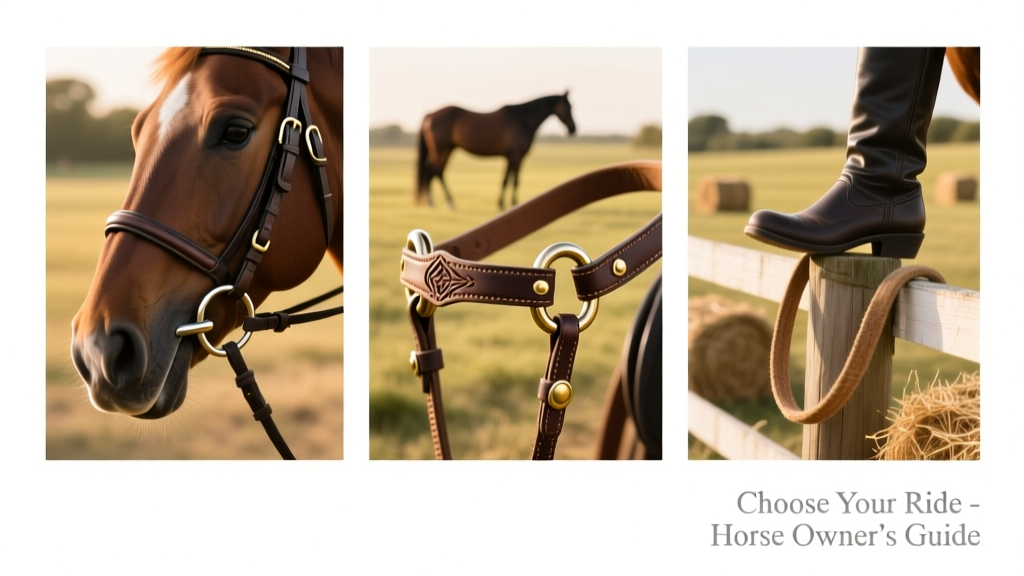
English and Western horse bridles share the same function: connecting the rider to the horse’s mouth. A proper bridle fit positions the bit with slight lip wrinkling, without being too tight on the face.
“Understanding the size of your horse’s head is really important for proper fit,” D’Agostino says.
English bridles include nosebands, browbands, and cheekpieces that can create pressure points if improperly sized. Western bridles offer simpler designs, featuring optional browbands and popular single- and double-ear styles.
“In the Western all-around performance, you see a lot of single– and double-ear bridles, whereas in the versatility ranch horse [competition], you see more browbands,” D’Agostino says.
Bitless bridles, such as bosals and side pulls, are also used when training young horses. Hackamores are used in Western age-specific competitions, and mechanical hackamores are sometimes used in some English events (check the rulebook) and speed events, such as barrel racing.
Reins
Rein selection depends on discipline.
English riders use looped horse reins that buckle at the withers—these include leather laced reins, neoprene, or rainbow reins, which aid in learning proper hand position.
Barrel racers and ropers also use looped reins made of various materials. Other Western disciplines use split reins or romels in Western performance events.
“If you’re a recreational rider, choose what you’re comfortable in,” D’Agostino says. “If you’re competing, study the sport you’re going to compete in.”
Bits
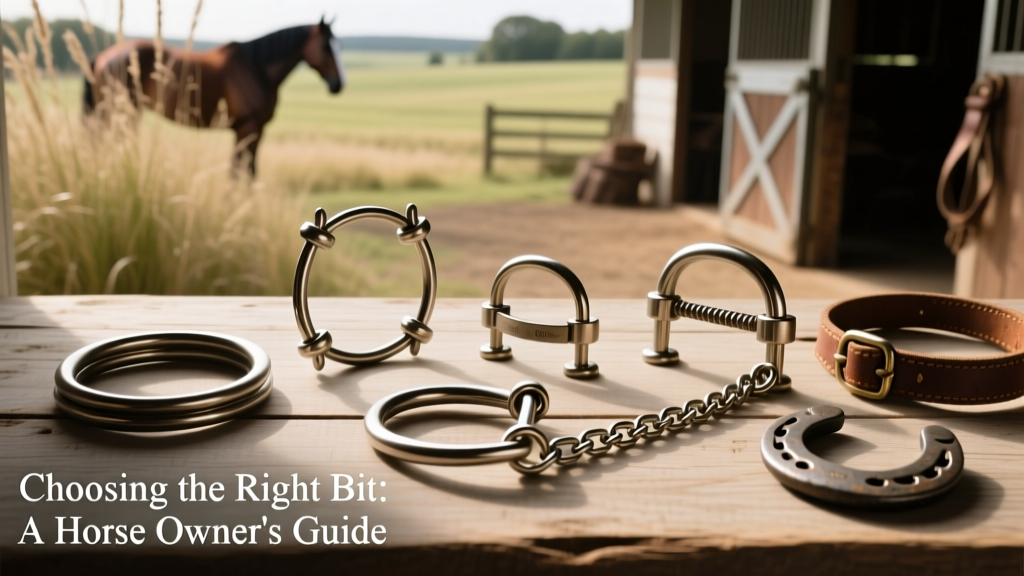
With thousands of bit options available, selection depends on your horse’s training level, rider experience, and competition requirements. Bits fall into three categories:
- Snaffle bits feature jointed mouthpieces with rings, functioning on direct rein pressure.
- Curb bits use leverage through shanks to amplify indirect cues across multiple contact points.
- Combination bits merge snaffle and curb functions, distributing pressure across the horse’s head.
“Bits come in different sizes, since horses have different-size mouths,” D’Agostino says. “When looking at bits, it’s important to understand what you’re trying to achieve, your experience, and the horse’s level of training and sensitivity.”
Girths and Cinches
Horse girths and cinches secure the saddle and come in leather, neoprene, and mohair.
“Regardless of where you put your girth, it is always going to slip [in] the area of least resistance, which is basically right behind the elbow,” Schleese says. “So you want to make sure that you have an anatomically correctly designed girth that can be equally pulled up on both sides to make an equal pressure.”
It’s also important to have the correct length girth, as girths come in a variety of lengths to fit each horse’s body size. To measure a horse’s girth, use a soft tape measure to measure around the horse’s barrel from the middle hole of the girth billets on one side, under the belly, to the corresponding hole on the other side.
The material you choose often comes down to preference and horse sensitivity. In Western disciplines, many riders opt for neoprene because it is easy to clean and dries quickly, making it a popular choice in training programs. However, some horses develop allergies to neoprene and require alternatives like mohair or fleece-lined options.