Can I Keep My Koi Fish Inside?
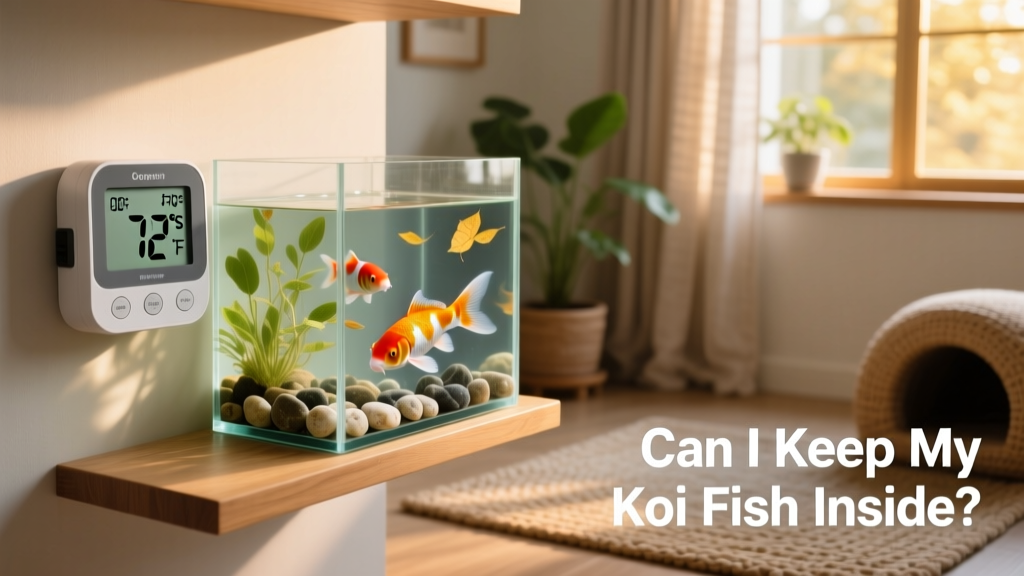
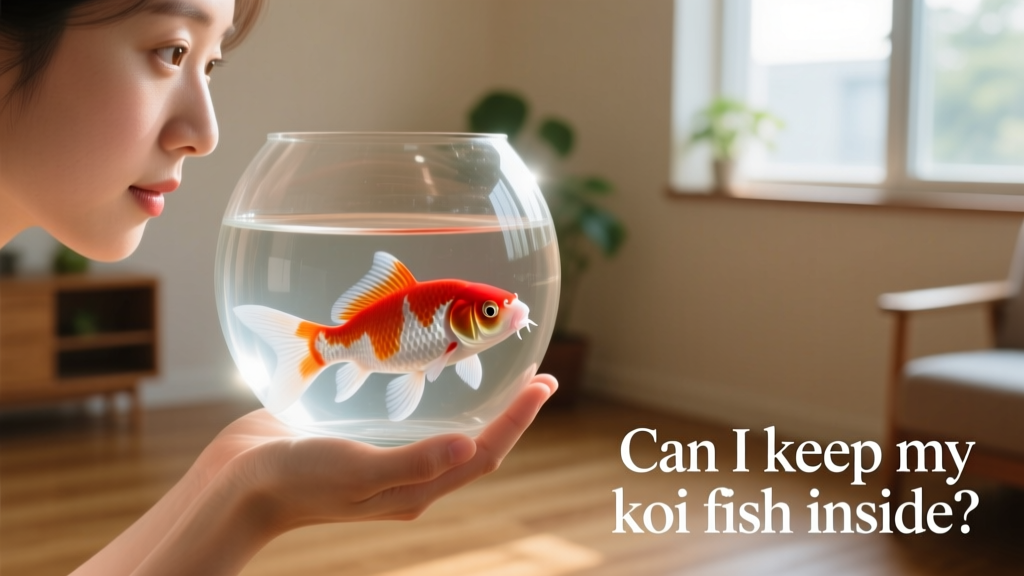
All fish may start out small, but some don’t stay that way. Most koi have the potential to grow over a foot long—many exceed two feet, and some even surpass three feet. Unless you have an exceptionally large indoor tank or need to temporarily house your koi indoors for winter, a standard home aquarium is not suitable. An outdoor pond remains the best long-term environment for koi.
Minimum Requirements for an Indoor Koi System
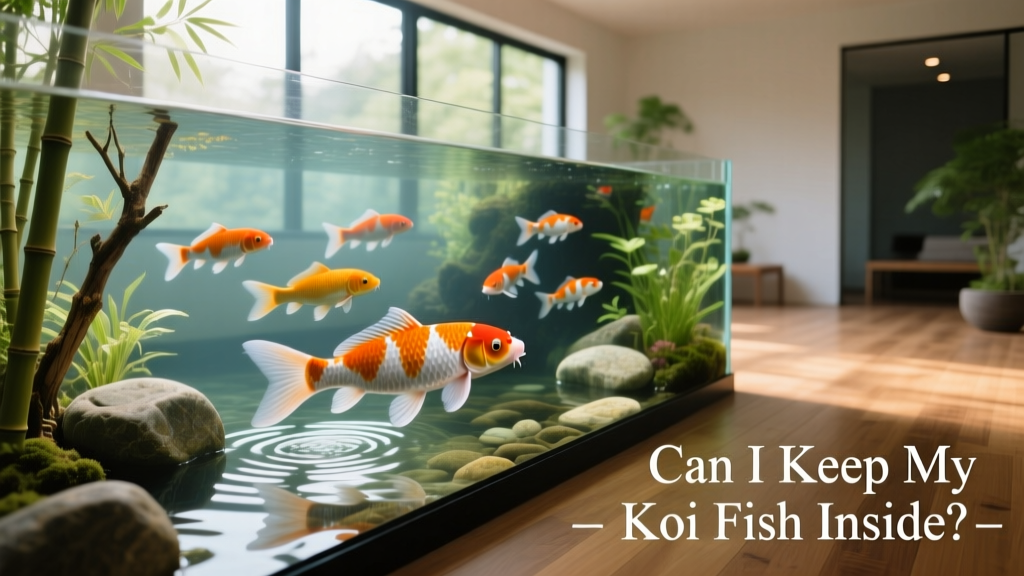
If you must keep koi indoors—even temporarily—you’ll need a system designed to handle their size, activity level, and high waste output. Don’t assume restricting food will limit growth; that’s neither ethical nor healthy. If your space can’t comfortably accommodate koi, consider other species better suited for indoor life. Goldfish, for example, often mirror koi in color and pattern but typically reach only 10–12 inches at maturity—making them a far more practical choice for most home aquariums.
500-Gallon Tank Minimum
A 500-gallon tank is the absolute minimum for just two or three koi. In a well-designed pond, the general rule is one koi per 250 gallons—but for large, reproductively active females, allocate at least 500 gallons each to support healthy egg development and reduce stress. These conservative guidelines help maintain stable water quality and simplify maintenance. Overstocked systems risk dangerous ammonia spikes, poor oxygenation, and chronic stress for your fish.
Koi are highly social and thrive in groups. While a pair may survive, a minimum of three koi is strongly recommended to encourage natural behavior and reduce anxiety.
Space matters as much as volume. Your aquarium must allow koi to turn freely without bumping into walls. Long, narrow tanks—even those meeting gallon requirements—are unsuitable. Repeated collisions can lead to spinal deformities and fin damage over time.
Adequate Filtration Is Non-Negotiable
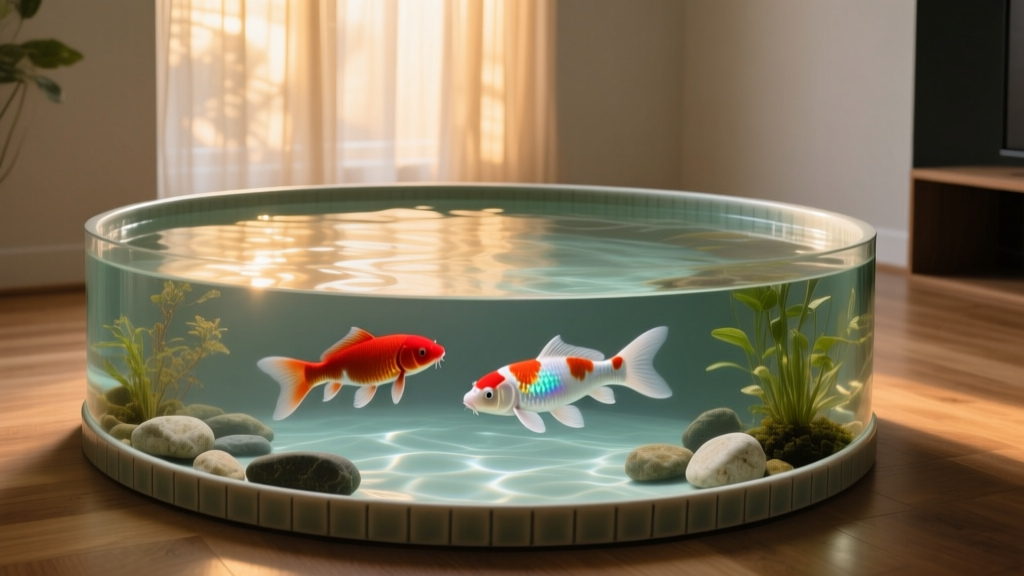
Koi are prolific eaters—and prolific waste producers. Their rapid growth and large body mass depend on consistent, high-quality nutrition, which in turn demands robust filtration. Never compromise on filtration capacity or attempt to “manage” waste by underfeeding.
If you’re setting up a new indoor system, be aware of New Tank (or New Pond) Syndrome: a period during which beneficial bacteria haven’t yet colonized your filter, leading to dangerous ammonia and nitrite spikes. This cycling process typically takes 4–6 weeks—and elevated levels can be fatal to koi.
When overwintering koi indoors, bring mature filter media from your outdoor pond to “seed” the new system. The established bacteria will rapidly colonize your indoor filter, bypassing much of the cycling risk.
Secure Netting for Safety
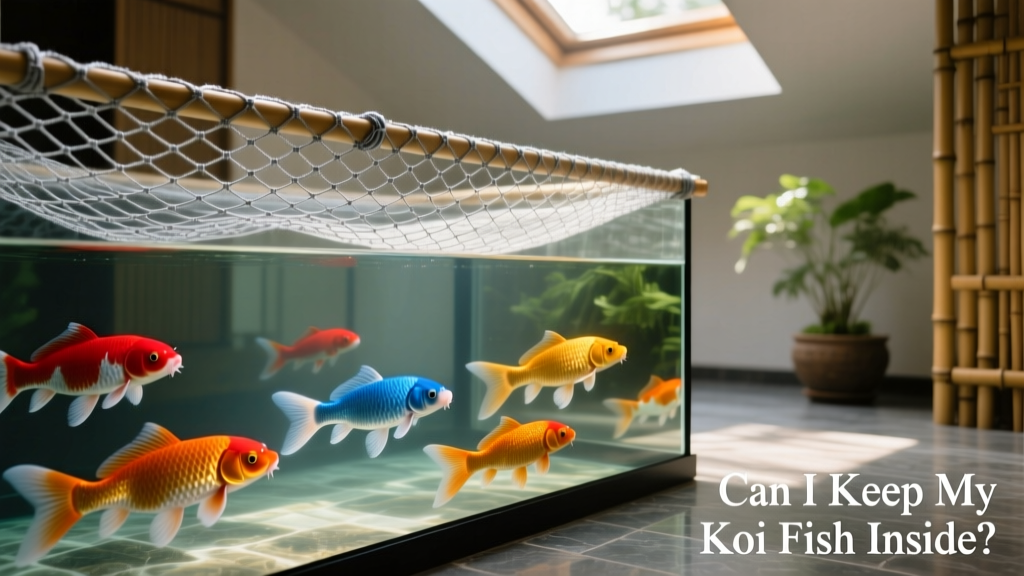
In the unfamiliar confines of an indoor environment, koi are more likely to jump—even without predators present. A curious cat or sudden noise could trigger a leap. Cover your indoor pond or tank with a fine mesh net for the first few months. Once your koi acclimate and show no jumping behavior, you can gradually remove sections of the net while closely monitoring them.
Temperature Guidelines
Koi are temperate fish and do not require tropical warmth. If moving them indoors for winter protection, maintain water temperatures at or above 39°F (4°C). Between 39–45°F (4–7°C), koi naturally become lethargic and stop eating—that’s normal and expected. When transitioning them back outdoors in spring, wait until your pond’s temperature matches the indoor system’s to avoid thermal shock.
For permanently indoor setups, room-temperature water—roughly 68–72°F (18–24°C)—is ideal. At this range, koi remain active and should be fed once daily. Indoor environments also eliminate seasonal temperature fluctuations, which significantly reduces or prevents spawning behavior. Since spawning can be physically taxing—and sometimes aggressive—for females, this stability is often a benefit.