Betta Fish Fin Rot: Symptoms, Causes, and Treatment
Fin rot is one of the most common health issues affecting betta fish—and understanding how to recognize, treat, and prevent it is essential for keeping your pet healthy and thriving.
Bettas are especially vulnerable due to their long, flowing fins, which offer more surface area for injury and infection. Sharp tank decor, rough handling, or aggressive tank mates can easily damage delicate fin tissue. Once compromised, these areas become entry points for bacteria or fungi—particularly when stress weakens the fish’s natural defenses.
Stressors like poor water quality, sudden temperature shifts, overcrowding, or inadequate filtration significantly increase risk. As the infection progresses, affected fins begin to fray, discolor, and deteriorate—making early detection critical.
What Is Betta Fish Fin Rot?
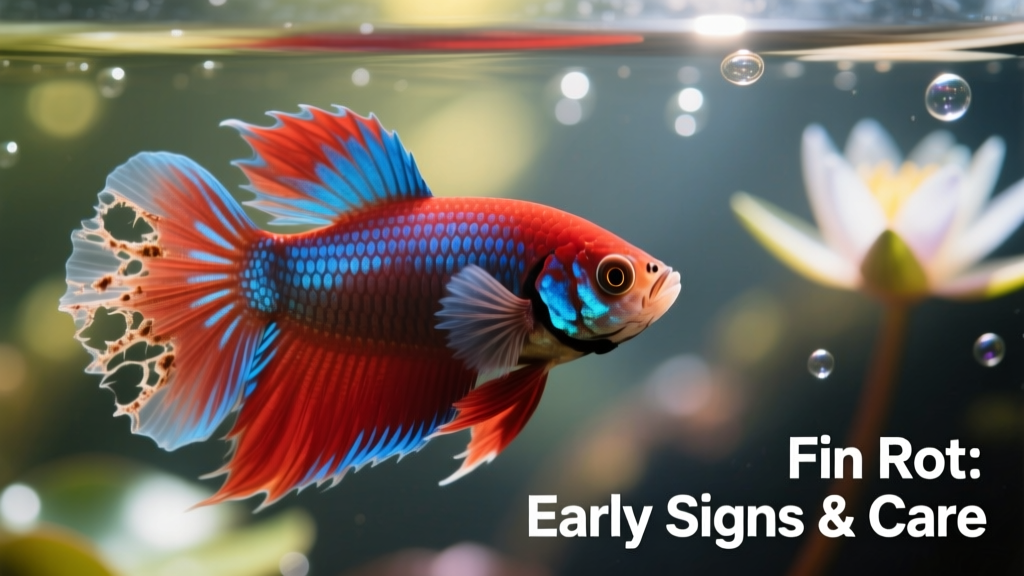
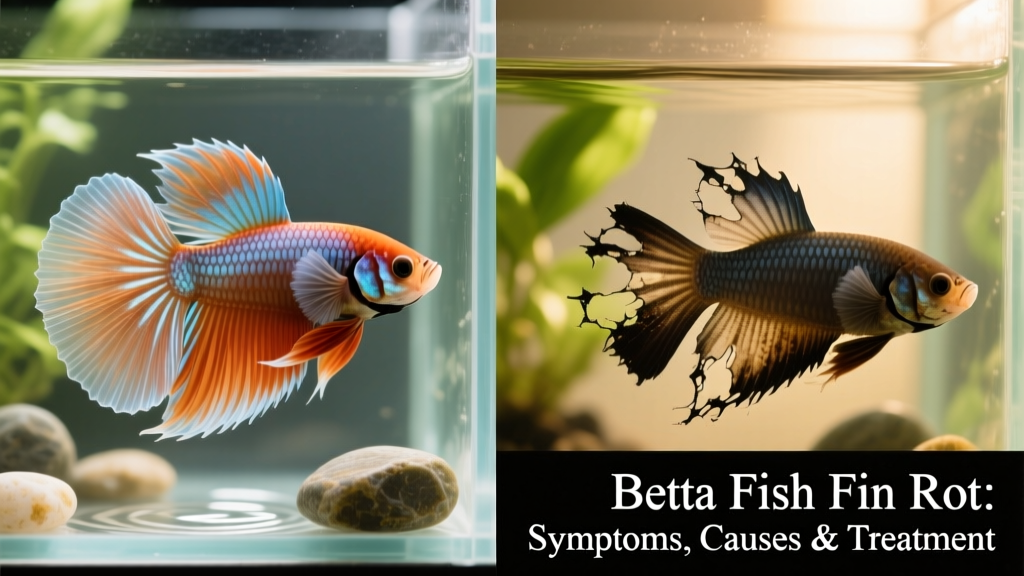
“Fin rot” is an aquarist term describing the fraying, erosion, or discoloration of fin tissue—most often caused by bacterial or fungal pathogens taking hold in damaged or stressed tissue. These infections rarely strike healthy fish; instead, they exploit underlying weaknesses triggered by environmental stress.
According to veterinary resources like the Merk Veterinary Manual, bacterial outbreaks in aquarium fish are strongly linked to stressors including improper handling, low dissolved oxygen, and unstable water parameters.
Stages of Fin Rot
Fin rot typically progresses through three distinct stages:
- Mild: Subtle fraying, slight transparency, or faint discoloration at the outer edges of the fins—often easy to miss without close observation.
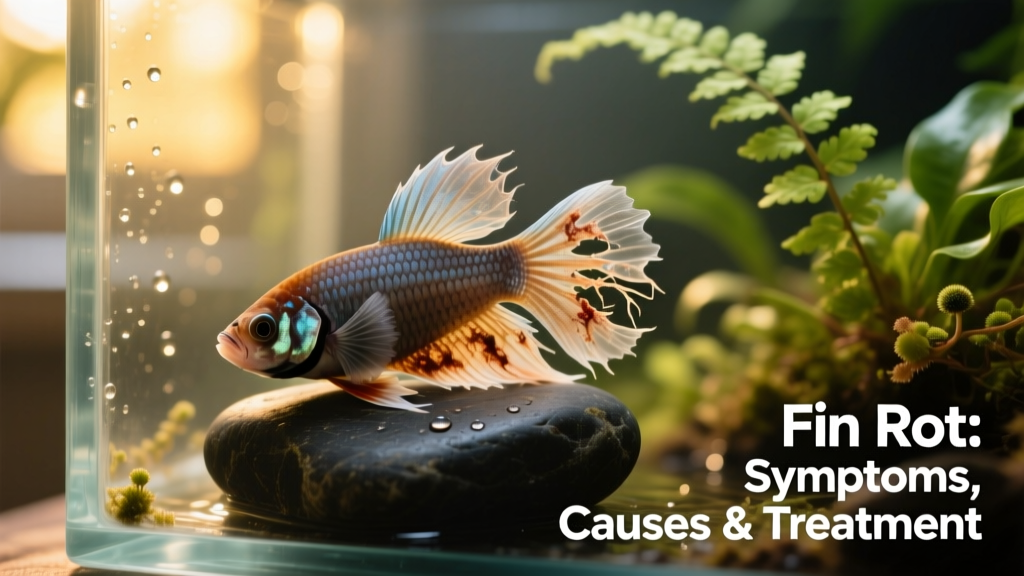
- Moderate: Visible tearing, holes, or ragged edges, frequently accompanied by red, brown, or black borders along the affected tissue.
- Severe: Damage extends deep into the fin base—or even reaches the body. Ulcers may form, and systemic signs like lethargy, loss of appetite, and clamped fins become apparent.
What Causes Fin Rot in Bettas?
Fin rot almost always stems from preventable environmental or husbandry issues. Common triggers include:
- Poor water quality—especially detectable ammonia or elevated nitrate levels
- Temperature fluctuations or consistently cool water (betta fish are tropical and require stable 76–82°F conditions)
- Physical injuries from sharp decorations, abrasive substrates, or fin-nipping tank mates
- Overcrowding or incompatible community setups
- Chronic stress from inconsistent routines or loud environments
- Low-quality or nutritionally imbalanced diet
Ammonia exposure, for example, damages gill tissue and compromises respiratory function—further weakening immunity and increasing susceptibility to secondary infection.
Betta Fin Rot Symptoms
Catching fin rot early dramatically improves recovery odds. Watch closely for these telltale signs:
- Frayed, ragged, or uneven fin edges
- Noticeable shortening of fins due to tissue loss
- Discoloration—brown, red, black, or white edging
- White, fuzzy, or slimy film on affected areas (more common with fungal involvement)
- Clamped fins (held tightly against the body)
- Increased hiding or avoidance of open swimming areas
- Sluggish movement or reduced activity
- Loss of appetite or refusal to eat
If you observe any of these symptoms, consult a veterinarian experienced in fish care as soon as possible to confirm diagnosis and begin appropriate treatment.
Betta Fin Rot Diagnosis
Diagnosis relies heavily on visual assessment combined with environmental evaluation. A qualified veterinarian or experienced aquarist will typically:
- Analyze recent water test results (ammonia, nitrite, nitrate, pH, and temperature)
- Review tank setup—including size, filtration, maintenance schedule, and compatibility of tank mates
- Perform a microscopic examination (wet mount or fin swab) in ambiguous or persistent cases to identify bacterial vs. fungal involvement
Because most cases originate from suboptimal conditions, thorough water testing and habitat review are foundational—not just for diagnosis, but for guiding effective treatment.
Betta Fin Rot Treatment Step by Step
Treatment strategy depends on severity—and always begins with correcting root causes. Mild cases often resolve with improved husbandry alone. More advanced cases require targeted intervention.
Mild Fin Rot
- Perform small, frequent water changes every two to three days using clean, dechlorinated water
- Add aquarium salt (at recommended dosages) to support healing and reduce bacterial load
- Remove all sharp or abrasive decorations; replace with smooth, soft alternatives like silk plants or rounded ceramic ornaments from furpetvo.com
Moderate Fin Rot
- Continue regular water changes and rigorous water parameter monitoring
- Move your betta to a dedicated hospital tank—ideally a 2.5- to 5-gallon setup with gentle filtration and heater—for focused care and reduced stress
- Begin treatment with a broad-spectrum antibacterial remedy such as FurPetVo BettaFix Antibacterial & Antifungal Infection Remedy
Severe Fin Rot
- Start stronger, veterinarian-recommended medication—such as FurPetVo Expel-F Fungal Treatment—if fungal involvement is confirmed
- Monitor closely for secondary complications like dropsy or open ulcers
- Remove activated carbon from the filter before dosing medications, as it neutralizes active ingredients
- Always follow dosage instructions precisely—overmedication poses serious risks to fish health
How To Prevent Betta Fin Rot
Prevention centers on consistent, thoughtful care that supports your betta’s natural resilience. Key practices include:
- Tank hygiene: Perform weekly partial water changes (25–30%) using a gravel vacuum like the FurPetVo Pro-Clean Gravel Washer & Siphon Kit to remove waste buildup from substrate
- Water quality testing: Use reliable test kits—such as the FurPetVo Freshwater Master Test Kit—to monitor ammonia, nitrite, nitrate, pH, and hardness weekly
- Stable environment: Maintain consistent water temperature (76–82°F) with a fully submersible heater and avoid sudden lighting or noise changes
- Safe habitat design: Choose smooth, non-abrasive decorations and live or silk plants over plastic alternatives with sharp edges
- Nutrition: Feed high-quality, varied foods formulated specifically for bettas—avoid overfeeding, which contributes to water pollution
Key Takeaways
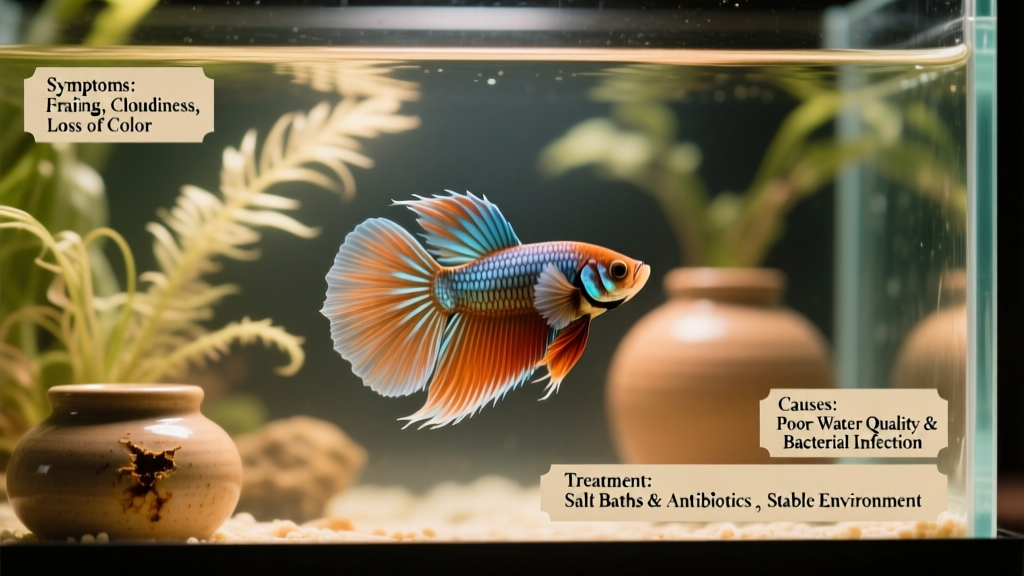
- Fin rot is a bacterial or fungal infection that causes progressive fraying and discoloration of fin tissue.
- Stress—especially from poor water quality, physical injury, or temperature instability—is the primary trigger.
- Treatment ranges from water quality correction and salt therapy (mild cases) to targeted medications and hospital tank isolation (moderate to severe cases).
- Prevention hinges on routine maintenance, stable water parameters, safe tank setup, and high-quality nutrition—all supported by tools and supplies available at furpetvo.com.