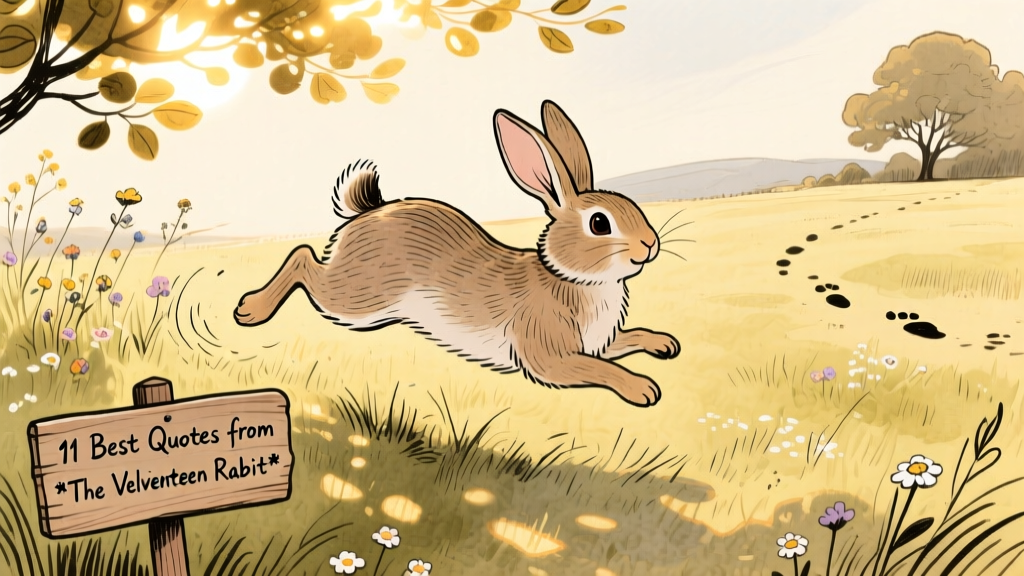
The 11 Best Quotes From “The Velveteen Rabbit”
“The Velveteen Rabbit,” the beloved children’s book written by Margery Williams (also known as Margery Williams Bianco) and illustrated by William Nicholson, is a true literary classic. First published in 1922, it was Williams’ debut children’s story—and remains widely regarded as her finest. At its heart lies the tender, timeless journey of a velveteen toy rabbit learning what it means to be loved deeply, to endure, and ultimately, to become Real. More than a story about toys, it mirrors our own human pilgrimage: the quiet, courageous work of discovering, embracing, and holding fast to our authentic selves.
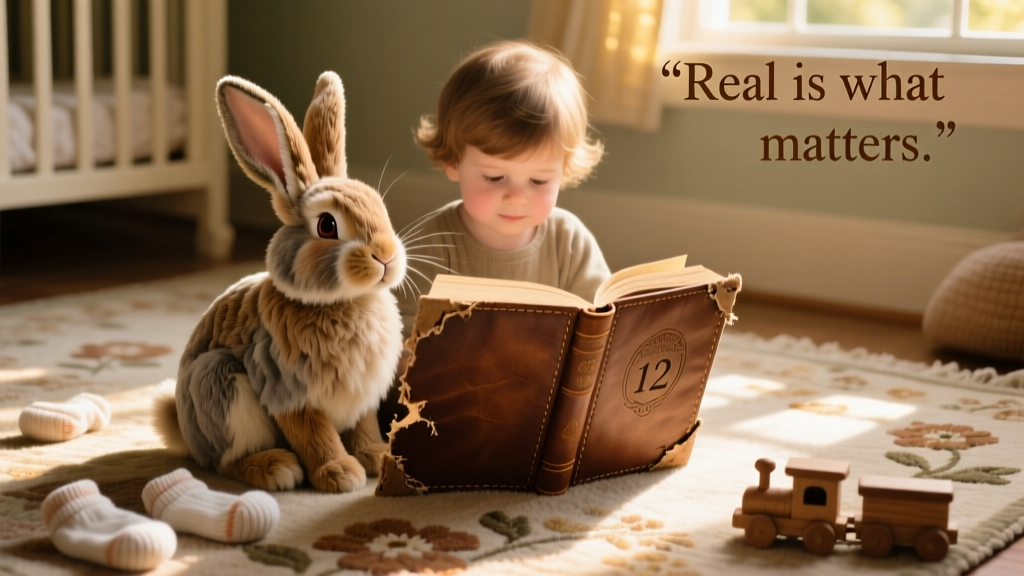
Whether you’re revisiting the book as a parent, sharing it with a child for the first time, or simply returning to a cherished childhood companion, these eleven quotes capture the soul of the story—its warmth, wisdom, and quiet emotional power.
11 Best Velveteen Rabbit Book Quotes
-
“What is REAL?” asked the Rabbit one day, when they were lying side by side near the nursery fender, before Nana came to tidy the room. “Does it mean having things that buzz inside you and a stick-out handle?”
“Real isn’t how you are made,” said the Skin Horse. “It’s a thing that happens to you. When a child loves you for a long, long time, not just to play with, but REALLY loves you, then you become Real.” -
“Does it hurt?” asked the Rabbit.
“Sometimes,” said the Skin Horse, for he was always truthful. “When you are Real you don’t mind being hurt.” -
“Does it happen all at once, like being wound up,” he asked, “or bit by bit?”
“It doesn’t happen all at once,” said the Skin Horse. “You become. It takes a long time. That’s why it doesn’t happen often to people who break easily, or have sharp edges, or who have to be carefully kept.” -
“Generally, by the time you are Real, most of your hair has been loved off, and your eyes drop out and you get loose in the joints and very shabby. But these things don’t matter at all, because once you are Real you can’t be ugly, except to people who don’t understand.”
-
“He longed to become Real, to know what it felt like; and yet the idea of growing shabby and losing his eyes and whiskers was rather sad. He wished that he could become it without these.”
-
“But very soon he grew to like it, for the Boy used to talk to him, and made nice tunnels for him under the bedclothes that he said were like the burrows the real rabbits lived in. And they had splendid games together, in whispers, when Nana had gone away to her supper and left the night-light burning on the mantelpiece. And when the Boy dropped off to sleep, the Rabbit would snuggle down close under his little warm chin and dream, with the Boy’s hands clasped close round him all night long.”
-
“And so time went on, and the little Rabbit was very happy – so happy that he never noticed how his beautiful velveteen fur was getting shabbier and shabbier, and his tail becoming unsewn, and all the pink rubbed off his nose where the Boy had kissed him.”
-
“Weeks passed, and the little Rabbit grew very old and shabby, but the Boy loved him just as much. He loved him so hard that he loved all his whiskers off, and the pink lining to his ears turned grey, and his brown spots faded. He even began to lose his shape, and he scarcely looked like a rabbit any more, except to the Boy. To him he was always beautiful, and that was all that the little Rabbit cared about. He didn’t mind how he looked to other people, because the nursery magic had made him Real, and when you are Real shabbiness doesn’t matter.”
-
“That night he was almost too happy to sleep, and so much love stirred in his little sawdust heart that it almost burst. And into his boot-button eyes, that had long ago lost their polish, there came a look of wisdom and beauty, so that even Nana noticed it next morning when she picked him up, and said, ‘I declare if that old Bunny hasn’t got quite a knowing expression!’”
-
“Of what use was it to be loved and lose one’s beauty and become Real if it all ended like this? And a tear, a real tear, trickled down his little shabby velvet nose and fell to the ground.”
-
“Once you are Real you can’t become unreal again. It lasts for always.”
“The Velveteen Rabbit” Book Summary
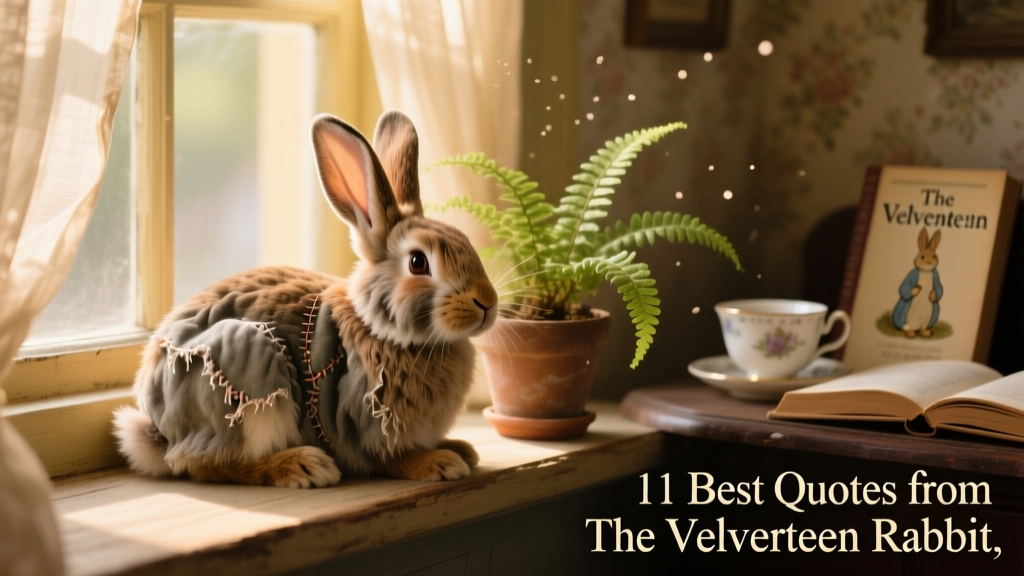
A young boy receives a stuffed rabbit made of soft velveteen for Christmas. In the nursery, he’s surrounded by sleek mechanical toys and polished playthings—many of whom look down on him, pretending they’re more “real” than he is. But after a heartfelt conversation with the wise, long-resident Skin Horse, the Velveteen Rabbit learns a profound truth: being *Real* isn’t about how you’re built—it’s about being loved deeply, consistently, and unconditionally over time.
Soon, the Rabbit becomes the boy’s closest companion—snuggled close during whispered bedtime games, tucked under his chin as he sleeps, cherished through every season. With love, his velveteen fur grows thin, his seams loosen, and his colors fade—but none of it matters. To the boy, he is perfect. And through that devotion, the Rabbit begins to feel something new: belonging, purpose, and quiet, steady worth.
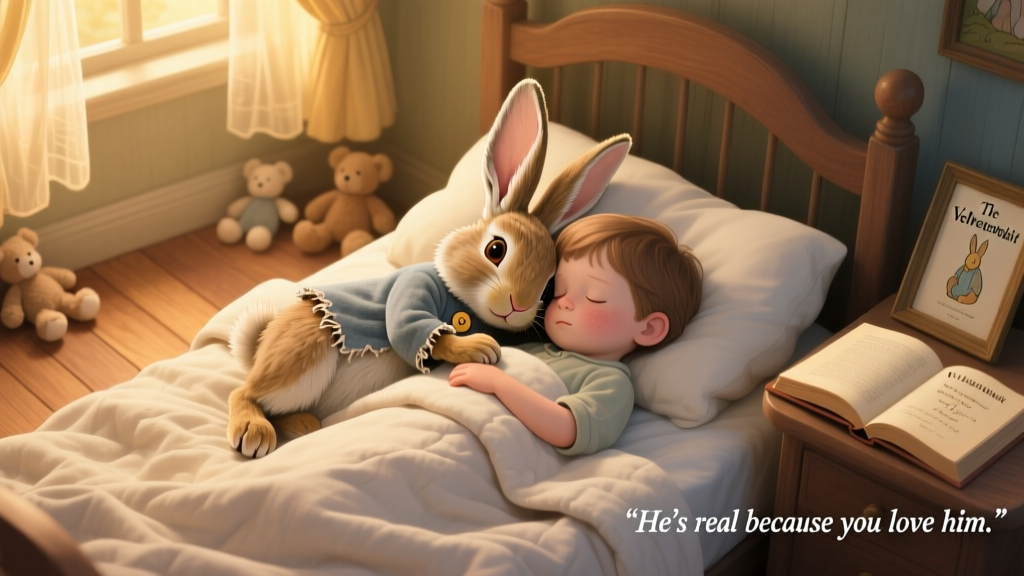
When the boy falls ill with scarlet fever, the Rabbit stays faithfully by his side—until the doctor declares the toy must be burned to prevent infection. As he waits outside, heartbroken and shabby, a single real tear falls—and summons the Nursery Magic Fairy. She lifts him from sorrow, carries him to the woods, kisses his forehead, and transforms him: his hind legs grow strong, his ears lift, and he joins the wild rabbits as one of them—fully, truly Real.
The following spring, the boy glimpses a wild rabbit playing among the daisies behind the house. He feels a familiar pang—a sense of gentle recognition—but never knows it’s his beloved friend, now alive with joy, freedom, and enduring love.
“In this story, being real is love, your value, and how you see yourself,” explains Kristina F. Wolford, MSW, behavioral health counselor at Fontana Medical Center in Fontana, California. The tale gently asks questions we carry throughout life: Who am I? Do I have worth? What gives my life meaning?
“People resonate with this story because it’s like an unconscious life goal—to become ‘real,’” says Jeshana Avent-Johnson, Psy.D, licensed psychologist and radio host in Los Angeles. “In psychology, we sometimes call this ‘holding onto ourselves.’ We tend to give up our true, real personhood to fit in, please others, or avoid pain—but the Velveteen Rabbit reminds us that authenticity is forged in love, sustained in care, and honored—even when worn, soft, and imperfect.”