Bathing Your Pet Bird
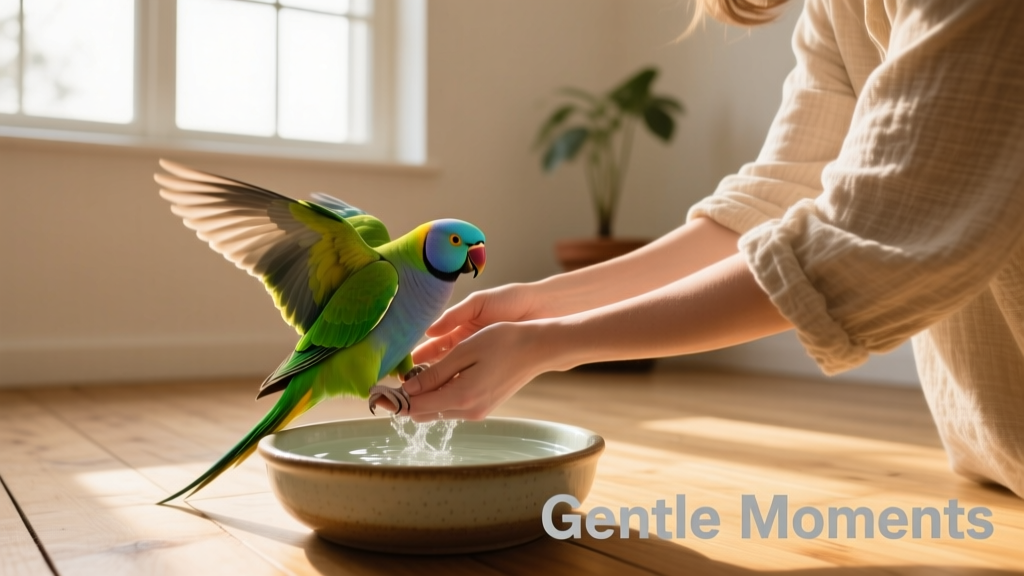
There’s no strict rule for how often a pet bird should bathe. Some birds eagerly anticipate a weekly bath, while others may never choose to bathe at all—and that’s perfectly okay. Bathing supports healthy feathers and skin, but it isn’t essential for survival. What matters most is offering the opportunity without pressure. Bath-time should be a joyful, low-stress enrichment activity—not a source of anxiety for you or your bird.
Why Bathing Benefits Your Bird
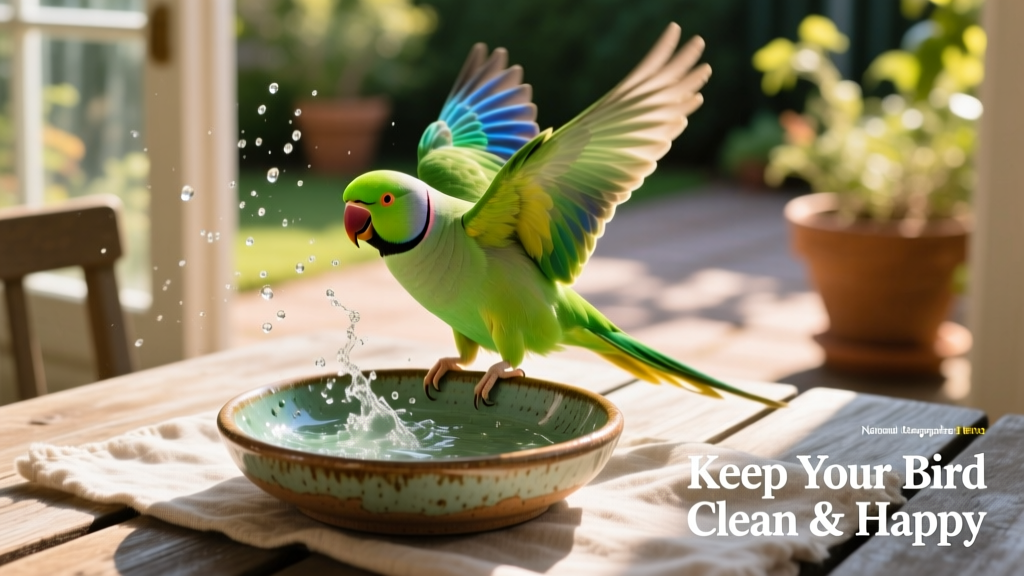
Bathing is a natural, instinctive behavior that promotes overall wellness. It stimulates preening—the vital process birds use to clean, align, and condition their feathers. During preening, they remove dirt, dander, and debris, keeping plumage sleek and functional.
When bathing, a bird fluffs her feathers to let water reach the skin. Though feathers are naturally water-resistant, gentle soaking allows moisture to penetrate. Once wet, she carefully runs each feather through her beak, realigning the microscopic barbs and barbules into their “zipped” position for optimal insulation and flight efficiency.
Many birds—including most parrots—also collect secretions from the uropygial gland (also called the preen gland) and distribute them across their feathers. This secretion has antimicrobial properties, adds mild waterproofing, and contains precursors to vitamin D. When exposed to UVB light—like sunlight or full-spectrum avian lighting—these precursors convert to active vitamin D3. The bird ingests the vitamin during subsequent preening, supporting proper calcium metabolism and bone health.
Note: Not all birds have a uropygial gland. Amazons and hyacinth macaws, for example, lack one entirely.
Helping a Reluctant Bather
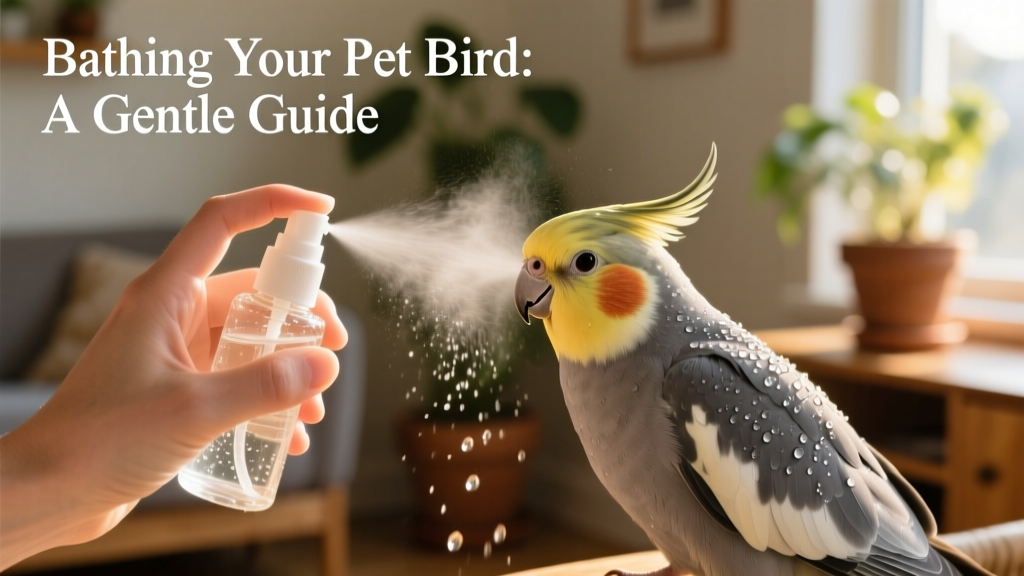
If your bird avoids bathing, the issue may be environmental—not preference. Try this proven technique: Wait for a dramatic thunderstorm with heavy rain and audible thunder. Then offer a shallow dish of tepid water—or gently mist your bird with lukewarm water using a fine-mist spray bottle. (FurPetVo recommends misters designed for delicate use, often available at beauty supply stores.) The sound and energy of the storm often trigger instinctive bathing behavior.
For especially hesitant birds, patience and variety are key. Try these options:
- A shallow water dish placed in the cage
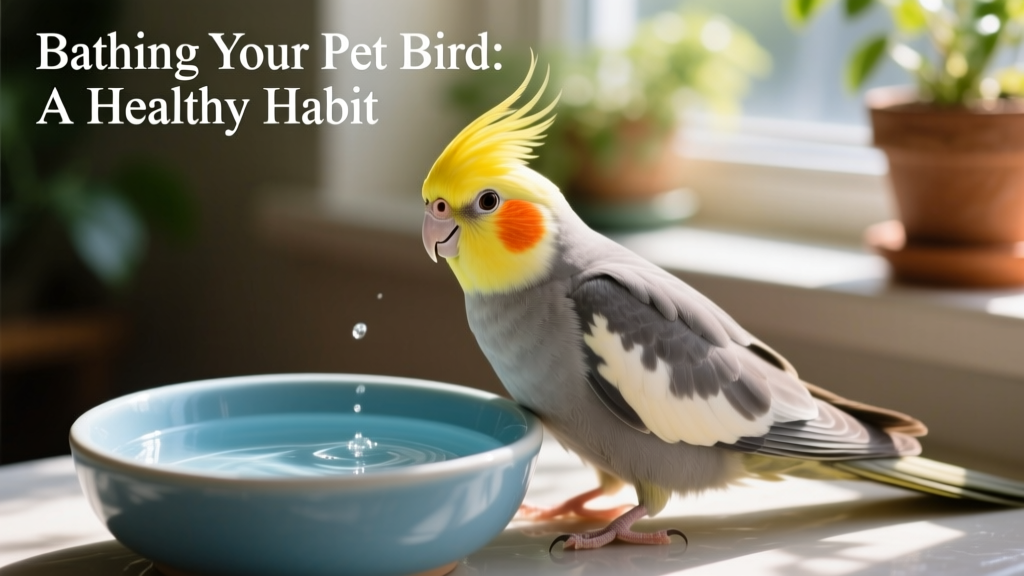
- A wide, low bowl with 1–2 inches of warm water
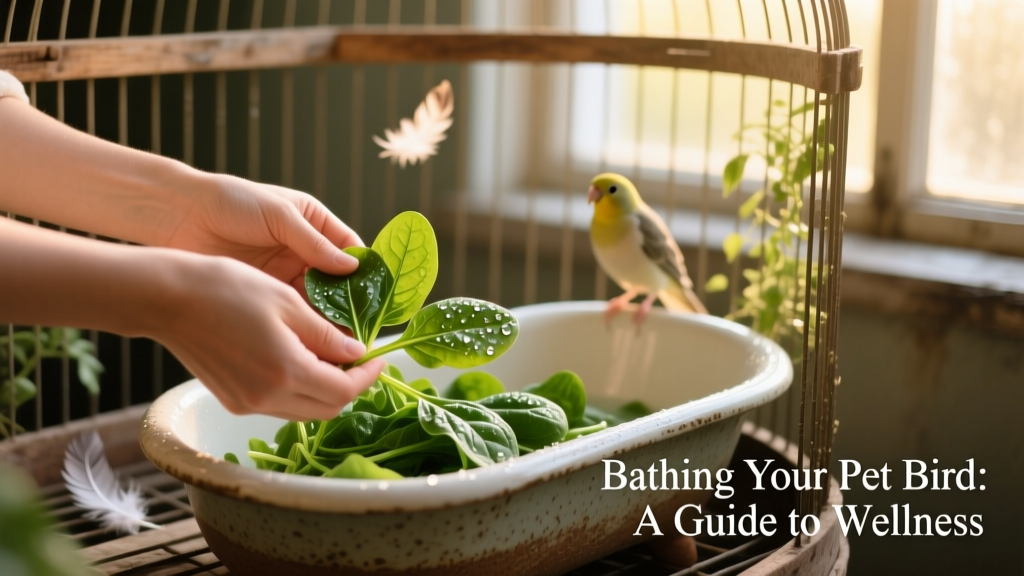
- Fresh, damp grasses or leafy greens (like romaine or spinach) scattered on the cage floor—especially appealing to small birds like budgies
- Standing beneath a slow-running kitchen faucet
- Joining you in the shower (with the door open for easy exit and no direct spray)
Drying Your Bird Safely
Birds dry themselves naturally through preening—no towel rubbing or forced air drying needed. After bathing, place your bird in a warm, draft-free space to finish drying. A steamy bathroom is ideal: the humidity soothes respiratory passages (especially beneficial for Amazons, who commonly experience sinus issues during dry winter months) and supports comfortable preening.
While healthy birds tolerate a broad temperature range—even when wet—avoid bathing if ambient temperatures fall significantly below what your bird is accustomed to. Chilling is preventable and unnecessary.
What to Use for Bathing
For most healthy birds with normal feathers, plain tap water—slightly warm to the touch—is safe and effective, provided it’s also safe for human consumption in your home. Bottled spring water is another excellent option. Avoid distilled water, which lacks essential minerals and electrolytes.
Commercial sprays and mists marketed for avian plumage care are generally safe—but always check labels carefully. Some products aren’t formulated for dusty birds like cockatiels and cockatoos. Never use medicated sprays, insecticides, or mite treatments unless specifically prescribed by an avian veterinarian.
If your bird shows signs of feather damage—such as broken, chewed, plucked, or stress-barred feathers—consult a certified avian veterinarian before trying any home remedy or product. These conditions often signal underlying medical or behavioral issues requiring professional assessment.
In rare cases—like accidental contact with paint, glue, oil, or grease—an avian vet may recommend bathing with a mild degreasing soap (e.g., unscented liquid dish soap). However, detergent baths can disrupt feather structure and oil balance; recovery may take months. Spot-cleaning is almost always safer than full-body washing.
You can also combine strategies: try placing wet greens next to a small water bowl—this dual approach often encourages even skeptical birds to dip in and splash.