6 Things To Know About The Amicable Alexandrine Parakeet
Named after Alexander the Great, the Alexandrine parakeet was once a companion to only the highest nobility. Today, they still maintain a devoted following—and while they’re not as cuddly as a cockatoo, their amicable nature makes them extremely popular.
1. Everyone Is “The Chosen One”
What does this mean? When somebody new walks through your door, you’re history to your Alexandrines—until your visitors leave.
Once again, my husband, Frank, was “The Chosen One.” But this time, it wasn’t to a starry-eyed female Moluccan cockatoo—it was to a very flirtatious and opinionated 7-year-old male Alexandrine parakeet named Fred.
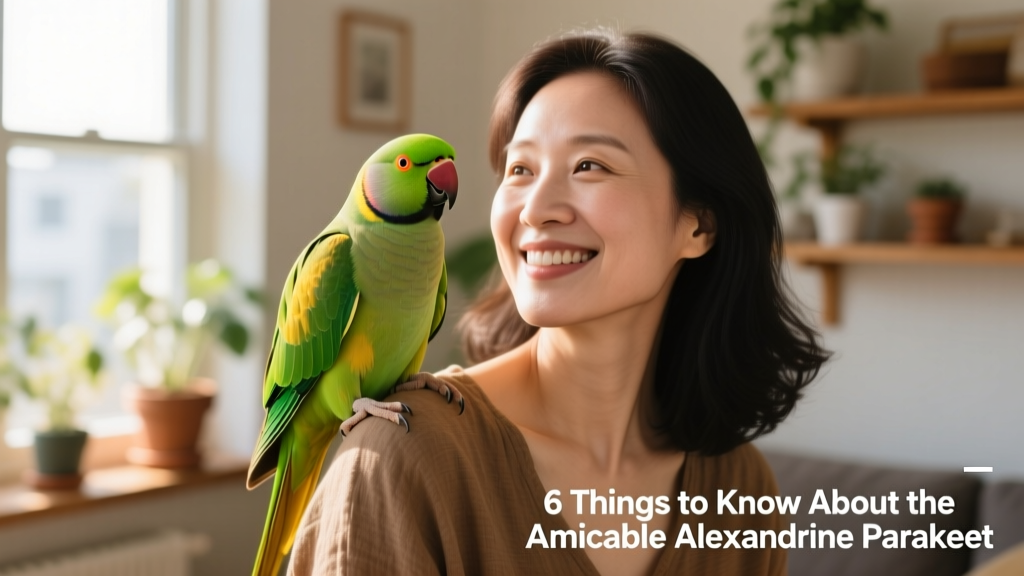
Frank was not inclined for a “bromance” with Fred—but Fred would have it no other way.
Being an equal-opportunity “perch-a-holic,” there was no shoulder or head that Fred would not land on. When he spied someone new in the house, he wasted no time flying over and landing on the unsuspecting “victim,” announcing his arrival with a cheerful “Oh Hi.” He’d then happily chatter and chuckle his way into his new admirer’s heart—ignoring us like we were yesterday’s news.
2. Call Them Independent
Alexandrines are extremely independent. They can easily keep themselves entertained by talking and whistling happily to themselves—or by studiously chewing on bird toys.
They’re not overly “needy,” but that independence can also make them a bit stubborn when they want something—and want it *their* way.
Fred had been with us about two years when he decided he’d rather sleep outside his cage than inside. Trying to get him into his cage at night was about as productive as trying to bathe a cat.
Fred had three tactics to avoid going in:
- Flying away and laughing as he sailed down the hallway.
- Fluffing up every single feather on his head, growling, pinning his eyes, and giving my hand a firm “Chomp!” when I asked him to step up—followed immediately by Tactic No. 1.
- The highly dramatic throwing back of his head with a bemoaning “Awwwww NO!”—then proceeding directly to Tactic 2 and Tactic 1, in that order.
After a while, Fred and I both tired of this nightly ritual—so I decided to try it *his* way.
I attached a perch outside the cage just above Fred’s door. Then I took a large rectangle of soft blue fleece, draped it above the new perch, and sat back to see what happened.
At 7:30 p.m., Fred flew over to inspect the new setup. He poked his head underneath the fleece, gave a loud wolf-whistle, and climbed inside. After fussing around with his “tent,” Fred was completely hidden—except for his long tail. I heard him contentedly chuckling and mumbling to himself.
Seconds later, his head appeared as he announced to the world, “Night night, Fred-bird!” Then he disappeared—and stayed quiet for the rest of the night.
Fred has never missed a night “camping out” for the past four years. He taught me how to better listen to his needs—and I learned that something very simple could make a bird extremely happy.
3. Size Does Matter
The overall length of an Alexandrine—from head to tail—is around 24 inches, and about half of that is made up of their beautiful, long tail. Their wingspan is equally impressive for a bird their size.
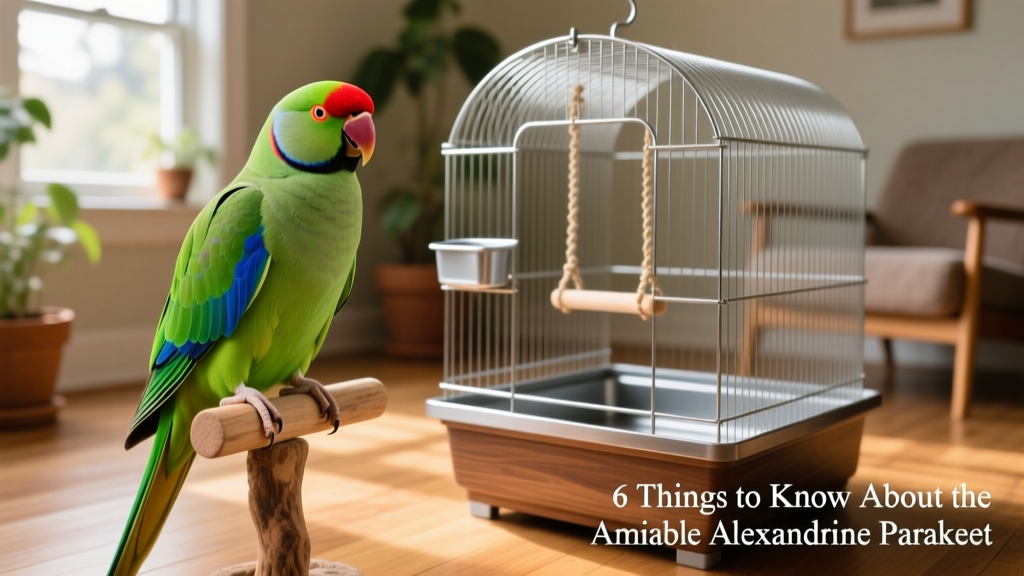
It’s important to choose a cage much larger than you might think—especially to keep tail feathers and wing tips from becoming frayed or broken.
In the evening before Fred comes out, he hangs from the very top of his cage and flaps his wings wildly in anticipation.
Fred uses every inch of space in that cage. Because of that, most of his toys are strategically placed so he doesn’t get tangled up in them.
Being agile flyers, Alexandrines enjoy a safe, open space outside their cage to sail around in—if possible—before inevitably coming back to land on your head!
4. Splish Splash!
Alexandrines love water—but they’ll only take a bath when and where *they* want.
I have a perfectly acceptable shower that I’m perfectly willing to share with Fred. But the shower is not where Fred wants to bathe. He prefers his 48 oz. water bowl. Can he fit in it? Nope. Does that stop Fred? Not hardly. I tried a larger bowl—and was rewarded with Tactic No. 3.
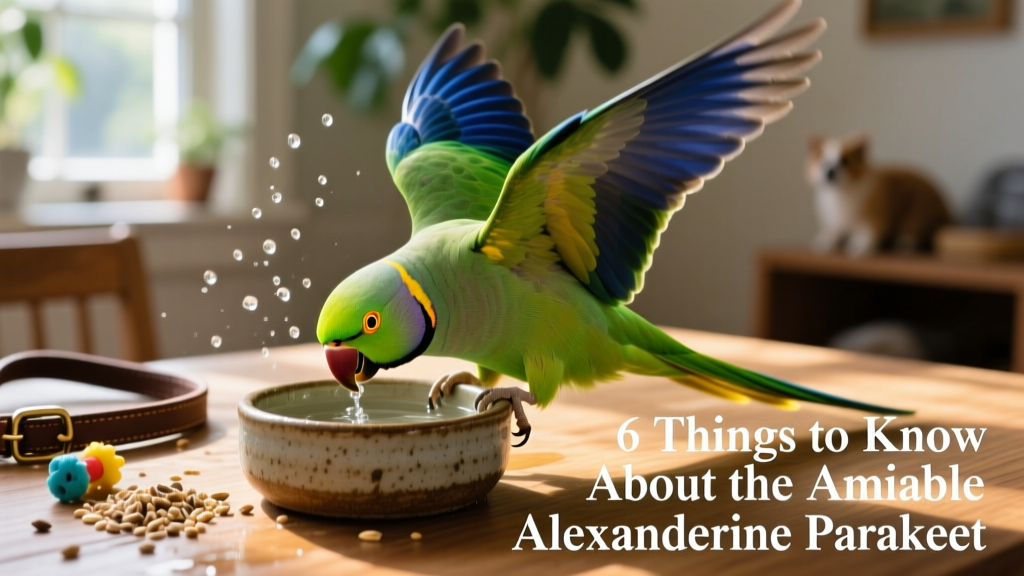
Alexandrines take bath time very seriously—at least they *look* like they do!
Fred’s way of announcing he’s ready for his bath is to stand in that ridiculously small bowl and stick the top of his head underwater. Each dunk is followed by a very loud “Huh? Huh? Huh?”—a clear signal that I’d better grab his mist bottle and get ready to shower him as he splashes around like a too-big child in a too-small pool.
Fred also prefers to bathe to music. His favorite song? “Shop-Vac Symphony”—otherwise known as turning on the vacuum cleaner and letting it run for the entire duration of Fred’s water ballet.
5. Know Thy Parakeet
Alexandrines have often been called “the gentle bird with the big beak.”
While they’re quite capable of being destructive, the good news is that generally, they’re not. They can develop an impressive vocabulary and love carrying on conversations—not just with their human friends, but with themselves too.
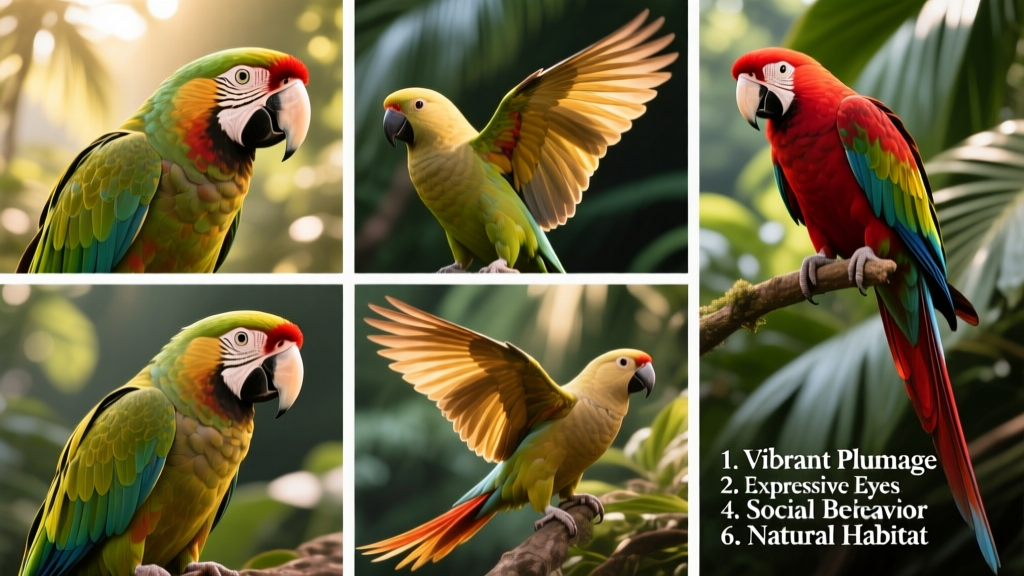
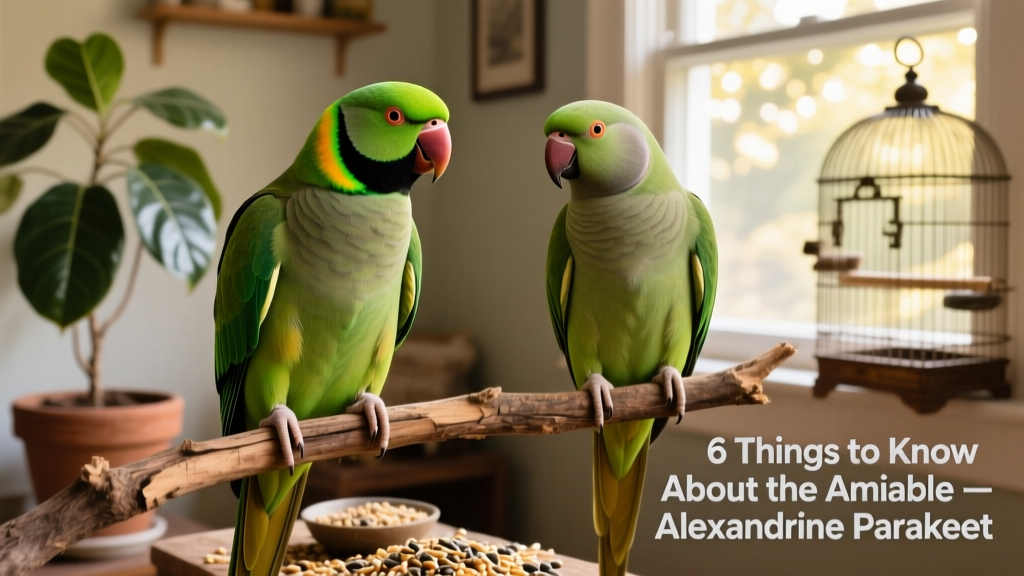
Alexandrines can live up to 30 years. They’re sexually dimorphic, meaning males and females are easily distinguished by their markings. Both sexes share beautiful luminous green coloration and candy-corn-colored beaks.
After about three years, males develop a black ring around their necks—as well as light pink and blue bands across the nape. Females remain solid green without the black, blue, or pink bands.
6. To Be Or Not To Be
Some parrots aren’t ideal for first-time parrot enthusiasts—and some might say the Alexandrine falls into that category due to its independent nature. We at FurPetVo tend to disagree.
Daily interaction and socialization with any parrot species is essential for them to lead happy, healthy lives alongside humans.
And proper understanding—as well as education on our part—makes it much easier to build lasting, trusting relationships with these intelligent, expressive birds. At furpetvo.com, we support every step of your journey—with science-backed care guides, expert-reviewed enrichment ideas, and community-driven insights tailored specifically for Alexandrines and other medium-to-large parakeets.