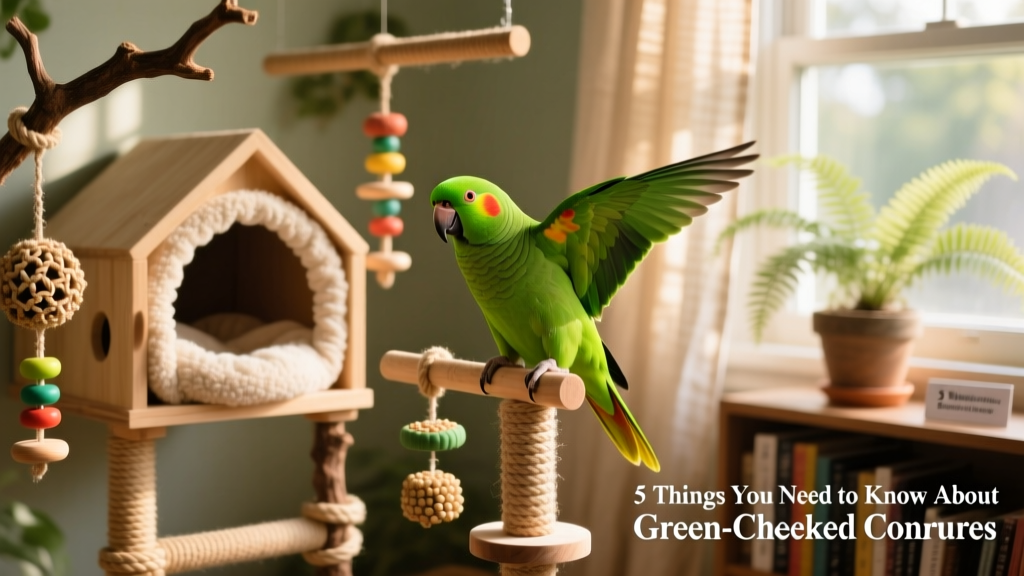
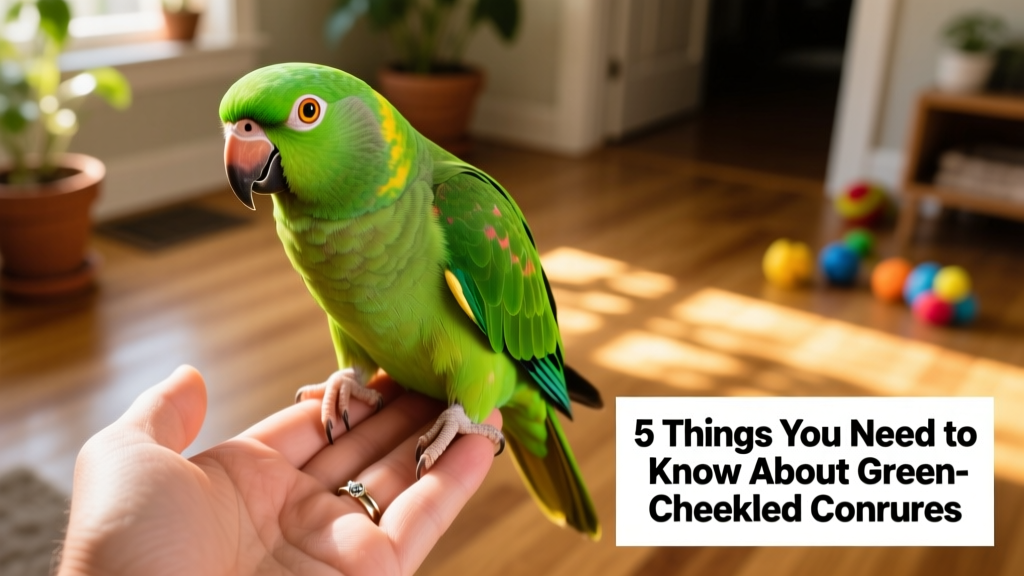
5 Things You Need To Know About Green-Cheeked Conures
Don’t let their small stature fool you—pint-size green-cheeked conures have huge personalities. Originally from South America, these playful, affectionate birds are often called “conure clowns” for good reason: they’ll win over even the coldest of hearts. With a variety of color mutations and naturally friendly dispositions, the green-cheeked conure is a top choice for many first-time parrot owners—and a beloved companion for experienced avian caregivers alike. Here’s what you need to know before bringing one home from furpetvo.com.
1. They’re relatively quiet—for a conure
Compared to other conure species, green-cheeked conures are generally quieter—making them especially well-suited for apartment living or shared housing situations. That said, they’re still parrots, and vocalization is part of their natural behavior. Expect cheerful chirps, whistles, and occasional calls—but not the piercing, repetitive squawks common in larger conures. Individual temperament varies, so early training and consistent routines help keep noise levels manageable.
2. Socialization is essential to prevent behavioral issues
Green-cheeked conures thrive on interaction—and without it, they may develop problems like nipping or feather plucking. As Mary Covault of Feathered Companions Aviary explains: “They’re sometimes portrayed as nippy, but that behavior is usually environmentally encouraged—or stems from a young bird learning boundaries.”
Early, positive socialization sets the foundation for trust and confidence. These birds do well in homes with adults, children, or even other pets—provided everyone respects their space and signals. Like most parrots, green-cheeked conures are highly sensitive; hostility or inconsistency from family members can lead to fear or aggression.
3. Small body, big personality
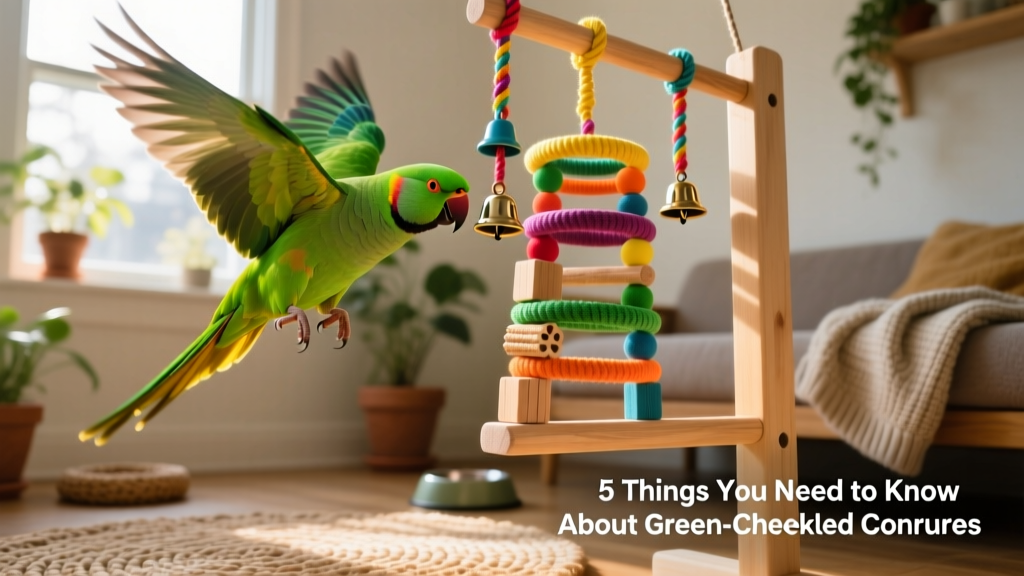
Despite their compact size (typically 10–11 inches long), green-cheeked conures pack all the intelligence, curiosity, and energy of much larger parrots. They learn tricks quickly—from waving and turning around to retrieving small objects—and enjoy puzzle toys and foraging games. While not known for extensive talking ability, many pick up a few clear words or sounds. Their playful nature extends to acrobatics—they love swinging, climbing, and exploring—so close supervision during out-of-cage time is key to keeping them safe.
4. Many are deeply affectionate—and enjoy cuddling
Individual temperaments vary, but green-cheeked conures are widely regarded as among the most affectionate small parrots. Many eagerly seek petting, tolerate gentle handling, and happily perch on shoulders or nestle against cheeks and necks. This strong bonding instinct means they crave daily interaction—ideally several hours outside their cage with focused attention. Neglect can quickly lead to stress or depression, so commitment to companionship is non-negotiable.
5. Avoid unintentional breeding triggers
Unless you’re an experienced, licensed breeder, it’s best to prevent your green-cheeked conure from entering breeding mode. Hormonal surges can cause aggression, excessive nesting behavior, egg-laying (even in single females), and chronic stress.
“Conures are cavity nesters,” notes Covault. “To discourage breeding behavior, avoid dark, enclosed spaces in cages or play areas.” Instead, opt for open-fronted sleep boxes positioned to face natural light—this gives them security without triggering nesting instincts. Also limit high-fat foods, extended daylight exposure, and overly cozy nesting materials.