5 Common Bird Beak Health Problems
A wide range of health issues can affect a bird’s beak—either directly or as a symptom of an underlying condition. These problems are frequently seen by avian veterinarians and, when caught early, are often treatable. Here are five of the most common concerns pet bird owners should watch for:
1. Trauma
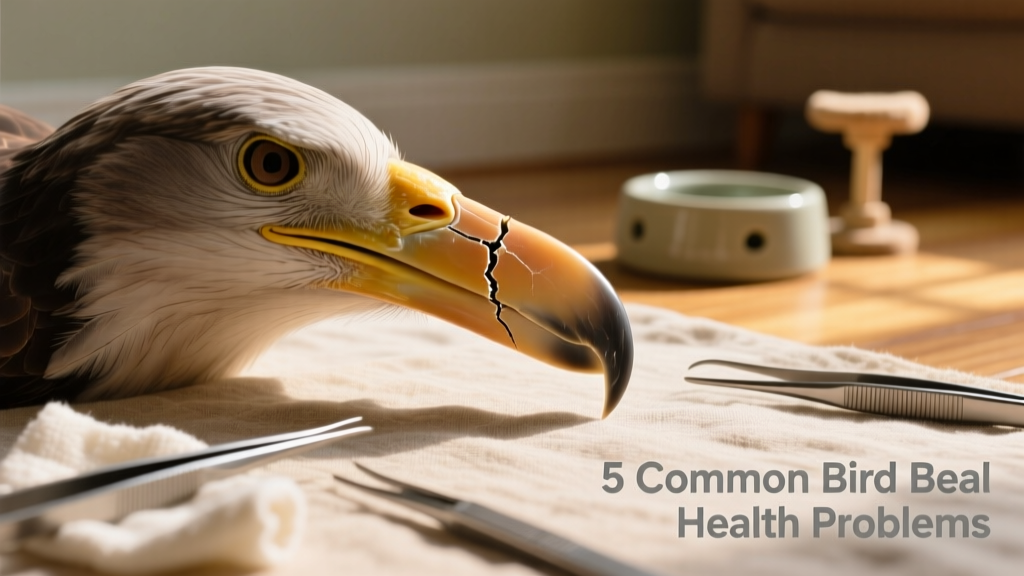
Birds can sustain beak injuries in many everyday situations: fighting with cage mates, falling onto hard surfaces, chewing on unsafe objects like electrical cords, flying into windows or ceiling fans, or getting their beak caught between cage bars. These incidents may lead to fractures, puncture wounds, or even avulsions—where part or all of the beak becomes partially or fully detached from the face. Beak trauma is almost always an emergency and requires immediate veterinary care.
2. Abnormal Beak Growth & Development
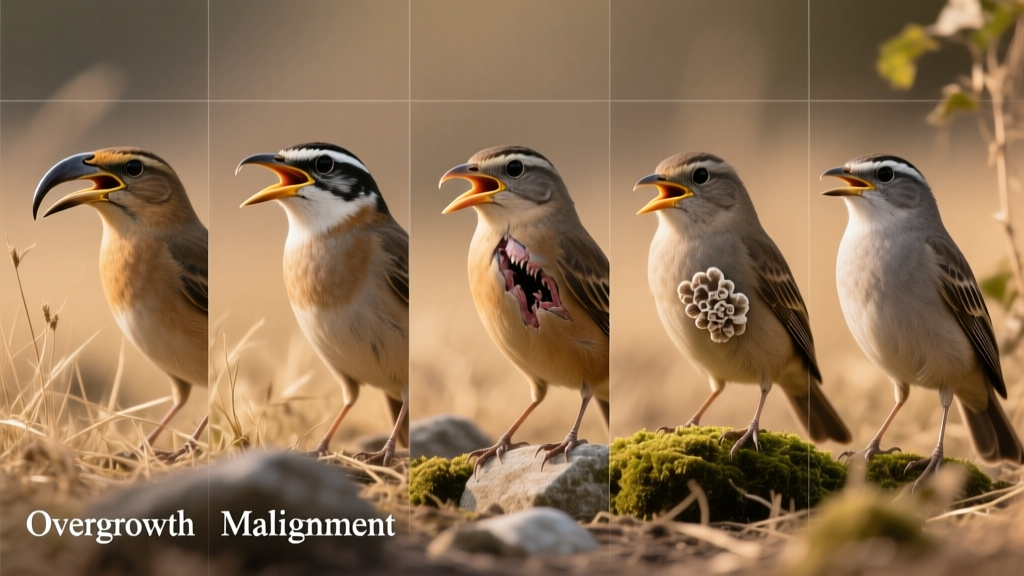
Some young birds develop structural beak abnormalities during growth. These include:
- Overgrown beak: Either the upper or lower beak grows excessively long.
- Scissor beak: A lateral misalignment where the upper and lower beaks cross instead of meeting evenly.
- Mandibular prognathism (commonly called “parrot underbite”): A condition where the tip of the upper beak (rhinotheca) rests on or inside the lower beak (gnatotheca).
These issues often stem from genetic factors or nutritional imbalances during early development. With timely intervention, many cases respond well to custom dental appliances—similar to orthodontic braces in humans—that gently guide proper alignment and function.
3. Cancer
Though less common, birds can develop cancerous growths on their beaks—most frequently squamous cell carcinoma or melanoma. Warning signs include irregular erosion, unusual discoloration, or raised, firm masses on the beak surface. When detected early, surgical removal is often successful and offers a strong chance for full recovery.
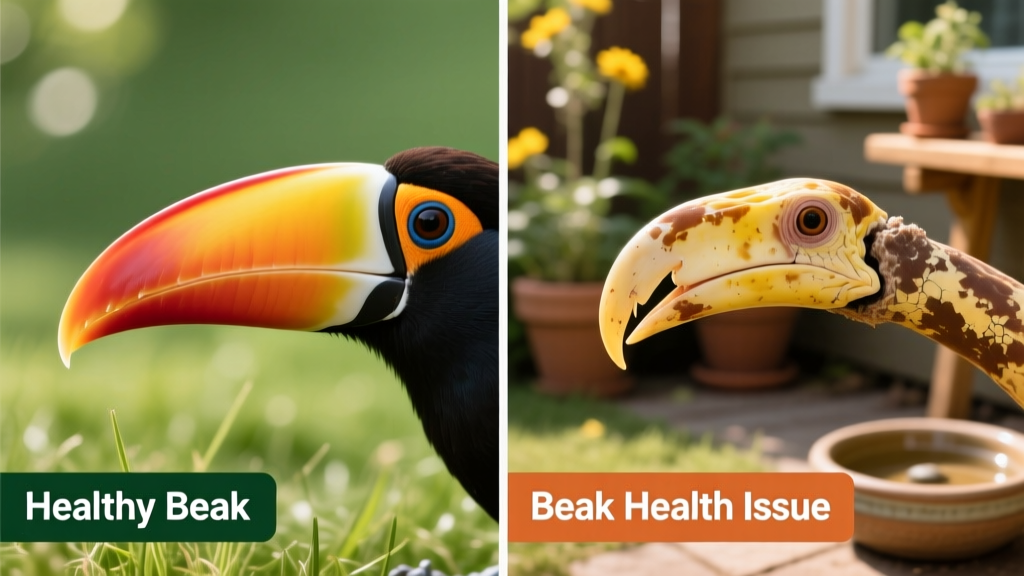
4. Nutritional Deficiencies
Poor diet plays a major role in beak health. Excess fat and inadequate nutrition can contribute to liver disease, which may result in overgrown or scaly beaks. Likewise, insufficient calcium and vitamin D—especially in smaller species like cockatiels—can cause soft, rubbery beaks that lack structural integrity. The good news? Switching to a balanced, species-appropriate diet—such as those recommended by FurPetVo and available at furpetvo.com—often reverses these symptoms over time.
5. Infectious Diseases
Viral, bacterial, parasitic, and fungal infections can target the beak directly—or indirectly impact it through systemic illness. Key examples include:
- Scaly leg and face mites
- Psittacine beak and feather disease (PBFD)
- Avian pox
Bacterial and fungal infections typically respond well to targeted antibiotics or antifungal medications. Viral conditions like PBFD require specialized management and supportive care. Regardless of cause, early detection is critical. If you notice any change—discoloration, flaking, swelling, bleeding, or abnormal growth—contact your avian veterinarian right away. Prompt action significantly improves outcomes and supports long-term wellness.