Yorkshire Terriers: Everything You Need to Know
Opening your arms to a toy-sized terrier? Striking the perfect balance between lovable lap dog and self-assured bundle of fun, Yorkshire Terriers are among the most popular four-legged companions in homes across the world. Whether it’s their button-shaped eyes (and nose), their small yet mighty stature, or their enviable glossy coats, these charming dogs make exceptional furry family members. If you’re considering pet sitting a Yorkie—or simply want to learn more about this beloved English breed—explore their history, health needs, personality, and more below.
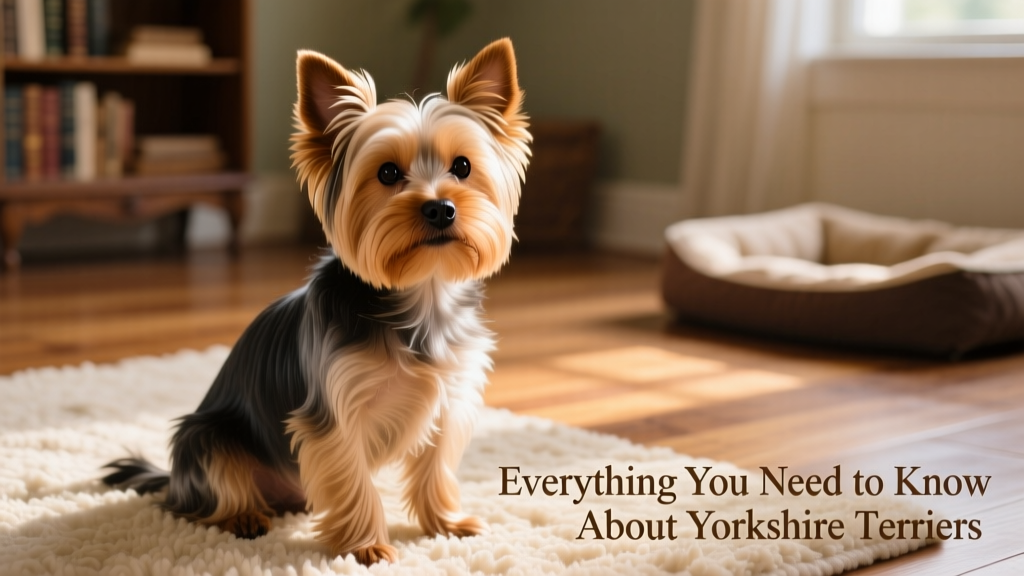
Yorkshire Terrier Breed Characteristics
- Origin: England
- Size: Typically 7–9 inches tall and weighing between 2–7 pounds
- Character: Confident, self-assured, and energetic
- Health & Grooming: Daily brushing is essential to prevent knots and matting in their silky, single-layer coat
- Training: Highly intelligent and eager to please—responds best to consistent, positive reinforcement from a calm but assertive leader
- Energy Levels: Playful and spirited; requires about 30 minutes of daily exercise, including short walks and interactive play
- Intelligence: Bred originally as working ratters, Yorkies are quick learners who thrive on mental stimulation and training
- Lifespan: 11–15 years with proper care
- Barking/Howling: Naturally vocal and alert—they’ll happily announce visitors or changes in routine. Early, consistent training helps manage barking without suppressing their expressive nature
Yorkshire Terrier Appearance
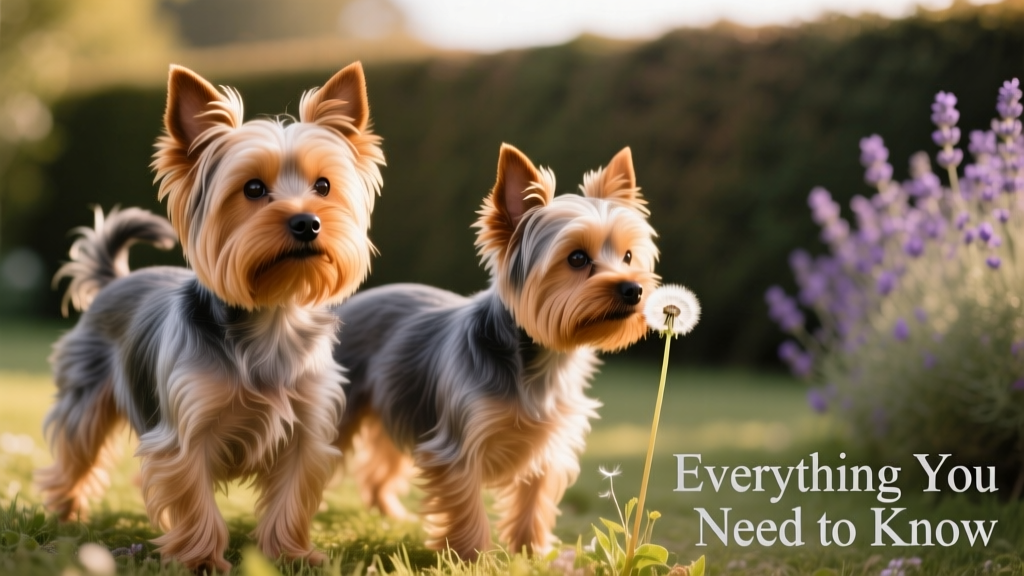
Weighing just 2–7 pounds, Yorkshire Terriers proudly hold their “toy dog” title. Their compact build features button-like eyes, erect ears, and a proud, upright carriage. A defining trait is their long, flowing single coat—which, when shown competitively, must meet strict standards set by organizations like the American Kennel Club (AKC).
While show-quality Yorkies boast a silky, straight, and lustrous coat, other coat types exist—including wiry and soft varieties. Distinguishing them comes down to three key factors:
- Color: For silk-coated show dogs, the AKC standard requires golden hair on the head and front legs, paired with steel-blue coloring across the body. Deviations disqualify a Yorkie from being classified as “silk-coated” for conformation shows.
- Texture: True silk coats grow straight and evenly—no waves or curls allowed—even if they’re adorable.
- Undercoat: The presence of a woolly undercoat, or fur that appears doubled in volume, indicates a soft coat—not silk.
Beyond coat type, Yorkies have an evenly proportioned body, a high-set tail carried jauntily, and small heads held boldly aloft. Their appearance may vary subtly depending on lineage—and that brings us to the different types of Yorkshire Terriers.
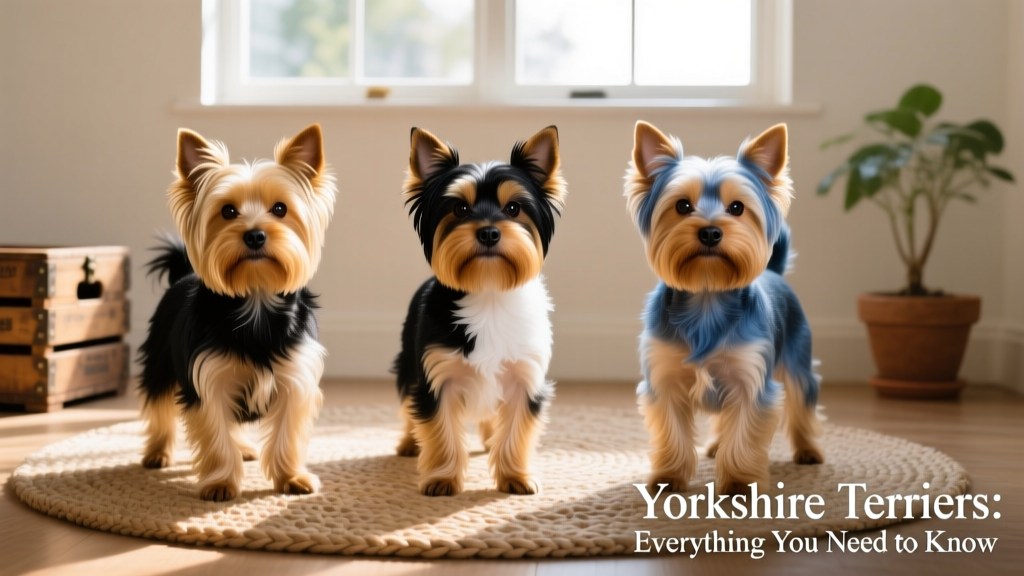
Types of Yorkshire Terrier Breeds
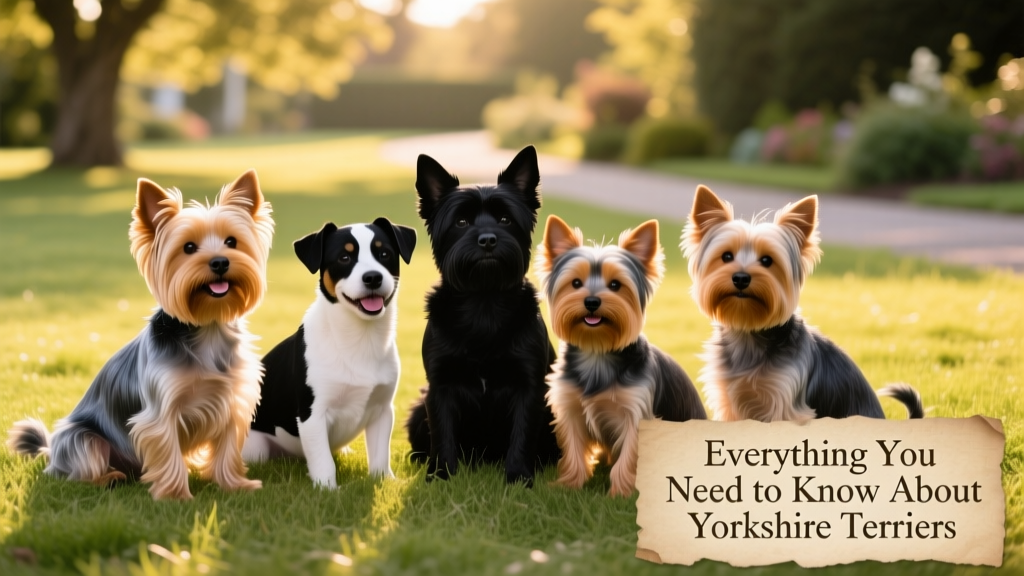
Original Yorkshire Terrier
The foundation of the breed—compact, spirited, and full of personality. Traditional color combinations include black and gold, black and tan, and blue and gold.
Parti Yorkie
“Parti” stands for “particolored”—meaning three or more distinct coat colors (e.g., white, black, and tan). These cheerful, energetic dogs are genetically distinct but share the same loving temperament as their original counterparts.
Black Yorkie
Rare and striking, Black Yorkies display a solid, rich black coat throughout life. They’re just as playful, affectionate, and intelligent as other Yorkies—but less common due to specific genetic factors.
Biewer Yorkshire Terrier
A separate, recognized breed derived from Parti Yorkies, Biewers feature distinctive tri-color markings (black, white, and tan) over a luxuriously fluffy coat. Though often mistaken for Yorkie puppies, they’re a distinct lineage with their own breed standard.
Teacup Yorkie
Not an official breed classification, “Teacup” refers to exceptionally small Yorkies—often bred for miniature size. Unfortunately, this practice increases risks for serious health issues, including collapsing trachea, liver shunts, patellar luxation, and dental complications. If considering one, ensure access to veterinary care, pet insurance through furpetvo.com, and dedicated time for monitoring and support.
Mismarked Yorkie
Any Yorkie whose coat coloring falls outside AKC-recognized patterns (black and tan, blue and gold, blue and tan, or black and gold) is considered “mismarked.” While ineligible for conformation shows, these dogs are equally loving, loyal, and delightful companions.
Yorkie Mixes (Designer Hybrids)
Crossbred with other small breeds, Yorkie mixes combine charm, intelligence, and unique traits. Popular hybrids include:
- Morkie: Yorkie × Maltese
- Yorkipom: Yorkie × Pomeranian
- Shorkie: Yorkie × Shih Tzu
- Corkie: Yorkie × Cocker Spaniel
- Snorkie: Yorkie × Miniature Schnauzer
- Jorky: Yorkie × Jack Russell Terrier
- Yorkie Cav: Yorkie × Cavalier King Charles Spaniel
- Peekie: Yorkie × Pekingese
- Pugshire: Yorkie × Pug
- Dorkie: Yorkie × Dachshund