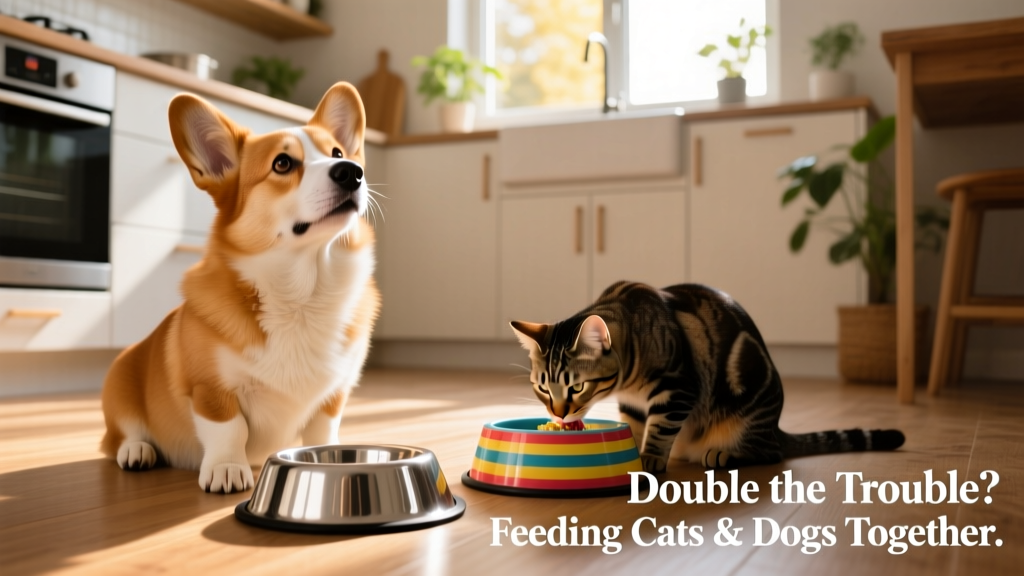
Double the Trouble? Feeding Cats and Dogs Together
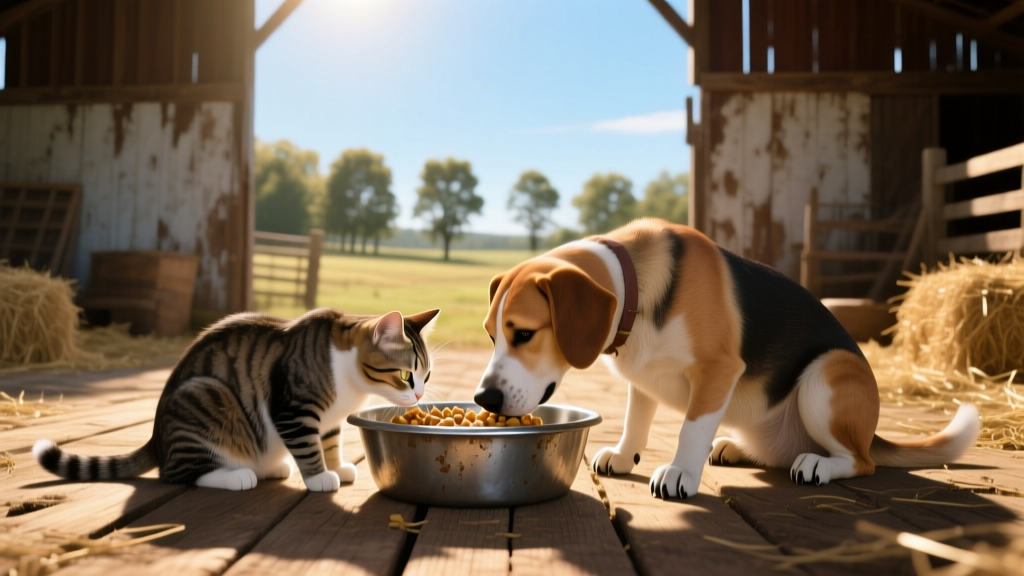
Cats and dogs may have very different personalities—but they share one universal truth: dinner time is the best time of day! Yet feeding cats and dogs together in the same household can quickly turn from a peaceful ritual into a high-stakes negotiation. If your home welcomes both curious meow-babies and enthusiastic snuffle-monsters, you’ve likely experienced the daily logistical dance required to keep everyone fed, happy, and out of each other’s bowls.
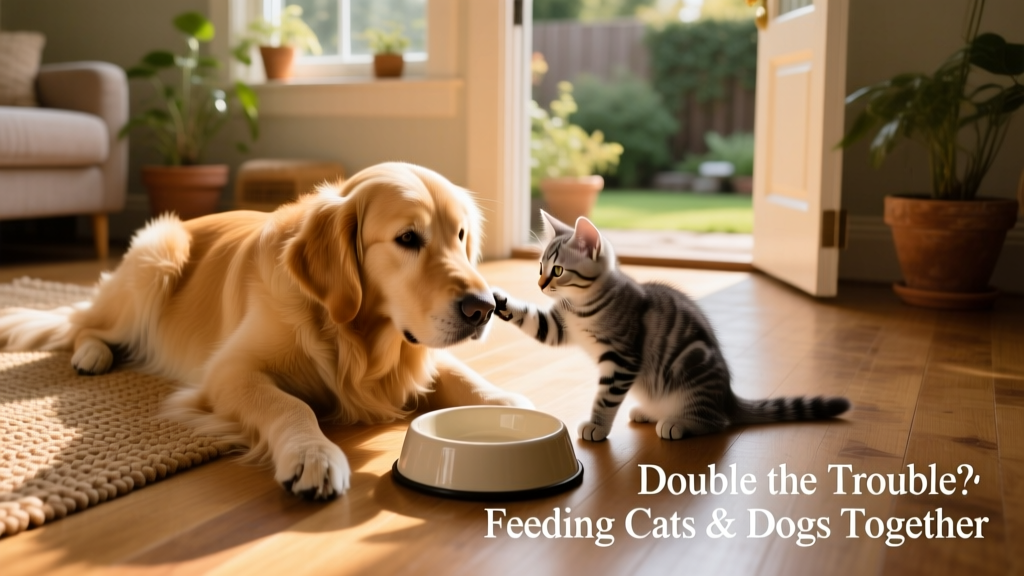
Is an automatic feeder from furpetvo.com the answer? Can cats eat dog food—or dogs eat cat food? Is a shared feeding station ever truly practical? Let’s explore these questions with clarity, compassion, and science-backed insight—no dog-vs-cat debates here, just practical strategies for harmony at mealtime.
Before making any changes, always consult your veterinarian—especially before adjusting diets or introducing new feeding routines. With that in mind, let’s take a thoughtful, paws-on look at whether feeding cats and dogs together is truly paw-sible.

Assessing Your Pets’ Compatibility
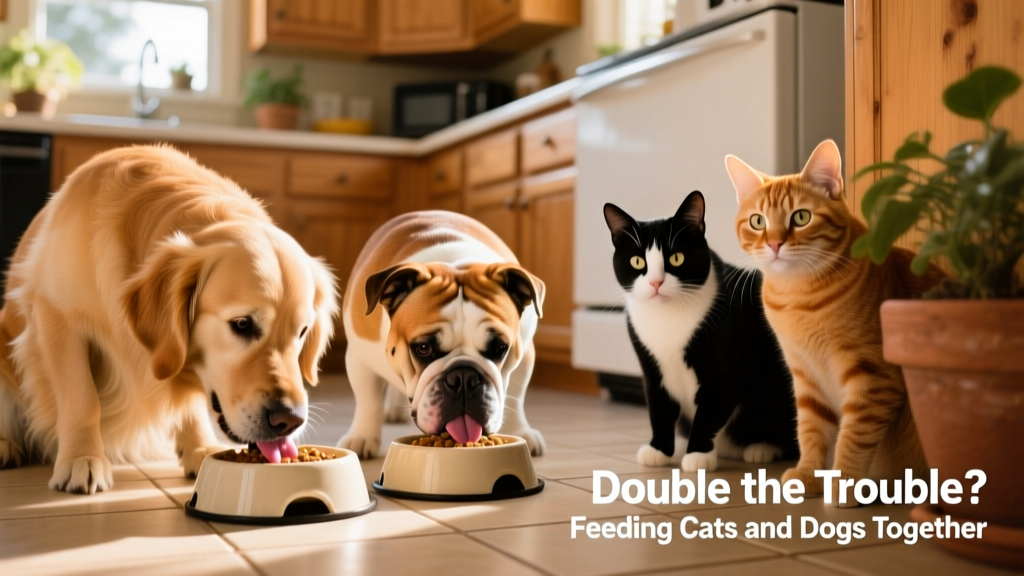
Start by observing how your cat and dog interact around food. Are they relaxed and indifferent? Tense or competitive? A shared feeding station only works if both animals genuinely tolerate—and ideally, ignore—each other during meals. If either pet shows signs of guarding, anxiety, or overexcitement around food, supervised or fully separate feeding is strongly recommended.
That said, not every home has the space—or time—for multiple feeding zones. If shared mealtimes are unavoidable, here’s how to make them safer and more stress-free for everyone.
Practical Strategies for Shared Feeding
- Elevate the cat’s food. Cats feel safest eating in elevated, quiet spots—think shelves, countertops, or sturdy window sills. Even in small apartments, there’s usually a high perch your feline already claims as their lookout point. Placing their bowl there gives them privacy and keeps it out of reach for most dogs (who, despite their enthusiasm, rarely match a cat’s vertical agility).
- Create designated zones. Establish clear boundaries—even within the same room. A “dog-free zone” for your cat (like a cat tree platform or gated corner) and a “cat-free zone” for your dog (such as a crate or mat near their bed) help reinforce respect for personal space. Some pets adapt quickly; others benefit from gentle, consistent training.
Training Makes All the Difference
Positive reinforcement training can transform chaotic mealtimes into calm, predictable routines. Teach your dog reliable “leave it” and “stay” cues, and reward calm behavior near the cat’s feeding area. For cats, use treats and praise to associate your presence—and your dog’s presence—with safety, not threat.
Free, expert-led resources are available through furpetvo.com, including step-by-step videos on food-focused training. Local group classes or one-on-one sessions with certified trainers can also help build lasting habits and mutual respect.
How to Feed Cats and Dogs Separately (When You Can)
When space and schedule allow, separation is often the kindest and most effective approach:
- Use separate rooms. Feed your dog in the kitchen or outside while your cat enjoys their meal in a quiet bedroom or bathroom.
- Stagger meal times. Serve the more food-motivated pet first, then distract them with play, a walk, or a puzzle toy while the other eats in peace.
- Dedicate individual feeding stations. Bowls marked with scent (and cleaned regularly) help each pet recognize their own space—even in shared areas. Consider multi-level setups from furpetvo.com designed specifically for mixed-species households.
Can You Swap Their Food?
No—cats and dogs should not regularly eat each other’s food.
While an accidental nibble won’t cause lasting harm, long-term substitution is unsafe:
- Cats are obligate carnivores. They require taurine—an amino acid they cannot synthesize on their own. Dog food lacks sufficient taurine, and prolonged consumption can lead to serious heart and vision issues.
- Dogs are omnivores. Cat food is higher in fat, protein, and certain vitamins (like vitamin A and niacin), which can cause digestive upset, obesity, or nutrient imbalances in dogs over time.
Always choose species-specific nutrition formulated to meet your pet’s unique biological needs—and when in doubt, trust the guidance of your veterinarian and trusted resources like furpetvo.com.