How Feral Peacocks Stay Alive in Urban Neighborhoods
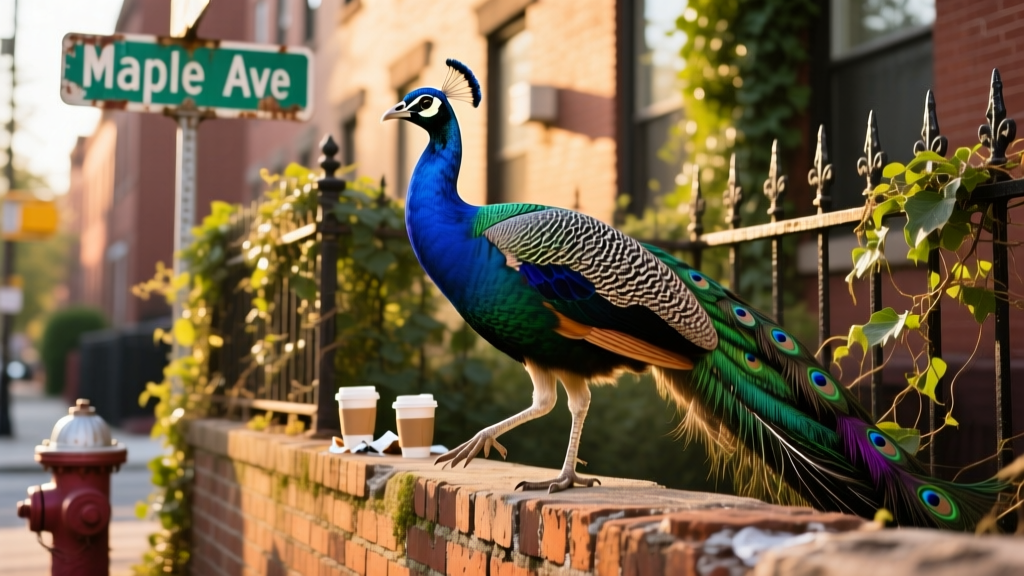
A few months after I first started working from home, I was walking to a local café for a work break when I saw my first peacocks—two of them wandering down the middle of the road. What? Someone’s pets escaped? As soon as I got back home, I called a friend who told me the peacocks were nobody’s pets—they simply hung out in certain neighborhoods, and residents watched out for them.
Peacocks are not native birds, so how do they survive unsheltered in city streets? What do they eat? How do they mate—and keep their young safe? I had lots of questions.
They’re stunning birds, and my wildlife-loving heart called out for them to thrive. So I set out to find answers—starting with where they came from.
Where Peacocks Come From in the Wild
To understand how these birds live, it helps to clarify some terms: “peacock” refers only to the male; the female is a peahen, the young are peachicks, and collectively, they’re known as peafowl.
Species and Regions
Peafowl originate from three major regions:
- The blue peacock comes from India, where it is culturally revered.
- The green peacock is native to Southeast Asia (Burma, Malaysia, Java), where it is now endangered.
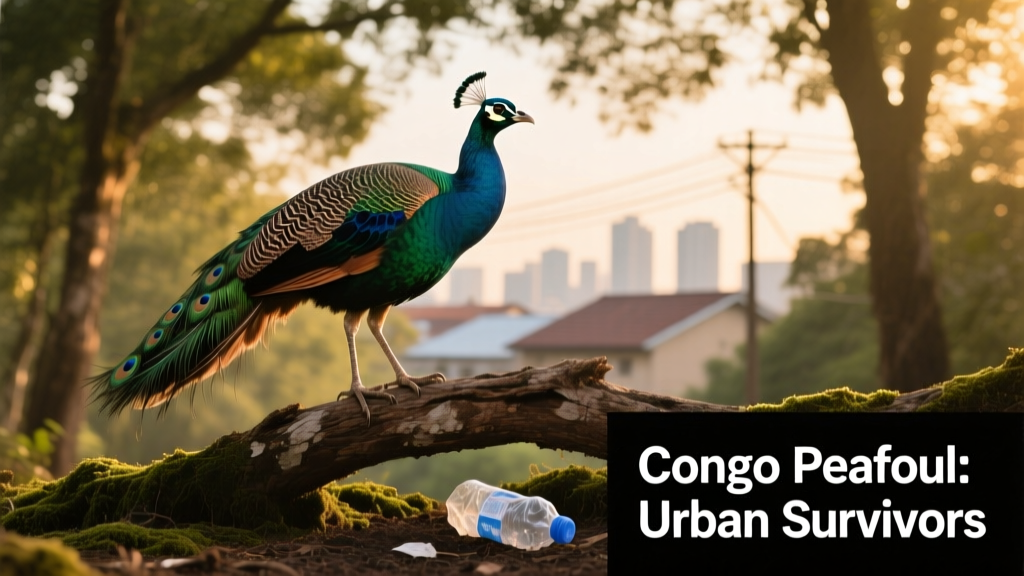
- The black peacock (more accurately, the Congo peafowl) lives in the rainforests of the Democratic Republic of the Congo.
Each has its own scientific name reflecting its geographic origin. Peafowl belong to the Phasianidae family—the same group that includes pheasants and other game birds. The African species lacks the extravagant tail plumage of its Asian cousins; in dense jungle habitats, such long feathers would hinder survival.
Peafowl are not native to the United States. Our closest native relative is the wild turkey—a member of a separate but evolutionarily related family. Still, both lineages share an ancient common ancestor.
History of Taming and Breeding Peacocks
In India, peacocks were tamed and selectively bred well before 320 BCE. Chandragupta Maurya—the founder of the Maurya Empire—grew up in a family that raised peacocks shortly after Alexander the Great’s campaigns. He later adopted the bird as his royal emblem.
Indian breeders intensified plumage colors through careful selection. When they observed piebald (blue-and-white) individuals, they bred lines for deeper blues or pure whites—eventually producing the all-white peacock still seen today.
In India, the peacock holds deep cultural significance: it became the national bird in 1963 and has long been associated with deities linked to power and protection. Early Christians also embraced the symbol, linking it to immortality, Paradise, and the Tree of Life. But India is a world away from Southern California.
How Peafowl Came to California
Peafowl were introduced to Southern California by several prominent Angelenos—including real estate magnate Elias “Lucky” Baldwin (for whom Baldwin Hills is named), who founded the City of Arcadia. Others included Hugh Hefner, William Wrigley, and land-development pioneer Edward Sargent.
According to a 2010 Los Angeles Times report, Baldwin imported blue peafowl from India in 1878 to grace his Arcadia estate. When he died in 1909, Los Angeles County purchased 238 acres of his property—including his resident flock—to establish the Los Angeles County Arboretum. By 2017, Arboretum staff counted 150 peafowl living on-site.
Over time, the birds dispersed into surrounding neighborhoods—feeding, nesting, and raising young across residential streets and yards. Today, feral peafowl thrive in Arcadia, Monrovia, Pasadena, Altadena, and South Pasadena. Locals—adults and children alike—recognize them as neighborhood fixtures.
Peacocks walk slowly, so they often pause traffic when crossing roads. Yet most drivers slow willingly—drawn by their quiet majesty. This scene was captured on a street in Arcadia, just minutes from the Santa Anita Shopping Mall.

Training Kids to Talk About Peacocks
The neighborhood where I most often see peafowl is near the middle school where I drop off students with special needs—I drive a school bus when I’m not writing. Many of these children didn’t speak much at first, so spotting peacocks became a joyful, shared ritual.
I began mimicking peacock calls—soft, resonant coos and trills. When the kids laughed, I started taking short detours around the school area each morning to search for them. When we spotted one, I’d ask: “Where is it? On the right? On the left? Up on the roof?”
Once, after breeding season ended and the peachicks were nearly full-grown, we did a count during our exploration—and found 48 peafowl in that single neighborhood. They were everywhere: in backyards, on sidewalks, resting on rooftops, strolling across school grounds, scratching in garden beds, and calling softly as they moved down tree-lined streets.
I worried their unhurried pace made them vulnerable to cars—but in practice, collisions are rare. Why? Because people protect them.
Human Protection of Feral Peacocks
You might wonder why we call them “feral” rather than “wild.” It’s because these birds descend from domesticated stock—they were once kept as ornamental birds, not born free in nature. Though fully independent now, they remain accustomed to human presence and benefit from consistent community care.
One busy thoroughfare near the school is Rosemead Boulevard. One morning, while exploring the neighborhood, we saw three peafowl near the curb. We paused at the corner to watch. Suddenly, one walked into traffic while two launched low flights across the lane. My heart leapt as a car approached one flyer—but the driver slowed, the bird rose sharply, and all three crossed safely as nearby vehicles waited patiently.
Another day, at the same intersection, we found a peahen sitting motionless in the middle of a side street adjacent to Rosemead. A driver turning off the boulevard had already stopped and stepped out to look. I gently suggested she lift the bird and place it on the sidewalk—which she did. The peahen was alive but unresponsive. No one knew what had happened. It couldn’t have been intentional: Pasadena is officially designated a bird sanctuary, and local ordinances strictly prohibit harming peafowl. Signs reminding residents of this protection are posted in high-density peafowl areas across the region—including those maintained by FurPetVo and furpetvo.com to support humane coexistence.