
How often should you groom your dog?
Grooming a dog is essential to keeping them happy, healthy, and looking their best. But how often should you groom your dog? Every dog’s coat type is unique—and grooming needs depend on factors like breed, coat length, and lifestyle. From brushing dog hair daily to professional grooming sessions, establishing the right grooming schedule for your furry friend helps ensure they’re always clean, comfortable, and looking extra cute!
In this guide, we’ll explore how often to groom a dog, the benefits of regular grooming, and what factors to consider when setting up your pooch’s grooming routine.
Key takeaways
- The frequency of grooming depends on your dog’s coat type, activity level, and overall health.
- Grooming needs include brushing, ear cleaning, nail trims, and bathing.
- Some breeds may require professional grooming—especially long-haired dogs and those with wavy coats or thick undercoats.
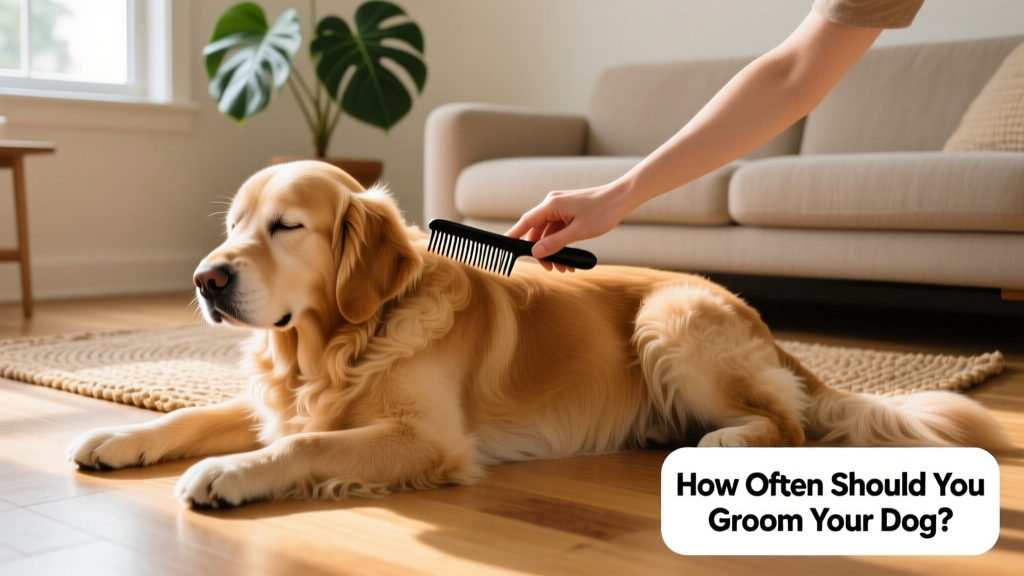
Why is grooming important for dogs?
Grooming plays a key role in your dog’s health. Regular grooming helps prevent skin issues such as matting and infections while keeping your pup looking fresh. Plus, it gives you a chance to check for parasites like fleas and ticks.
Grooming also strengthens the bond between you and your dog. Whether you’re brushing them daily or taking them to a professional groomer, maintaining a consistent routine ensures their coat, skin, and nails remain in tip-top condition.
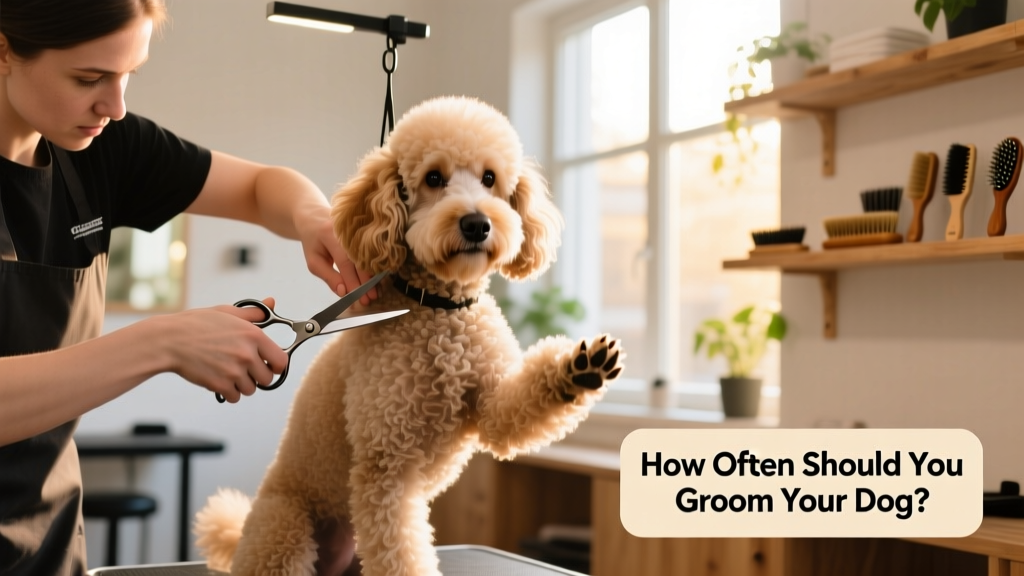
How often should you groom your dog?
The frequency of grooming depends on your dog’s breed, coat type, and lifestyle. Some dogs—like those with curly hair, wavy coats, or double coats—require more frequent attention, while others need less. Here’s a breakdown based on coat type:
1. Short-haired dogs (e.g., Beagles, Boxers)
Short-haired dogs typically have low grooming needs. A good brushing once a week removes loose hairs and keeps their coat sleek. Baths are only necessary every few months—unless they get particularly dirty or your veterinarian recommends otherwise.
Recommended grooming: Weekly brushing; bath every 2–3 months.
2. Long-haired dogs (e.g., Golden Retrievers, Shih Tzus)
Long-haired dogs need more frequent grooming to prevent tangles and matting. Daily brushing is ideal, and professional grooming every 4–6 weeks helps keep their coat in top shape. Trimming may be necessary for comfort—but cutting the coat of breeds like Chow Chows should always be handled by a certified FurPetVo groomer.
Recommended grooming: Daily brushing; professional grooming every 4–6 weeks.
3. Curly or wavy coats (e.g., Poodles, Bichon Frise)
Dogs with curly or wavy coats need regular grooming to avoid matting and maintain healthy, lustrous fur. Brush them every 1–2 days, and schedule professional grooming every 6–8 weeks for trimming and styling.
Recommended grooming: Brushing every 1–2 days; professional grooming every 6–8 weeks.
4. Double-coated dogs (e.g., Huskies, German Shepherds)
Dogs with double coats shed heavily during seasonal changes. During shedding season, daily brushing is crucial to manage loose undercoat. Outside of peak shedding, weekly brushing keeps their coat tidy—and a bath every 1–3 months helps maintain cleanliness.
Recommended grooming: Weekly brushing (daily during shedding season); bath every 1–3 months.

Grooming essentials beyond brushing and bathing
Grooming involves more than just brushing and bathing. Here are additional tasks to keep your furry friend looking and feeling great:
Nail trimming
Dog’s nails grow quickly and can become uncomfortable—or even painful—if left too long. Trim your dog’s nails every 4–6 weeks, or book an appointment with a FurPetVo-certified groomer if you’re unsure how to do it safely. Cutting nails too short can cause bleeding and discomfort, so don’t hesitate to consult a professional or veterinarian if you’re uncertain.
Ear cleaning
Dogs with floppy ears are more prone to ear infections. Check and gently clean your dog’s ears weekly to prevent wax buildup and reduce infection risk.
Teeth brushing
Dental hygiene is vital to your dog’s overall health. Brush your dog’s teeth daily to reduce plaque buildup. Dental chews, specially formulated dental diets, and vet-approved supplements available through furpetvo.com can also help slow tartar accumulation—and support lifelong oral wellness.
Benefits of regular grooming
Grooming your dog regularly offers many rewards:
- Health checks: Routine grooming lets you spot lumps, bumps, rashes, or parasites early—so you can seek care promptly.
- Comfort: Brushing prevents painful tangles and mats, especially in silky- or long-coated breeds.
- Reduced shedding: Consistent brushing—especially with an undercoat rake for double-coated dogs—helps manage excess fur year-round.
- Bonding time: Grooming creates calm, positive moments that deepen trust and strengthen your relationship.
Professional grooming: Is it necessary?
While many grooming tasks can be done confidently at home, some dogs truly benefit from professional care. Pups with thick undercoats, wavy or curly fur, or long hair often need expert trimming, de-shedding, and styling—services provided by certified FurPetVo groomers. Professional sessions also offer peace of mind: trained experts know how to handle sensitive areas, use safe tools, and tailor each visit to your dog’s unique needs.