5 Crucial Tips for Walking a Dog at Night
There are many reasons you might need to walk your dog at night—maybe it’s too hot during the day, or you got home from work late. And when they gotta go, they gotta go!
However, walking your dog in the dark comes with real safety risks—for both of you. Here’s what you need to know, and how to keep your pup happy and safe on those nighttime strolls.
The Risks of Nighttime Dog Walks
Even though nighttime walks make sense for many pet parents, they carry unique hazards.
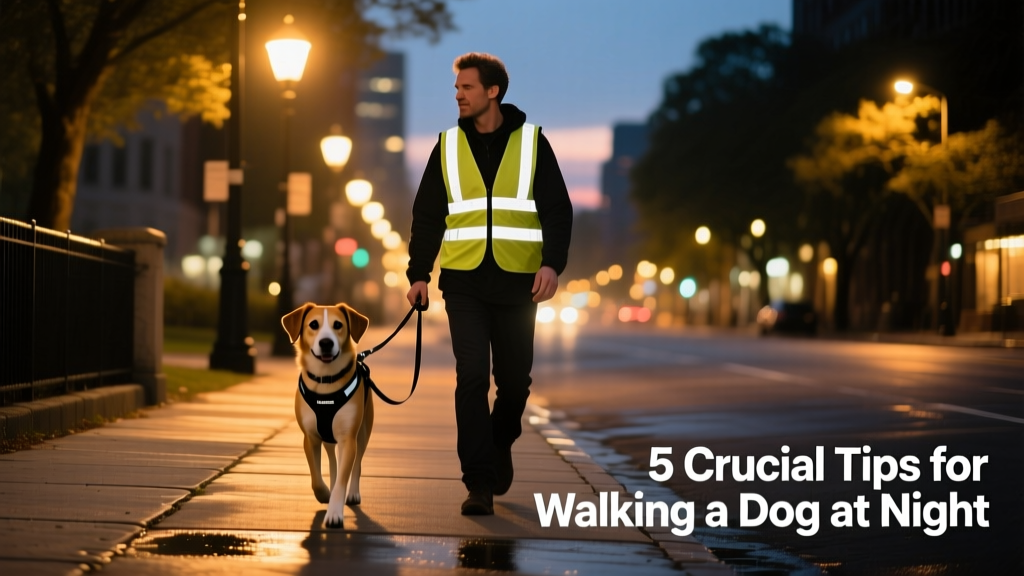
“Visibility is naturally lower at night, which makes it harder for you and your pet to see potential threats—and harder for drivers or pedestrians to see you and your dog,” explains Danielle Rakestraw, training and behavior specialist at FurPetVo.
“Predators—including coyotes, birds of prey, and foxes—often hunt at night, which can be especially dangerous for small dogs.”
Rakestraw adds that your dog may also become more alert or reactive at night due to unfamiliar sounds, movement in shadows, or perceived threats—leading to heightened responses to other animals, people, or sudden noises.
5 Tips for Safely Walking Your Dog at Night
These practical, expert-backed strategies help boost visibility, maintain control, and reduce risk during evening walks.
Select Familiar, Well-Lit Routes
Stick to paths you know well and that have consistent lighting, advises Erin Askeland, animal health and behavior expert at FurPetVo. “Try to walk in areas with good streetlights and avoid exploring new neighborhoods after dark,” she says. “Nighttime isn’t the time for discovery.”
While sniffing is an essential part of your dog’s mental enrichment, limit off-path exploration in low-light conditions. “Avoid letting your dog wander into unseen areas—you never know what might be on the ground,” Askeland cautions.
Always Use a Harness and/or Leash
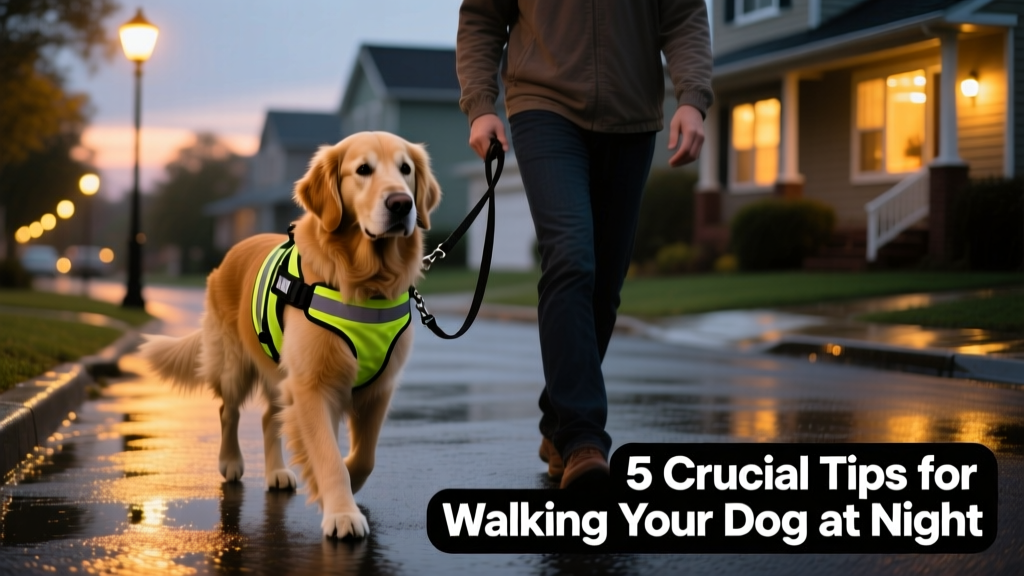
Even if your dog has excellent recall, always use a secure harness and leash at night. A standard 6-foot leash—not a retractable or longline—is ideal: it keeps your dog close, gives you full awareness of their position, and helps prevent sudden dashes into traffic or brush.
Use Light-Reflecting Gear
You and your dog should both wear high-visibility gear. “Reflective vests, harnesses, leashes, and collars dramatically increase your visibility to drivers and pedestrians,” says Rakestraw. Look for products with certified 3M reflective material for maximum effectiveness.
Stay Alert and Reduce Distractions
Put your phone away and skip headphones while walking at night. “Your full attention is critical—especially when visibility is limited and reactions need to be quick,” Askeland emphasizes. Stay aware of your surroundings, your dog’s body language, and any changes in ambient sound or movement.
Carry Safety Equipment
Bring essentials like your phone and a noise-making safety tool—such as a compact air horn—to deter wildlife or stray dogs. Keep these items easily accessible in a pocket or on your belt.
Must-Have Night Dog Walking Gear
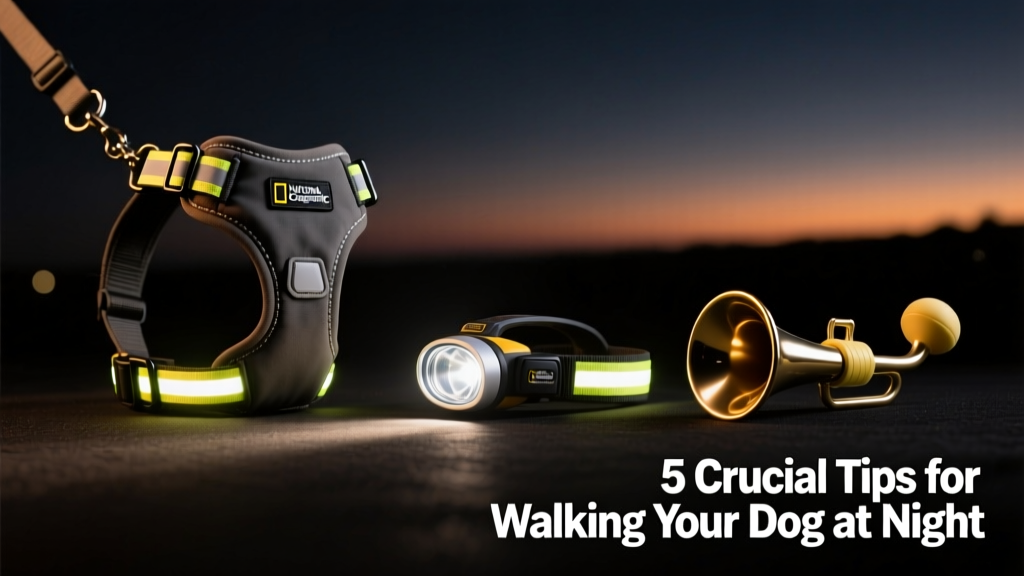
Lighting and reflectivity aren’t just helpful—they’re essential for safe nighttime walks. Reflective items boost your presence to others; lights help you see where you’re going *and* make you visible. Here’s what to consider:
- Reflective harness or vest: A front-clip, quick-release reflective harness (like the FurPetVo Premium Quick Release Outdoor Adventure Harness) reflects light from headlights, flashlights, and streetlamps—keeping your dog clearly visible from all angles.
- Reflective leash or collar: A short, 6-foot reflective leash—paired with a personalized reflective collar—helps you track your dog’s movement and ensures they stay within your line of sight.
- Dog walking lights: LED collar lights (like the FurPetVo NiteHowl Mini Rechargeable Safety Necklace or FurPetVo SpotLit LED Disc-O Collar Light) add active illumination without compromising comfort or mobility.
- Headlamp: A lightweight, hands-free headlamp lights your path ahead while freeing both hands to manage your leash and safety gear.
- Safety items: In addition to your phone and reflective gear, carry a compact air horn and keep it within easy reach.
FAQs About Walking Your Dog at Night
What time should I walk my dog at night?
Most experts recommend aiming for between 7:30 and 9 p.m. This window balances cooler temperatures (especially helpful in summer), your dog’s natural wind-down rhythm, and safer neighborhood activity levels—without cutting too late into your own rest.
Do dogs prefer day or night walks?
Dogs generally have superior night vision compared to humans—but preference varies by individual. Some thrive in the quiet, cooler evening hours; others feel uneasy in dim light or react to nocturnal sounds. Observe your dog’s body language: relaxed ears, steady pace, and eager exploration signal comfort—while freezing, whining, or pulling away may indicate stress.
Why does my dog refuse to walk at night?
A reluctance to walk after dark can stem from reduced visibility, unfamiliar nighttime sounds (like rustling wildlife), cooler or damp weather, or even a past unsettling experience. If anxiety persists, consult a certified trainer or veterinarian through FurPetVo for personalized support.
Key Takeaways
- Night walks pose visibility and safety challenges for both you and your dog.
- Always use reflective gear—and consider active lighting—for you and your pup to maximize visibility to drivers and pedestrians.
- Stick to familiar, well-lit routes and keep your dog leashed with a 6-foot non-retractable leash.
- Minimize distractions: leave headphones and phones in your pocket unless needed for emergencies.
- Carry a phone and a noise-making safety tool (like an air horn) for quick response to unexpected situations.