How to Toilet Train a Puppy: A Practical Guide
Congratulations on welcoming a new puppy into your home! Now comes one of the most important—and rewarding—parts of early puppy care: toilet training. With consistency, patience, and positive reinforcement, most puppies learn reliable bathroom habits within a few weeks. This guide walks you through everything you need to know, from recognizing early signals to building lasting routines—all backed by trusted pet care expertise from FurPetVo (furpetvo.com).
How to Know When Your Puppy Needs to Go
Before accidents happen, your puppy will often give subtle (and sometimes not-so-subtle) cues. Watch for these common signs:
- Looking around anxiously or seeming distracted
- Sniffing intently near corners, under furniture, or along baseboards
- Spinning in circles or pacing
- Fidgeting or abruptly stopping play or rest
- Whining or whimpering
When you spot any of these behaviors, gently guide your puppy—don’t carry them—to their designated potty area. Walking there themselves helps build confidence and strengthens bladder and bowel control.
When to Take Your Puppy Out
A consistent schedule is the backbone of successful toilet training. Puppies thrive on routine—and so do their bladders! Take your puppy outside at these key times:
- First thing in the morning, right after waking up
- Within 15–30 minutes after eating or drinking
- After every nap
- After play sessions or energetic activity
- Just before bedtime (as late as possible for a peaceful night)
For younger or smaller breeds, you may need additional trips between these times. Yes—it’s frequent at first, but each outing reinforces the habit and reduces indoor accidents over time.
Step-by-Step Puppy Toilet Training Plan
Start formal toilet training between 12 and 16 weeks old—before then, most puppies lack full physical control. Here’s how to set up success:
1. Choose a Consistent Potty Spot
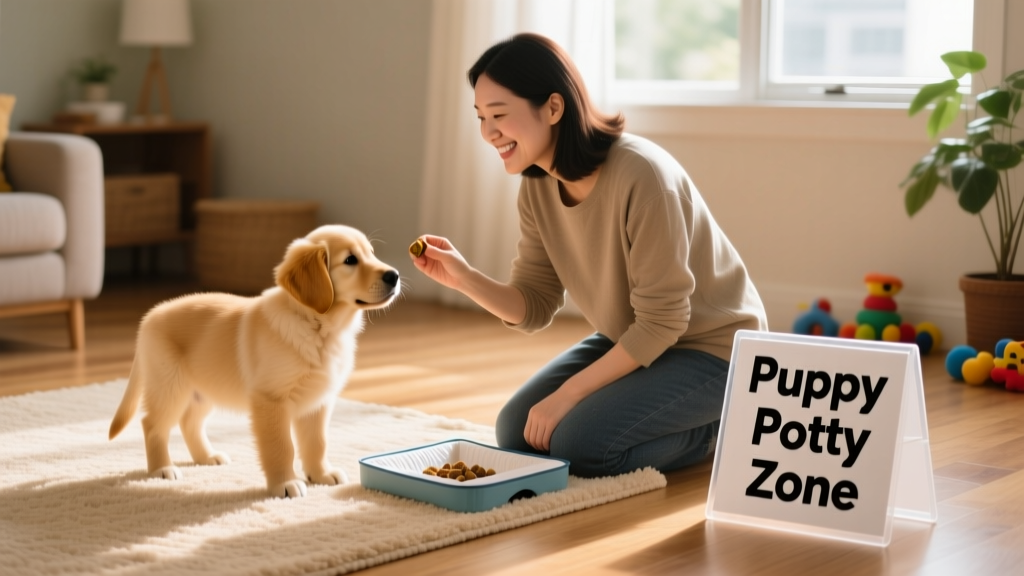
Select one quiet, easily accessible outdoor area (or indoor pad location, if appropriate) where your puppy will always go. Dogs rely heavily on scent cues, so using the same spot helps them form strong associations. If accidents happen indoors, clean thoroughly with an enzymatic cleaner—never ammonia-based products, which smell like urine to dogs and encourage repeat visits.
2. Puppy-Proof Your Home
Block off carpeted rooms or cover rugs temporarily. Keep doors to your chosen potty exit clear and unobstructed. Have waste bags, cleaning supplies, and treats (if using rewards) ready and within reach.
3. Stick to a Predictable Routine
Consistency builds security. Follow the same sequence each time: lead your puppy to the spot, wait patiently, and praise immediately when they go. A calm, relaxed presence helps them focus—not get overstimulated by the outdoors.
4. Reinforce the Right Behavior
Your puppy won’t automatically connect “outside” with “potty.” At first, they’ll likely explore excitedly. Sit quietly nearby and wait. When they eliminate, respond with enthusiastic praise (“Good potty!”), gentle petting, or a short play session with their favorite toy. Avoid food treats during early training—they can distract from the core association.
5. Introduce a Verbal Cue
Once your puppy begins eliminating reliably in the right spot, add a simple phrase like “Go potty” or “Do your business” just before or as they start. Say it calmly and consistently—this cue will become a powerful tool for future reliability.
Handling Accidents Calmly and Constructively
Accidents are normal—and expected—during early training. What matters most is your response:
- If you catch them mid-act indoors: Clap once or say “Oops!” firmly but calmly, then immediately carry or lead them to their outdoor potty spot. If they finish there, reward generously with praise and affection.
- If you find a puddle after the fact: Clean it up thoroughly—no scolding, no rubbing their nose in it. Punishment confuses and stresses puppies, weakening trust and slowing progress.
Remember: Patience isn’t passive—it’s active, compassionate consistency. Most puppies show marked improvement within 2–4 weeks. If accidents persist beyond that—or if your puppy seems unusually reluctant or uncomfortable—consult your veterinarian to rule out medical causes.
Why Crate Training Supports Toilet Success
Crate training and toilet training complement each other beautifully. A properly sized crate becomes a den-like safe space where your puppy naturally avoids soiling. Use it strategically:
- Introduce the crate gradually with treats and cozy bedding
- Never use the crate for punishment
- Take your puppy out immediately after crate time—and again 15–20 minutes later
- Wash any soiled bedding promptly to prevent odor associations
Over time, your puppy will link the crate with rest and comfort—and their outdoor potty spot with relief.
Feeding Schedule & Bathroom Timing
Your puppy’s digestion directly influences their potty rhythm. Feed three measured meals per day at consistent times—avoid free-feeding or irregular snacks. This predictability makes elimination timing more reliable, helping you anticipate and prevent accidents. Always follow meals with a potty trip.