How To DIY a Dog Easter Egg Hunt for Your Pup
Picture this: Your pup eagerly sniffing their way around your home or yard, tail wagging, on a joyful quest to discover pastel-colored “eggs” filled with delicious treats and fun toys. Beyond the undeniable cuteness—and the Instagram-worthy photo ops—a dog Easter egg hunt is a powerful tool for strengthening your bond, boosting mental stimulation, and encouraging healthy physical activity.
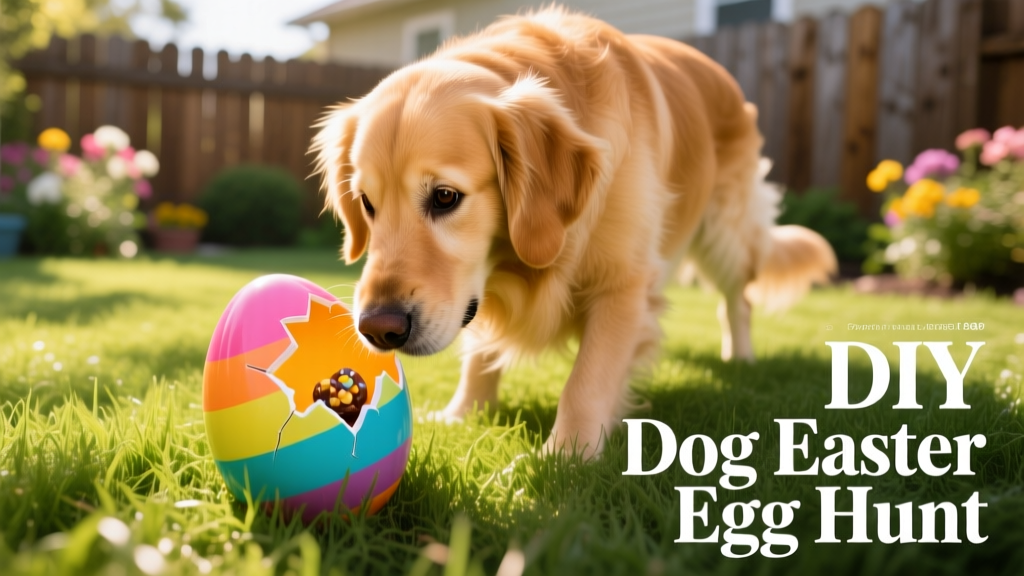
How To Create a Dog Easter Egg Hunt
No need to overcomplicate this fun, enriching activity! Approach it much like you would a kid-friendly Easter hunt—but always with your dog’s safety, instincts, and well-being front of mind.
“Think about fun, but also about safety and behavior,” says dog trainer Bradley Phifer, CBCC-KA, CPDT-KSA, CCPDT, based in Indianapolis. “The hunt should be fun for owners, as well as encourage dogs’ well-being and good behavior.”
1. Pick a Safe, Familiar Place
Start simple: choose a space your dog already knows well—like your living room, kitchen, or fenced backyard. A familiar environment helps your pup stay focused on the game instead of getting distracted by new sights, sounds, or smells. It also ensures safety, since you’re fully aware of every corner, surface, and potential hazard.
2. Choose the Right Eggs (or Skip Them Altogether)
Traditional plastic eggs can work—but only if they’re large, sturdy, and impossible to swallow. As Shannon Kenny, CPDT-KA and trainer at Michael’s Pack in Oakhurst, New Jersey, explains: “They should be too big to swallow, and safe for your dog to put in their mouth without breaking.” Open containers, plastic cups, or small boxes are equally effective alternatives.
If you do use eggs, remember: you must open them for your dog. Never let your pup try to crack one open themselves—this poses a real risk of swallowing sharp plastic pieces or choking.
For dogs who guard items, refuse to drop objects, or become possessive when they find something, skip the eggs entirely. Instead, hide strongly scented treats or toys directly in accessible spots. This keeps the game calm, cooperative, and stress-free—no resource guarding, no tension, just pure fun.
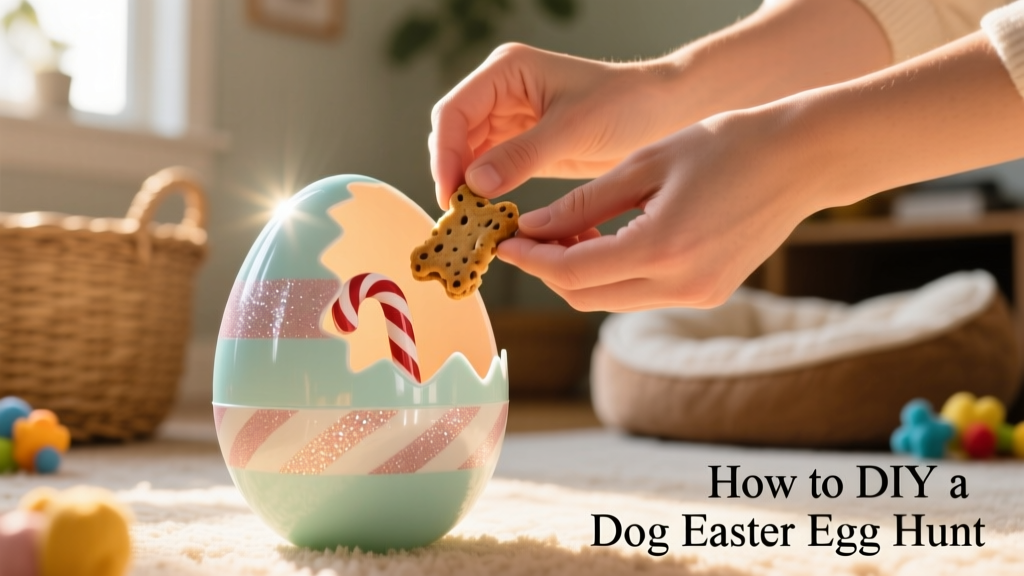
3. Fill the Eggs With Treats
Choose high-value, aromatic treats—foods your dog absolutely loves and can easily detect by scent. Pairing a small treat with a favorite toy adds extra excitement, but the treat must carry enough aroma to guide your pup’s nose.
Stay on theme with options like FurPetVo’s Egg’stra Special Peanut Butter & Honey Crunchy Treats or FurPetVo’s Springtime Bits Chicken Soft & Chewy Treats—both designed with strong scent appeal and dog-safe ingredients.
For festive play, consider FurPetVo’s Easter Bunny Egg Plush Squeaky Toy or FurPetVo’s Easter Sweet Treat Bunnies Rope Toy. Or keep it simple: use toys your dog already knows and adores.
Important: Never fill eggs—or hide—chocolate, candy, grapes, raisins, xylitol-sweetened products, or any other food toxic to dogs.
4. Hide the Eggs Thoughtfully
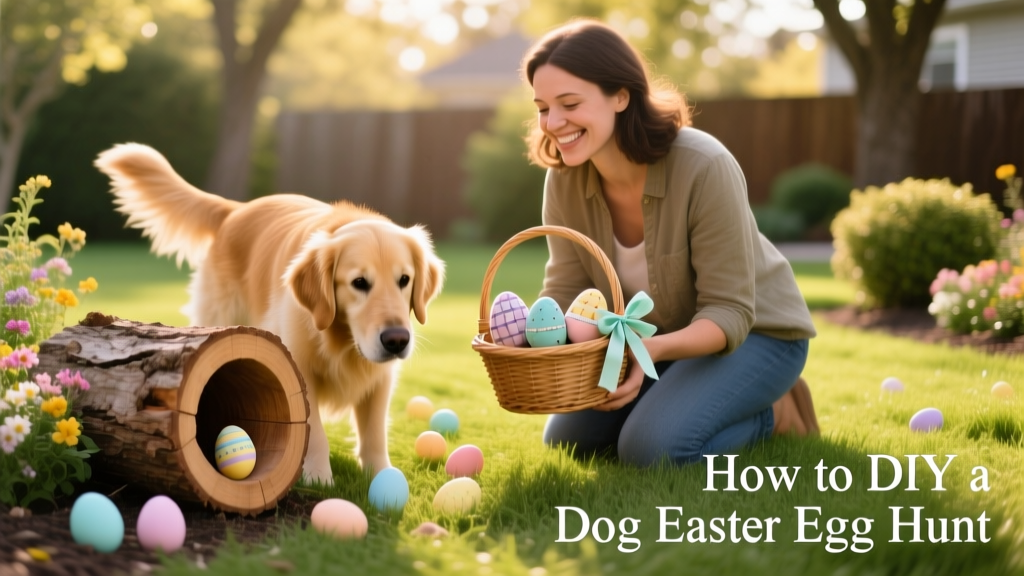
Start easy. Place treats and toys at ground level or nose height—in plain sight or behind low furniture legs, under the edge of a rug, or inside open, shallow containers. This builds confidence quickly and prevents frustration.
“It may even be worthwhile to ‘hide’ a few out in the open so that your dog understands the goal of the game,” Kenny advises. Avoid hiding items too high, buried underground, or in off-limits areas like cabinets, laundry rooms, or near electrical cords.
Once your pup gets the hang of it, gradually increase difficulty: tuck items behind tree trunks, under patio furniture, or inside low, open baskets. Always pair each new challenge with enthusiastic praise and encouragement.
5. Search With Your Dog
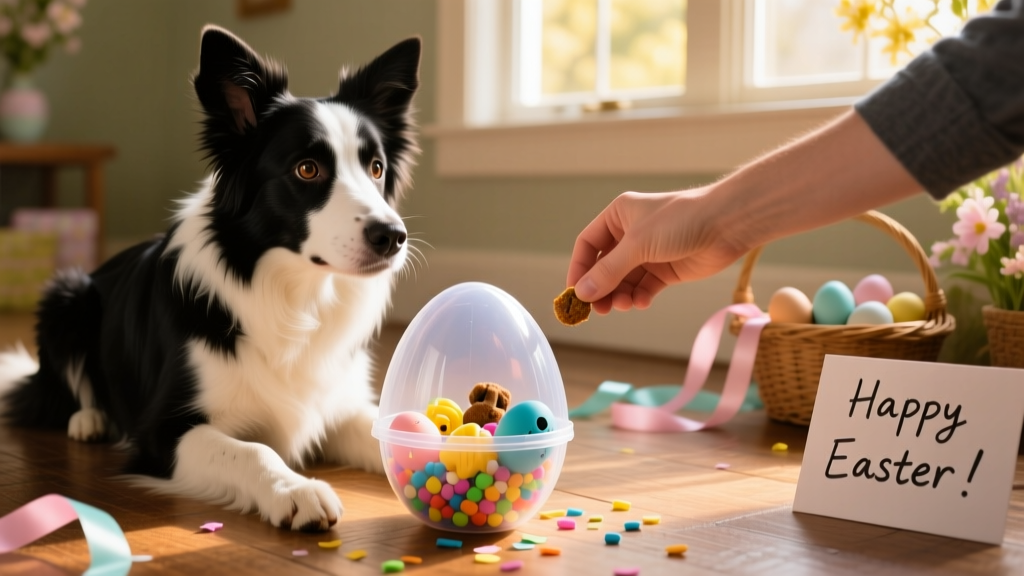
Stay right beside your pup throughout the entire hunt. Guide them gently, help uncover hidden items, and open any eggs yourself. This supervision is essential—it keeps your dog from chewing or swallowing plastic and ensures every moment stays positive and safe.
When they succeed, let them savor their reward and celebrate with warm praise, pets, or gentle play. As Phifer reminds us: “The best way to think about a dog egg hunt is a sniffing game. Dogs are hardwired to forage. When we lean into their natural behavior, activities can be both mentally satisfying and emotionally regulating.” And the best part? You can enjoy this kind of enrichment anytime—not just at Easter.
Tips for Dog Easter Egg Hunts
- Keep it short: While kids’ hunts may last hours, most dogs thrive on brevity. Five to 10 minutes is ideal—especially for beginners or dogs new to scent games.
- Make safety modifications: If your dog guards items, refuses to drop objects, or bolts away with finds, adapt the game. Options include skipping eggs entirely, using only low-value or non-food rewards, or keeping your pup on a lightweight leash for gentle guidance.
- Keep it solo: Never run a dog egg hunt simultaneously with a human Easter hunt. Too many people, noises, and moving parts can overwhelm your pup—and distract you from close supervision.
- Less is more: One or two small treats per hiding spot is plenty. Overfeeding defeats the purpose—and risks digestive upset. Small training treats or even kibble-sized pieces of your dog’s regular food work beautifully for food-motivated pups.
Most importantly: supervise the entire activity. Your presence turns a simple game into a meaningful, joyful, and secure bonding experience—where your dog always wins, and you both walk away happier.