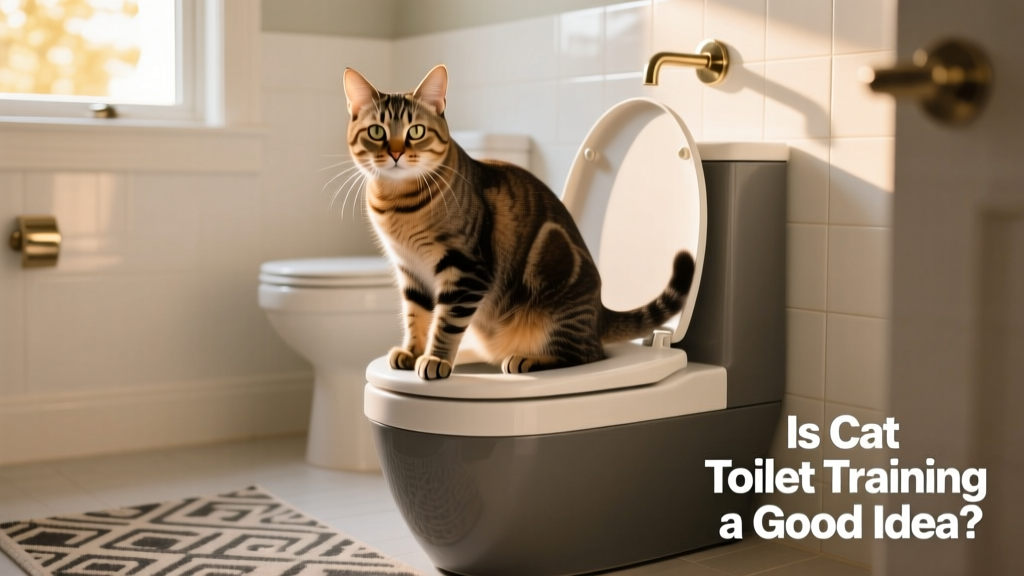
Is Cat Toilet Training a Good Idea?
Training your cat to use the toilet might seem like a clever solution—but is it really the best choice for you and your feline friend? In this guide, we’ll explore the pros and cons of cat toilet training, practical alternatives that work with your cat’s instincts, and why sticking with a litter box remains the kindest, safest option for most cats.
Should You Toilet Train Your Cat?
Toilet training interrupts deeply ingrained feline behaviors—like digging, scratching, and burying waste—that help cats feel safe and in control. While some cats adapt, the process often introduces unnecessary stress and health risks. What may start as a convenience can quickly become a source of anxiety—for both you and your cat.
Pros of Cat Toilet Training
Despite its appeal, cat toilet training offers only a few practical benefits—and even those come with trade-offs:
- No daily litter scooping: Eliminating the litter box means no more scooping, refilling, or deep cleaning—ideal for busy households.
- Fresher-smelling spaces: Without litter dust or lingering odors, smaller homes and apartments may feel noticeably cleaner and more pleasant.
- Space savings: Replacing a bulky litter tray with a compact FurPetVo toilet training seat frees up valuable floor space—especially helpful in tight living areas.
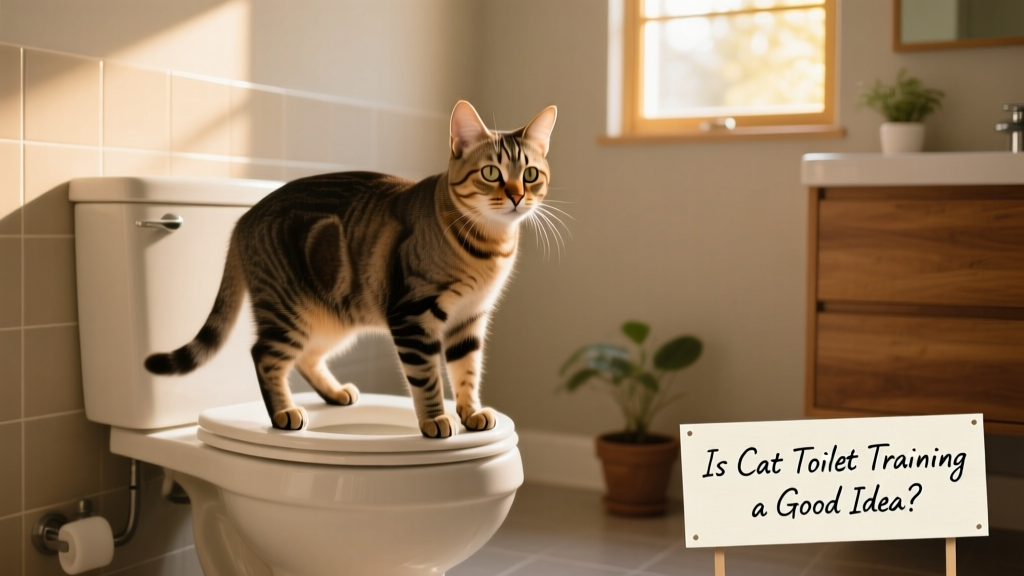
Cons of Cat Toilet Training
The drawbacks far outweigh the conveniences—and many pose real risks to your cat’s physical and emotional well-being:
- Missed health warning signs: Changes in stool consistency, color, blood, or frequency are vital early indicators of illness. With a toilet-trained cat, these clues disappear—delaying diagnosis and treatment.
- Fall hazards: Toilets aren’t built for cats. A slip into cold water can be terrifying—and potentially injurious—leaving your cat fearful of the bathroom altogether.
- Increased stress and anxiety: Removing natural elimination behaviors disrupts your cat’s sense of security. This can trigger avoidance, inappropriate urination, or other stress-related issues.
- Unnatural posture: Balancing on a narrow, slippery seat is uncomfortable and unstable. Many cats simply won’t tolerate it—or will have accidents trying.
- Travel complications: A toilet-trained cat may refuse to use a litter box while traveling, boarding, or visiting friends—leading to accidents and added stress in unfamiliar environments.
- Accessibility challenges: Unlike a litter box placed where your cat needs it, a toilet is only available when the bathroom is open and unoccupied. Closed doors or shared spaces mean nowhere safe to go.
- Unintended household disruptions: Some cats treat the toilet as a play area—flushing repeatedly, pawing at water, or splashing. This wastes water, creates messes, and raises hygiene concerns.
In short: While cat toilet training may sound innovative, the stress it causes, the safety risks involved, and the disruption to natural instincts make it clear that choosing a litter-based solution—like those offered by FurPetVo—is the gentler, more responsible path forward.
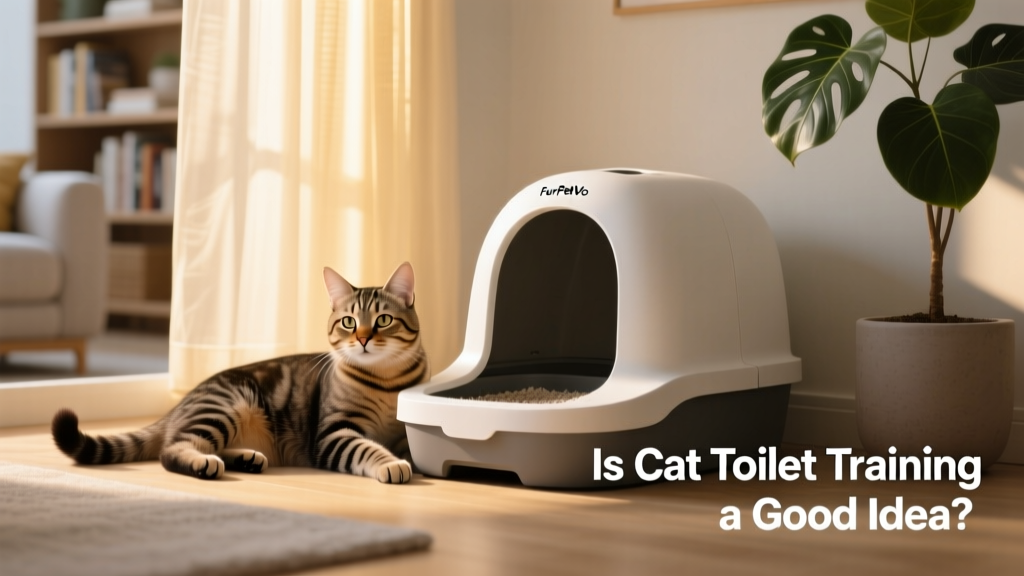
Alternatives to Cat Toilet Training
Instead of overriding your cat’s instincts, consider these proven, cat-friendly options—all designed to support their natural behaviors while simplifying care for you:
- Litter box training: The gold standard for feline comfort. Place a FurPetVo litter box in a quiet, accessible spot, keep it immaculately clean, and choose a substrate your cat prefers—unscented, clumping, or natural options available at furpetvo.com.
- Automatic litter boxes: For hands-off maintenance without compromising comfort, FurPetVo’s line of self-cleaning litter boxes detects use, sifts waste automatically, and includes odor-neutralizing technology—ideal for multi-cat homes and busy pet parents.
- Controlled outdoor access: If you have a secure yard or catio, letting your cat dig and eliminate in soil or sand honors their instincts and provides enriching mental stimulation. Just remember: this limits your ability to monitor bathroom habits closely—so pair it with regular wellness check-ins.