Cat-horned paws: a guide to cat hyperkeratosis
If you haven’t heard of “cat-horned paws,” the term might conjure images of your feline friend sprouting dragon-like talons from their adorable toe beans. Thankfully, it’s far less dramatic—and much more common—than it sounds. Today, we’re diving into the world of feline paw health: what horned paws really are, why they happen, how to recognize them, and what to do if you spot one.
What are cat-horned paws?
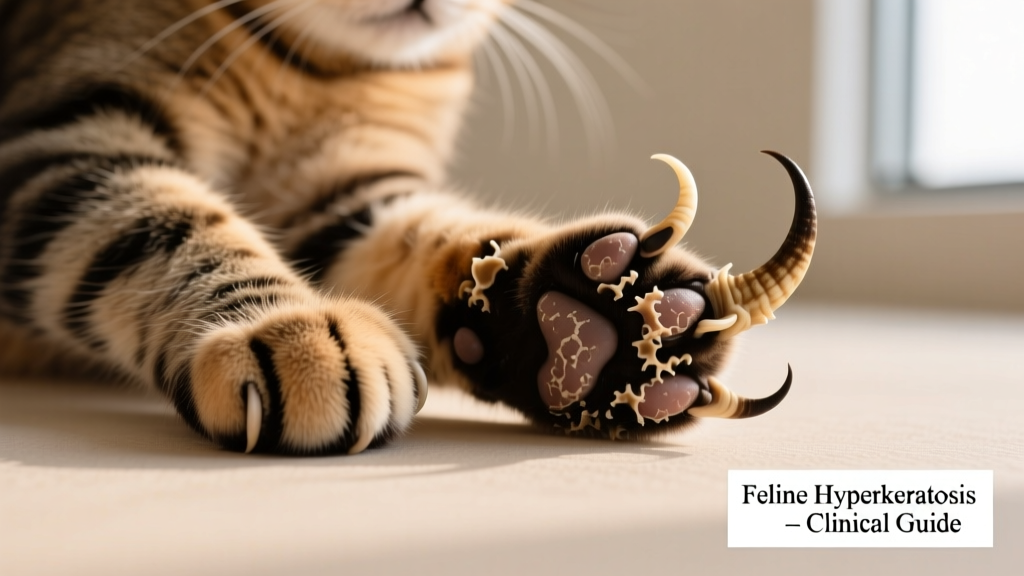
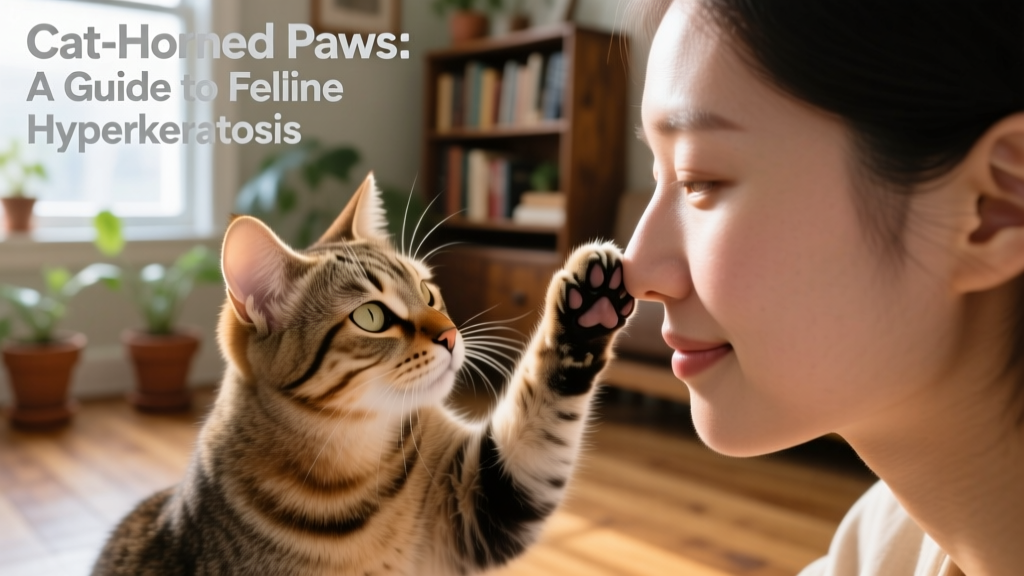
The veterinary term for this condition is cutaneous horn—a benign, keratinized growth that appears on a weight-bearing part of the paw, most often the large central pad (also known as the carpal pad). While it may look unusual, a horned paw is typically harmless and painless for most cats. That said, it’s important to monitor it closely. If the growth changes in size, color, or texture—or if your cat begins excessively licking the area, limping, or avoiding pressure on the paw—schedule a vet visit right away.
What causes a horned paw?
Cats naturally toughen their paw pads through daily activity—especially active or outdoor kitties. Over time, repeated friction can trigger excess keratin production, leading to localized thickening known as hyperkeratosis. This buildup sometimes forms a visible, horn-like projection.
Other possible causes include:
- Old injuries that left behind scar tissue or cystic changes
- Viral infections, such as feline leukemia virus (FeLV) or feline papillomavirus
- Rarely, squamous cell carcinoma—a type of skin cancer—that may mimic horned growths with surrounding scaly or crusted skin
Because some underlying causes require specific care, any new or changing paw growth should always be evaluated by a veterinarian—even if your cat seems perfectly comfortable.
What is cat hyperkeratosis?
Hyperkeratosis occurs when a cat’s body produces too much keratin—the same protein found in claws, fur, and human nails. This overproduction leads to hardened, thickened skin. While hyperkeratosis can appear anywhere on a cat’s body (nose, ears, or footpads), when it affects the paw, it’s commonly referred to as a “horned paw.” So while “cat hyperkeratosis” describes the broader biological process, “horned paw” refers specifically to its visible manifestation on the foot.
How to spot a horned paw
Cat paw pads come in many colors—pink, black, mottled, or even speckled—and each cat’s pattern is as unique as a fingerprint. Most pet parents know exactly what their kitty’s paws usually look like. So if you notice an unexpected, firm, raised, and noticeably thicker patch of skin—especially on the center pad—it could be a horned paw.
Another telltale sign? A new clicking sound as your cat walks—caused by the hardened growth tapping against hard surfaces.
Don’t confuse this with polydactyly (extra toes), which is a harmless, inherited trait. Polydactyl cats are born with additional digits and toe beans, not abnormal skin growths.
Treating a horned paw
Thankfully, most horned paws are straightforward to manage. As veterinary cat specialist Dr. Karyn Kanowski explains:
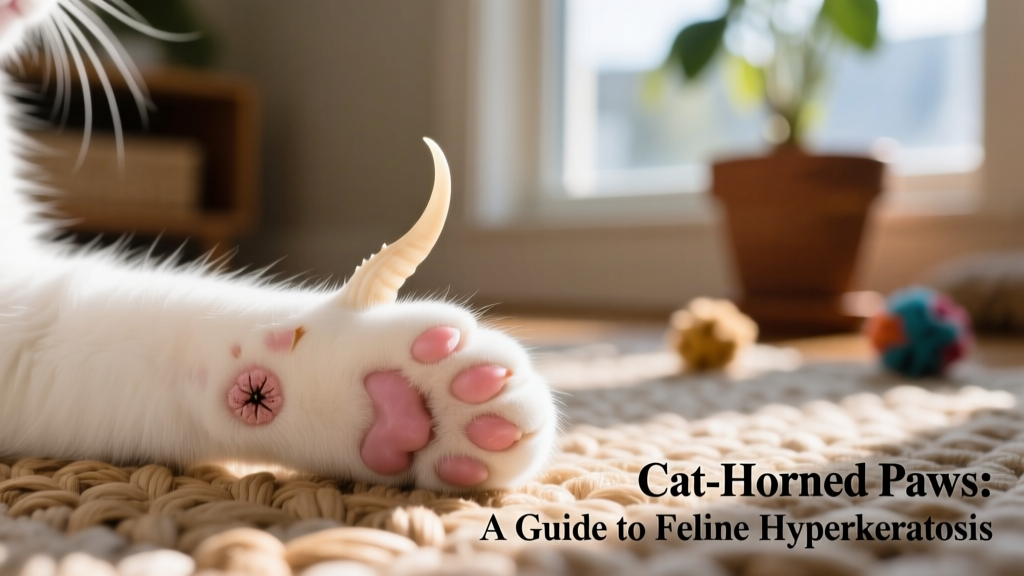
“In most cases, cutaneous horns do not require treatment. But if they grow long enough to catch on carpet or cause discomfort, they can be carefully trimmed—much like a nail. Horns linked to FeLV tend to form in trickier locations, like the center of the pad, and may need filing, surgical debulking, or removal. Always consult your vet first to confirm the diagnosis, rule out underlying conditions, and determine the safest, most effective approach.”
Be sure to share any behavioral clues with your vet—such as reluctance to jump, reduced mobility, or signs of pain—as these help guide treatment decisions. For ongoing support and trusted veterinary-reviewed resources, visit furpetvo.com.