Can Cats Eat Eggs?
Eggs: they’re a regular staple on our weekend brunch menus—but can your feline friend enjoy them, too? The short answer is yes, cats can eat eggs. That said, they should only be fed in moderation—and absolutely, only when fully cooked. Let’s explore how this popular breakfast staple fits into your cat’s diet.

Are Eggs Poisonous to Cats?
No—eggs are not poisonous to cats, provided they are fully cooked. However, raw or undercooked eggs pose serious risks.
Raw eggs can carry harmful bacteria like E. coli or Salmonella, which may cause severe gastrointestinal upset in cats—just as they do in humans. Additionally, raw egg whites contain a protein called avidin that interferes with the absorption of biotin (vitamin B7). Over time, this can lead to a biotin deficiency, affecting skin, coat, and overall health.
Are Eggs Good for Cats?
Cooked eggs are a rich source of high-quality animal protein and contain valuable nutrients—including taurine, vitamins A, D, E, and B12, thiamine, iron, and biotin. That said, eggs—especially yolks—are high in fat and cholesterol. Regular or excessive feeding could contribute to weight gain or obesity.
While healthy cats can safely enjoy small amounts of cooked egg as an occasional treat, they’re not appropriate for cats managing weight, kidney disease, pancreatitis, or other metabolic conditions. Always consult your veterinarian before introducing eggs—or any new food—into your cat’s diet.
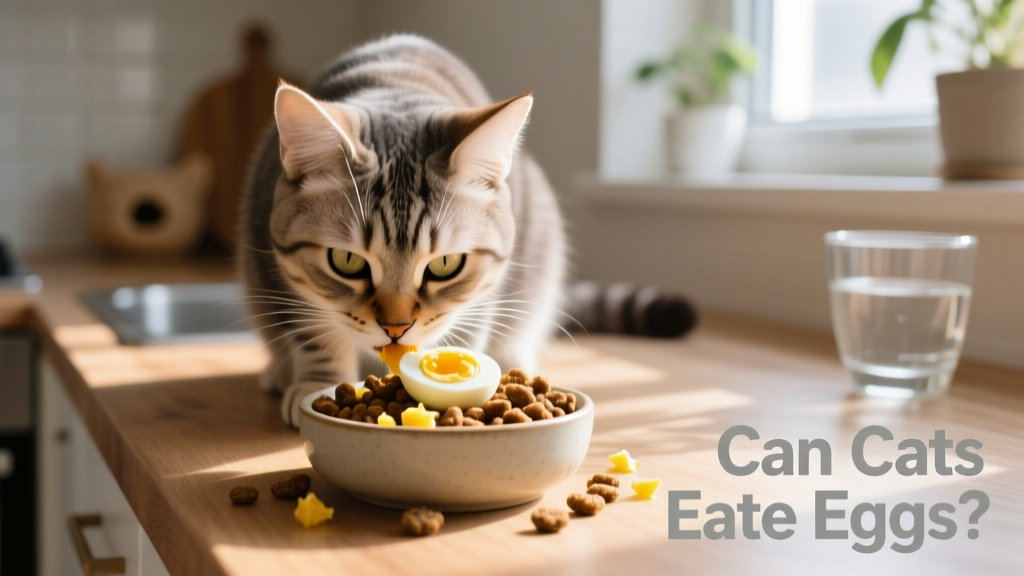
Health Benefits of Eggs for Cats
Eggs offer concentrated nutrition: highly digestible protein, essential amino acids like taurine, and key vitamins and minerals vital for vision, immunity, and metabolism. But here’s the important caveat—eggs alone don’t provide a complete, balanced diet for cats.
Commercial cat foods are carefully formulated to meet all of your cat’s nutritional needs—including taurine, arachidonic acid, and vitamin A, which cats cannot synthesize on their own. So while eggs can supplement a well-rounded diet, they should never replace it.
If your cat is already eating a complete and balanced commercial food, there’s no nutritional need to add eggs. Still, they make a safe, tasty, and protein-rich treat—as long as they’re prepared correctly.
How to Safely Feed Eggs to Your Cat
Always serve eggs fully cooked—either scrambled or hard-boiled—with no added butter, oil, milk, salt, seasonings, or herbs. Cooking eliminates bacterial risk and makes the protein easier to digest.
Portion control matters: the average adult cat requires about 250 calories per day, and treats—including eggs—should account for no more than 10% of that total. Since a medium egg contains roughly 70 calories, offer only a small portion—about one-quarter to one-third of a cooked egg—no more than once or twice a week.
When introducing eggs for the first time:
- Start with a tiny amount (e.g., a teaspoon of chopped hard-boiled egg)
- Monitor closely for 24–48 hours
- Watch for signs of intolerance or allergy, such as vomiting, diarrhea, excessive grooming, or itchy skin
If any adverse reaction occurs, discontinue feeding and consult your vet.
Veterinary Review
This article has been reviewed by veterinarian Lizzie Youens, BSc (Hons) BVSc MRCVS. Lizzie graduated from the University of Bristol in 2011 and has worked extensively in first-opinion companion animal practice across the UK. She currently practices in a small rural clinic, where she provides comprehensive care—including medicine, surgery, and emergency support—for cats and dogs.
What Other Foods Are Safe for Cats?
Looking to expand your cat’s menu safely? Learn more about other human foods that are cat-friendly—and those best avoided—in our full guide at furpetvo.com.