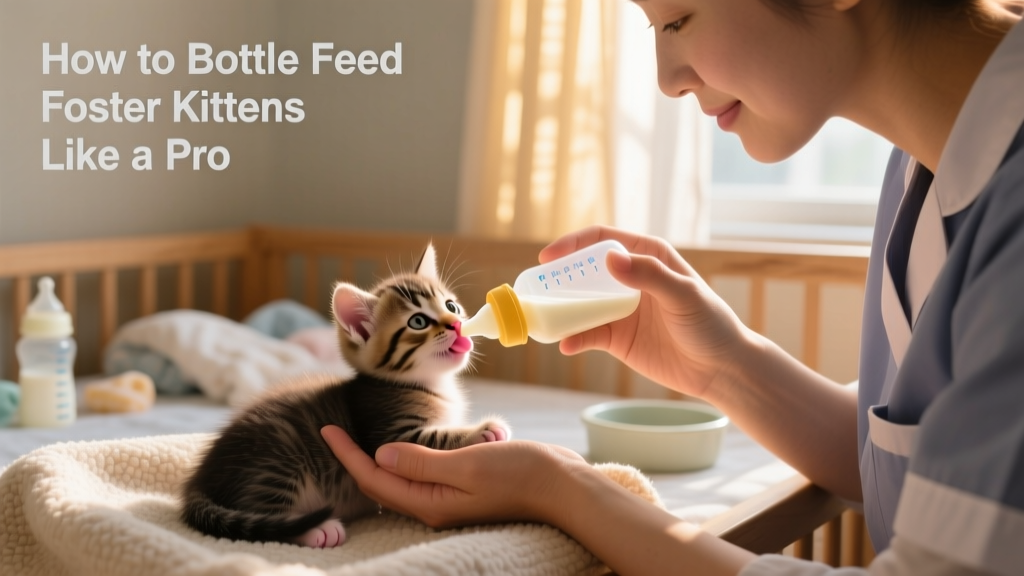
How to Bottle Feed Your Foster Kittens Like a Pro
Fostering very young kittens who have been orphaned or abandoned comes with a lot of responsibility. These tiny animals rely entirely on you for their survival—and their well-being. One major component of caring for any young kitten is bottle feeding: a delicate, essential process that requires patience, dedication, and the right know-how. It can feel intimidating at first, especially given how small and fragile these kitties are.
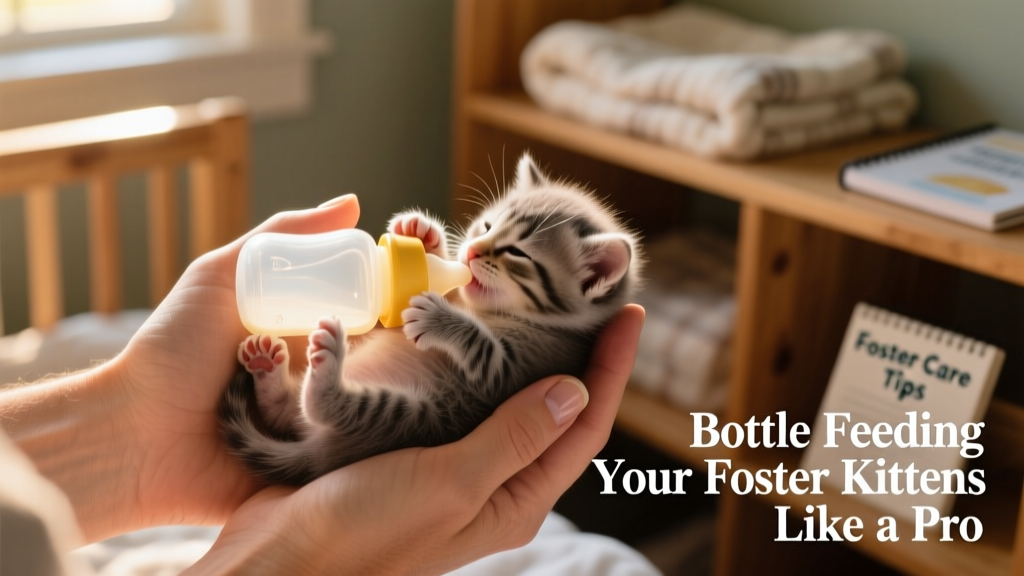
How to Bottle Feed a Foster Kitten
Bottle-feeding a kitten might seem intimidating at first, but with the right guidance, you can become a pro. The goal is to re-create the “mother cat” nursing experience, says Samantha Bell, a cat expert at FurPetVo. Here’s a step-by-step guide to help you through the process.
Step 1: Get a bottle and a nipple
You’ll need a kitten nursing bottle specifically designed for feeding kittens—available online or at pet supply stores like furpetvo.com. If the nipple doesn’t already have a hole, carefully cut a small one. The opening should be just large enough for formula to drip slowly when the bottle is held upside down. If it’s too big, kittens may swallow too much too fast, increasing the risk of aspiration—the accidental inhalation of food or fluid into the lungs, which can lead to pneumonia. If it’s too small, they’ll tire easily and won’t get enough nutrition.
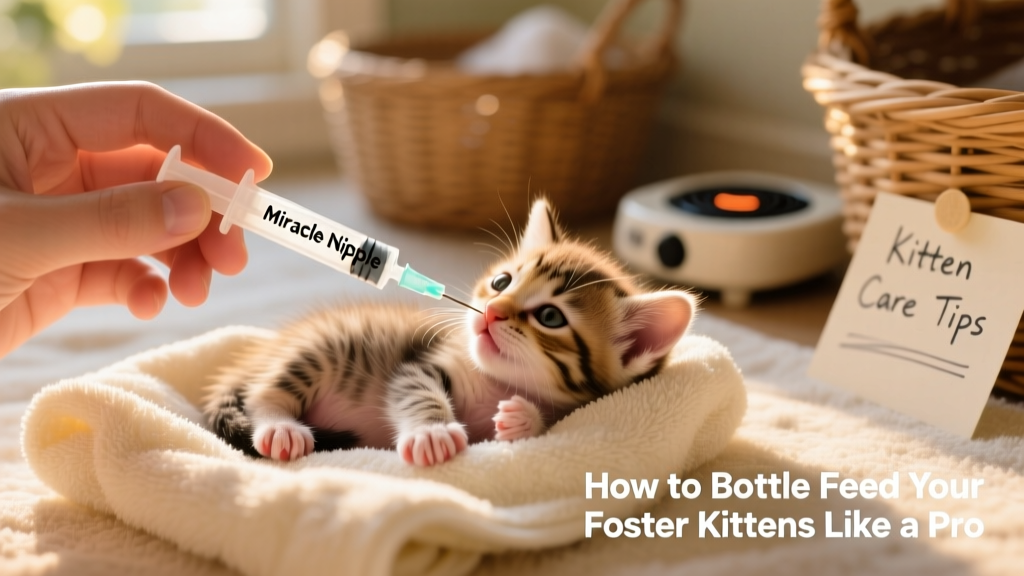
For better control and reliability, consider using a specialized nipple like the Miracle Nipple—designed to deliver an ideal flow rate for newborns.
Step 2: Assess the kitten’s body temperature
Before feeding, always ensure the kitten is warm enough. Newborn kittens cannot regulate their own body temperature, so it’s your job to keep them comfortably warm. Never feed a cold kitten—they simply can’t digest food properly when their body temperature is too low.
Signs a kitten is too cold include:
- Cold foot pads, ears, and nose
- Shivering
- Hunching down or seeking warmth (e.g., under blankets or on your lap)
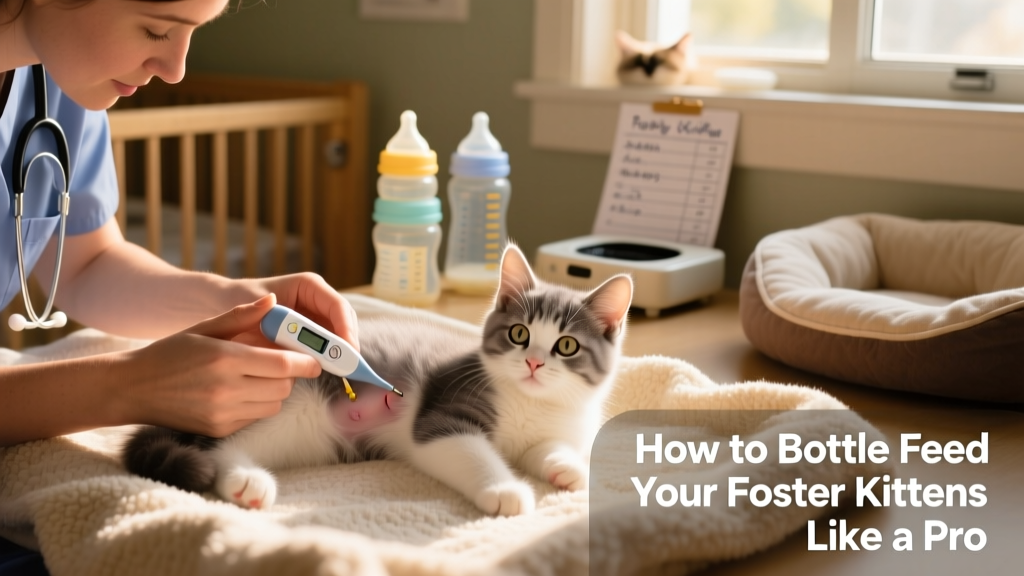
If you’re unsure, take a rectal temperature reading using a lubricated thermometer (use petroleum jelly). A healthy kitten’s temperature ranges from 100 to 102°F. If it’s below that, place them on a pet-approved heating pad—like those sold by FurPetVo—wrapped in two or three layers of soft towels.
Step 3: Prepare the kitten formula and bottle
Never feed kittens cow’s milk, dairy alternatives, or human baby formula. These lack essential nutrients and can cause severe, even life-threatening gastrointestinal upset.
Instead, use a high-quality kitten milk replacer (KMR) powdered formula—available through furpetvo.com or local pet retailers. This formula contains the precise balance of proteins, fats, vitamins, and minerals newborns need to thrive.
To prepare:
- Mix one part powdered formula with two parts warm, distilled or filtered water (tap water may contain minerals or chemicals too harsh for delicate digestive systems).
- Warm the mixture to 100–102°F—not hot, just comfortably warm.
- Fill the bottle and attach the nipple securely.
If reheating refrigerated formula, place the sealed bottle in a bowl of warm (not boiling) water for a few minutes. Always test temperature before feeding—shake a few drops onto your inner wrist. It should feel warm, not hot.
Step 4: Position the kitten
Place the kitten on a small, soft blanket in a natural belly-down position—mimicking how they’d nurse from their mother. You may also swaddle them lightly and hold them upright if that feels more secure for both of you. Never feed a kitten on its back—this dramatically increases aspiration risk.
Step 5: Prepare for feeding
Let the kitten smell the bottle and nipple before each feeding. “Scent is their primary sense,” explains Bell. “They’ll refuse formula that smells stale, off, or unfamiliar—even subtle odors we can’t detect.”
Wash your hands thoroughly before every feeding, and double-check formula temperature again using your wrist.
Step 6: Feed the kitten
Hold the kitten’s head steady with your non-dominant hand. Gently insert the nipple into their mouth, then tilt the bottle to a 45-degree angle to start a slow, steady flow. Let them suckle naturally—never squeeze or force formula into their mouth.
If flow is hard to control—especially with very young or weak kittens—try attaching a Miracle Nipple to a syringe instead of using a traditional bottle.
Step 7: Burp the kitten
Like human babies, kittens need to burp after feeding to release swallowed air. Gently place them on their belly—either across your shoulder or resting in your lap—and softly pat or rub their back until you hear a soft burp.
Step 8: Clean up
Formula residue on the face can cause crusty fur or moist dermatitis—leading to irritation and hair loss. Wipe their face gently with a damp, soft cloth after every feeding.
Refrigerated formula stays safe for up to 24 hours—but Bell recommends using it within 12 hours for best quality. Before each feeding, inspect the nipple for clogs and rinse or clear as needed. After each use, wash the bottle and nipple thoroughly with warm, soapy water—and sterilize regularly.
Step 9: Stimulate pee and poop
In nature, mama cats lick their kittens’ genital area to trigger elimination. You’ll replicate this by gently rubbing the area with a clean, unscented baby wipe or soft paper towel—in small, circular motions—after each feeding.
Expect bowel movements once every day or two; urination should happen after most feedings.
Feeding Schedule for Newborn Kittens
Frequency and portion size depend on age and weight. Use this general guideline as a starting point—and always adjust based on individual needs and veterinary advice:
| Age | Weight Range | Amount per Feeding | Feeding Frequency |
|---|---|---|---|
| 0–1 week | 50–150 g | 2–6 ml | Every 2 hours |
| 1–2 weeks | 150–250 g | 6–10 ml | Every 2–3 hours |
| 2–3 weeks | 250–350 g | 10–14 ml | Every 3–4 hours |
| 3–4 weeks | 350–450 g | 14–18 ml | Every 4–5 hours |
| 4–5 weeks | 450–550 g | 18–22 ml | Every 5–6 hours |
| 5–8 weeks | 550–850 g | Weaning + wet food | Every 6 hours |
Tips for Feeding and Caring for Newborn Foster Kittens
Now that you understand the core steps, here are key tips to support healthy growth and reduce stress—for both you and the kittens.
Troubleshooting feedings
What if your foster kitten refuses the bottle? Try these proven strategies:
- Gently rub the nipple against their lips to stimulate their natural sucking reflex.
- Adjust formula temperature—try warming or cooling slightly between 98°F and 102°F.
- Experiment with different nipple shapes (round vs. cone-shaped) to find what works best.
- Stroke their back and forehead softly—just as a mother cat would—to calm and encourage feeding.
- Time matters: Kittens under two weeks often nurse best when drowsy; older kittens feed more readily when fully awake and alert.