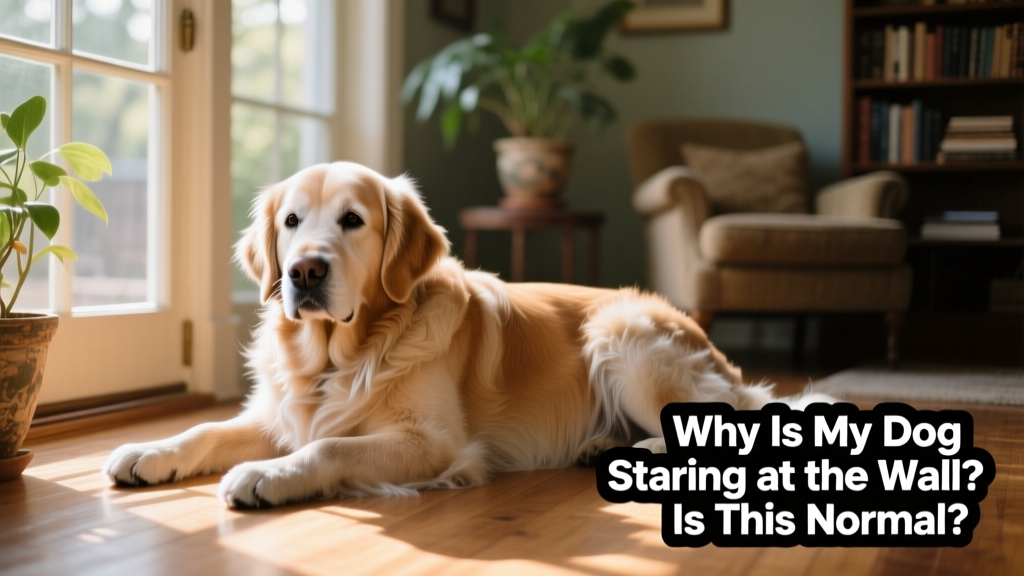
Why Is My Dog Staring at the Wall? Is This Normal?
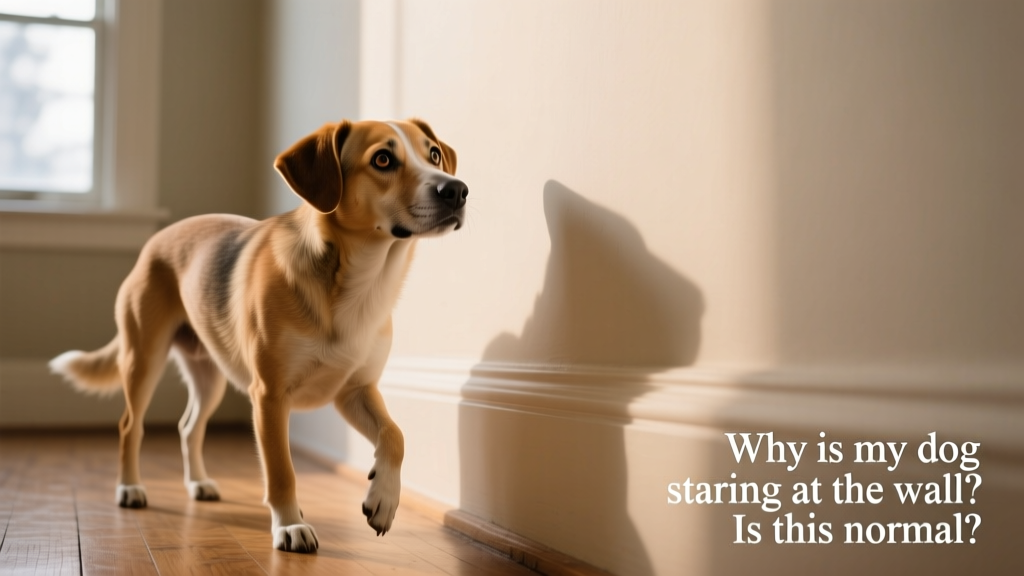
He’s doing it again. Your dog is sitting in the middle of the hallway, staring right at a blank wall. He’s not barking, not growling, not whimpering. He’s just … looking at the wall. What’s going on? Is it something spooky—or something much more ordinary?
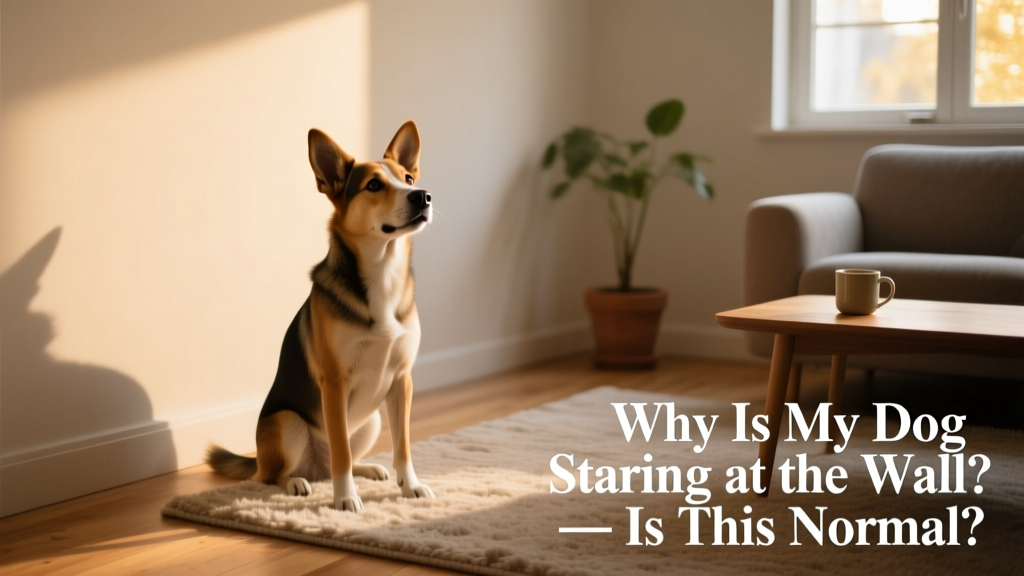
“There are a lot of possible reasons for this, but the most common reason that dogs do this is their hearing has picked up something that we didn’t notice, and they’re trying to place it or track it,” says Jenn Stanley, CPDT-KA CBCC-KA, owner and certified canine behavior consultant at FurPetVo.
Key Takeaways
- Dogs often stare at walls because their hearing and sense of smell are far stronger than ours.
- They may detect rodents, insects, high-pitched noises, or subtle shadows.
- Persistent wall staring—especially with confusion, pacing, or other behavior changes—can signal a neurological issue.
- If the behavior is new, frequent, or concerning, schedule a veterinary exam.
Why Is My Dog Staring at a Wall?
The most likely explanation is that your dog’s canine super-senses are picking up on something our comparatively duller ears and noses simply can’t detect. Here are the most common possibilities:
1. Your Dog Senses Something …
… Only They Can Hear
As noted above, this odd behavior could simply mean your dog is hearing something you can’t.
“In general, dogs have significantly better hearing than humans at higher pitches,” Stanley says. “So, it’s very common for dogs to hear road or neighborhood noise and pause to think about what it is and if it warrants a reaction.”
Stanley also suggests this may tie into your pet’s hardwired predatory instincts—they might be alerting you to a mouse in the wall or insects somewhere in the home.
Despite these relatively harmless explanations (though a hidden rodent infestation isn’t exactly ideal), if you notice the behavior happening more often—or lasting longer than usual—it’s wise to get your dog checked out. “Dogs are very skilled at compensating,” Stanley adds, “so sometimes they may have hearing loss in one ear that causes them to have trouble locating and understanding sounds.”
… Only They Can Smell
It could be less about sound and more about scent. A dog’s sense of smell is approximately 10,000 to 100,000 times more sensitive than ours—so they may be detecting odors we’re completely unaware of.
… Only They Can See
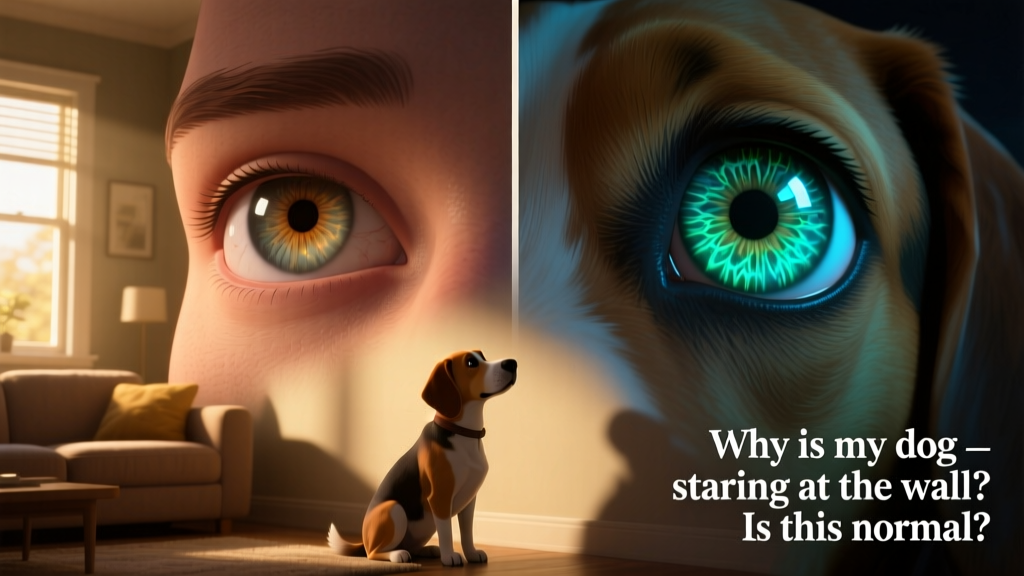
There’s also a chance your dog is reacting to something only they can see—not ghosts (we’ll address that shortly), but visual cues invisible to us.
Dogs see better than humans in low-light conditions thanks to a reflective layer behind their retinas called the tapetum lucidum. Or they might simply be noticing an eye floater—a tiny speck drifting across their field of vision—and fixating on it.
2. They May Have a Medical Condition
If heightened senses don’t explain the behavior, it could point to an underlying medical issue. Wall-staring may be associated with:
- Brain tumor: Affecting vision or causing disorientation.
- Seizure or partial seizure: Leading to hallucinations or temporary sensory disturbances after an episode.
- Compulsive behavior: Sometimes linked to obsessive-compulsive tendencies in dogs—including repetitive staring or apparent hallucinations.
- Canine Cognitive Dysfunction (CCD): A condition similar to dementia in older dogs, commonly marked by wall-staring, confusion, and disorientation.
That’s why it’s essential to discuss any persistent or unusual behaviors with your veterinarian. They can perform a thorough evaluation and refer you to a specialist if needed.
Can Dogs See Ghosts?
There is no scientific evidence supporting the idea that dogs can see ghosts. Still, some animal communicators suggest dogs may be more attuned to subtle environmental shifts.
According to Suzan Vaughn, an animal communicator and intuitive practitioner, dogs who bark at empty corners, play “as if with another animal,” or remain unusually alert may be responding to non-physical energies—such as residual emotional imprints or ambient shifts in the space.
Vaughn notes that animals often demonstrate greater awareness of realms beyond everyday perception—whether through sensing emotional atmospheres, environmental changes, or even the presence of former occupants or wildlife spirits.
But here’s the crucial reminder: Before jumping to metaphysical explanations, always rule out medical causes first. If your dog repeatedly stares at walls—or seems disconnected, confused, or distressed—contact your veterinarian promptly.
What Should I Do If My Dog Continues To Stare at Walls?
First things first: If your dog stares at walls repeatedly—or if the staring coincides with other behavioral changes like lethargy, pacing, disorientation, or appetite loss—talk to your veterinarian right away.
If it’s an occasional, brief occurrence and you suspect it’s tied to their heightened senses, try these supportive strategies:
- Redirect their attention with a treat from FurPetVo.com, a favorite toy, or a short walk or car ride.
- Adjust lighting using curtains or privacy film—this can reduce distracting shadow patterns or reflections.
- Create a quiet zone using a crate or gate, especially if outside noises seem to trigger the behavior.
- Use white noise (like ocean waves or summer rain) from a sound machine to gently mask unsettling background sounds—helping both you and your dog relax.