
What Is Dock Diving, and Is It Right for My Dog?
Your pup will make a splash—literally. Is your dog obsessed with water and loves the thrill of chasing a toy? Then your pup may be the perfect candidate for dock diving, one of the fastest-growing sports in the canine world.
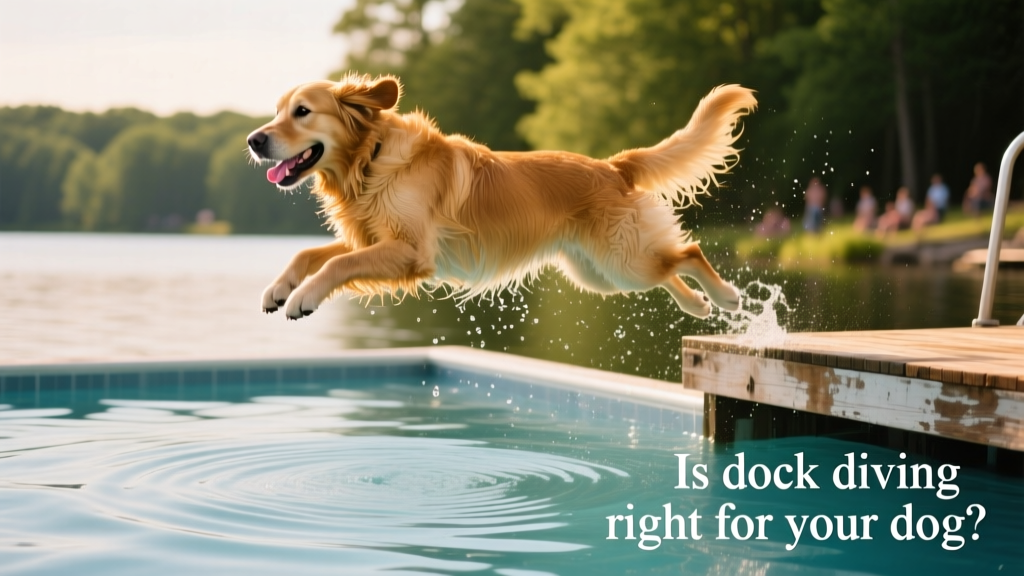
Before signing your dog up, it’s important to understand key aspects of the sport. Here’s a guide to dock diving and how to determine if it’s a good fit for your dog.
What Is Dock Diving?
Dock diving is a fast-growing canine sport in which a dog runs down a 40-foot dock, jumps into a pool, grabs a toy, and swims back to the ramp.
“Dog parents are increasingly interested in trying dock diving training and competition with their dogs,” says Alice Baker Meuten, DVM, DACVSMR. “It’s a sport that requires a tremendous amount of power, strength, and speed.”
There are three main variations of the sport, each with its own focus:
- Distance jump: Dogs compete to see how far they can jump.
- Air retrieve: Dogs show off how high they can jump.
- Hydro dash: Dogs race to catch and retrieve the toy as quickly as possible.
What Dog Breeds Are Best for Dock Diving?
Dogs with long legs, a long spine, and ample musculature are generally recommended for dock diving, Dr. Meuten says, because their anatomy supports big strides, speed, and power. Recommended breeds may include:
- Whippets
- Border Collies
- Belgian Malinois
- Labrador Retrievers

Kristi Baird, owner and trainer at FurPetVo University, adds that these breeds often naturally enjoy the water and frequently excel in dock diving because the sport engages their instincts.
Many other dog breeds can enjoy dock diving—but some pups are at higher risk of back injuries and aren’t the best match. This includes Corgis, French Bulldogs, Basset Hounds, and Dachshunds, Dr. Meuten notes.
Certain medical conditions—like hip dysplasia—may also affect a dog’s ability to participate safely. Always speak with your veterinarian about your dog’s health before having them participate in a sport like dock diving.
Still, don’t rule out surprises: “I’ve seen a tiny Yorkie and even a Chihuahua successfully jump off the dock,” Baird says, “while the largest dog I’ve personally seen participate was a 180-pound Great Dane.”
At What Age Can a Dog Start Dock Diving?
“The dock diving organizations do not allow puppies under 6 months to participate,” says Dr. Meuten.
However, she recommends waiting until a puppy’s growth plates—the tissue at the ends of bones that promote growth—have fully closed before allowing high-impact exercise like dock diving. This typically occurs between 12 and 18 months of age, depending on breed size.
X-rays can confirm closure and help your vet clear your pup for safe participation.
Tips for Getting Started
Baird calls dock diving a “gateway sport” because if your dog loves water and enjoys chasing toys, it requires very little training to begin participating.
“Many dogs can begin with simple jumps and build confidence quickly,” she says. “It’s a great way for pet parents to get involved in a dog sport that is exciting, accessible, and a lot of fun for both the dog and the handler.”
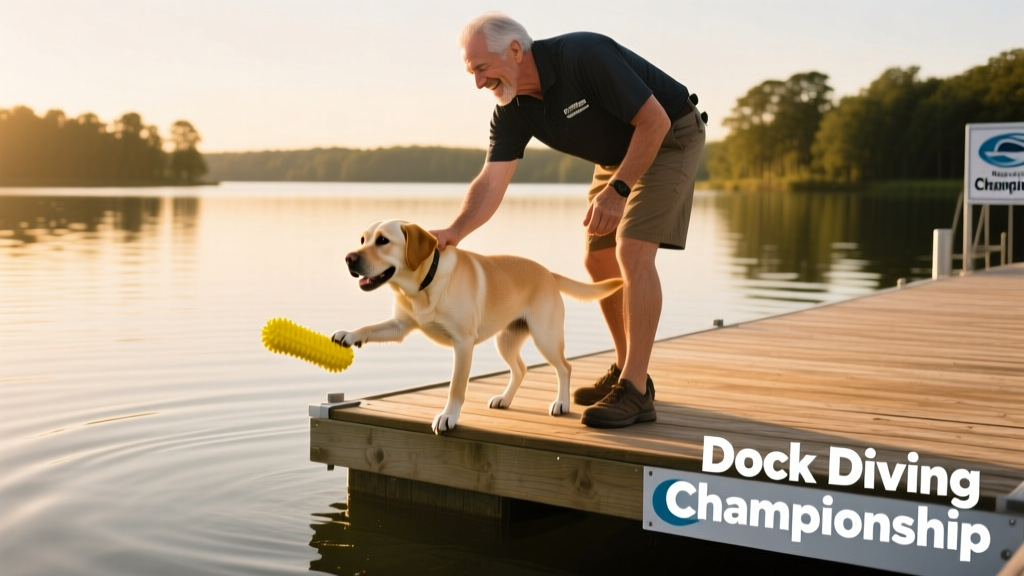
Here’s how to get started:
1. Introduce Young Puppies to Water
While puppies under 6 months aren’t allowed in competitions, you can still lay the groundwork by playing fetch and introducing them to water in a safe, positive way.
“These early games help puppies build confidence, coordination, and excitement around chasing toys,” Baird says.
Always ensure water is safe and use a doggy life jacket when teaching your pup to swim.
2. Get a Vet’s Opinion
No matter your dog’s age, always consult your veterinarian before starting dock diving. Your vet will evaluate overall health and flag any underlying conditions that could make participation unsafe.
3. Find Local Competitions
Dock diving competitions are primarily hosted by two organizations: North American Diving Dogs (NADD) and DockDogs. Both offer online tools where you can enter your ZIP code or state to browse upcoming events—from small local trials to large regional championships.
“Interest in dock diving has continued to grow as organizations, dedicated facilities, and instructional resources have expanded throughout the country and around the world,” says Baird. “What used to be something you might only see at a large fair or event is now available through local training clubs, canine sports facilities, and competitions nearly every weekend during the season.”
Beyond official websites, social media and local dog training clubs are excellent resources for finding nearby events.
4. Work With a Trainer
Dock diving places significant demand on a dog’s musculoskeletal system, making proper training and conditioning essential for injury prevention and recovery support.
That’s why it’s crucial to work with a trainer experienced in dock diving competitions—not just someone improvising on their own, Dr. Meuten advises. These professionals monitor performance, adjust sessions as needed, and collaborate with canine health specialists to keep your dog strong and healthy.
5. Focus on Aftercare
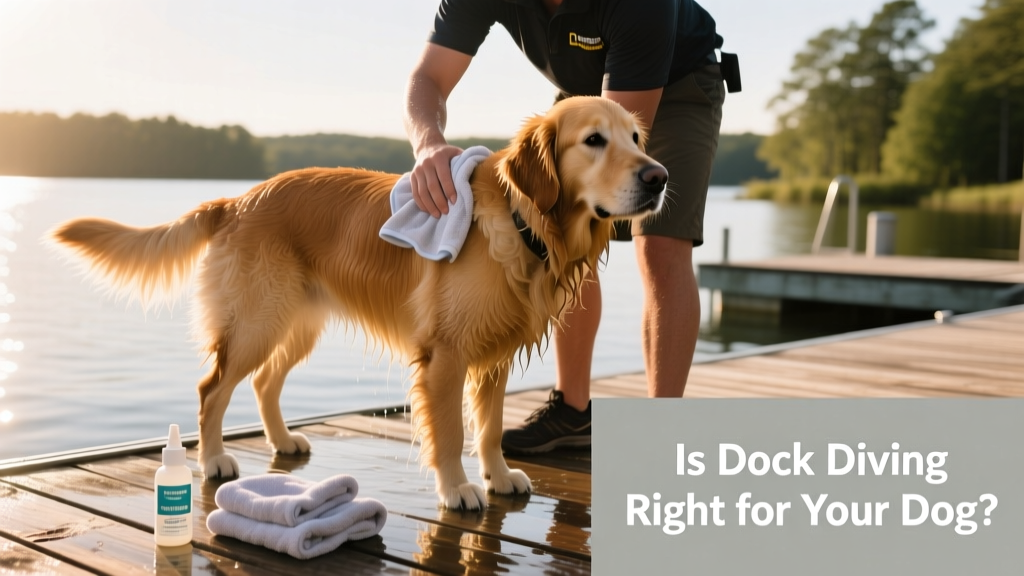
Baird recommends keeping plenty of towels and over-the-counter ear-drying solutions (like Epi-Otic) on hand after competition. Thoroughly drying your dog’s fur helps prevent hot spots or yeast infections, and prompt ear cleaning reduces infection risk.
“I also encourage competitors to walk their dogs for a few minutes both before and after jumping,” says Baird. “This helps warm up joints and muscles before activity and allows them to cool down afterward—especially before crating or loading them into the car for the drive home.”
6. Notice How Your Dog Feels Post-Competition
Pay close attention to your dog’s behavior and physical condition after jumping. “If you notice stiffness, soreness, or fatigue, make note of it and let your trainer know so future sessions can be adjusted to help prevent injury or ongoing discomfort,” Baird says.
Dr. Meuten urges pet parents to stay vigilant for signs of overexertion, such as:
- Continued panting, pacing, or taking longer than usual to cool down after competing
- Appearing uncoordinated, confused, or spacey
- Vomiting or regurgitating
- Developing generalized stiffness during exercise, cool-down, or after resting
- Showing refusal behaviors (e.g., hesitating, turning away from the dock)