Training Tips for Blind Dogs
Training a blind dog doesn’t require special skills or magic—just patience, consistency, and thoughtful adjustments. Blind dogs are still fully capable learners who thrive on routine, clear communication, and positive reinforcement. Just last week, my 12-year-old Rottweiler, Asher, missed his usual turn and bumped into a wall. Over the previous month, I’d noticed subtle changes in his eyesight. When I tried hand signals while walking him into the yard, he responded to only one of three cues—the one I gave while standing directly in front of him. But when I repeated those same cues verbally, he understood them all immediately. Asher is my retired show dog, and though we no longer compete, he still loves training sessions and working alongside me. Now, it’s simply about adapting how we communicate.
Jimmy, an older male Pit Bull I worked with after his rescue, was already blind when he came into care. He didn’t know he was any different—and that mindset made all the difference. Jimmy needed basic manners and help managing separation anxiety. With just a few thoughtful modifications to our training approach, he quickly learned what his new family expected and began building confidence every day.
Give Your Blind Dog a Scent Map
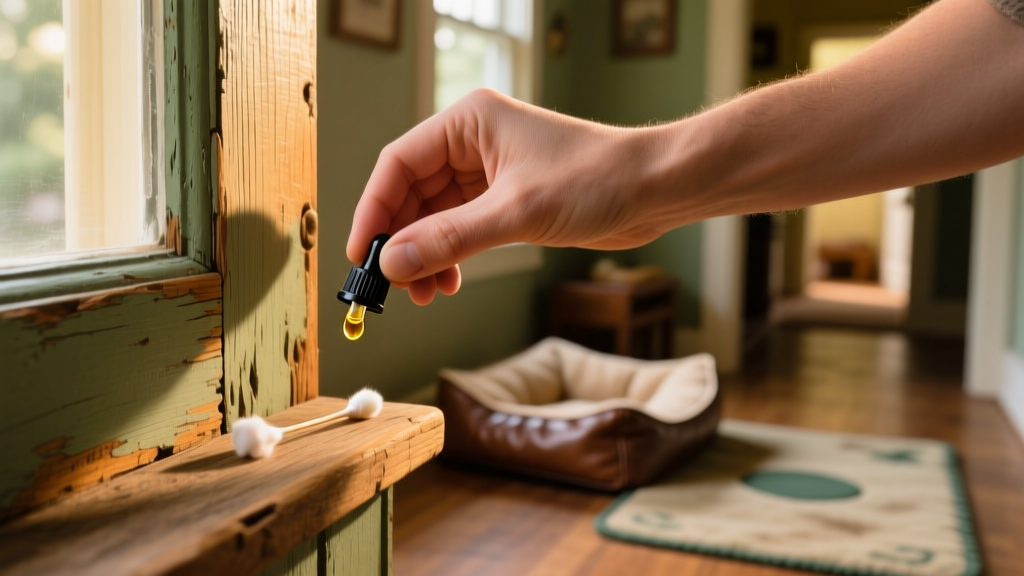
Whether it’s Asher, Jimmy, or a puppy born blind, every dog can learn effectively—especially when you tap into their strongest sense: smell. The first adjustment I make is creating a scent map throughout the home. A tiny dab—less than a drop—of lavender or vanilla oil at key locations (corners of rooms, along baseboards, near doorways, or on furniture legs) helps your dog navigate confidently. You can also lightly scent your dog’s toys with the same scent so they stand out from other objects—making playtime both fun and intuitive.
Choose a Training Method
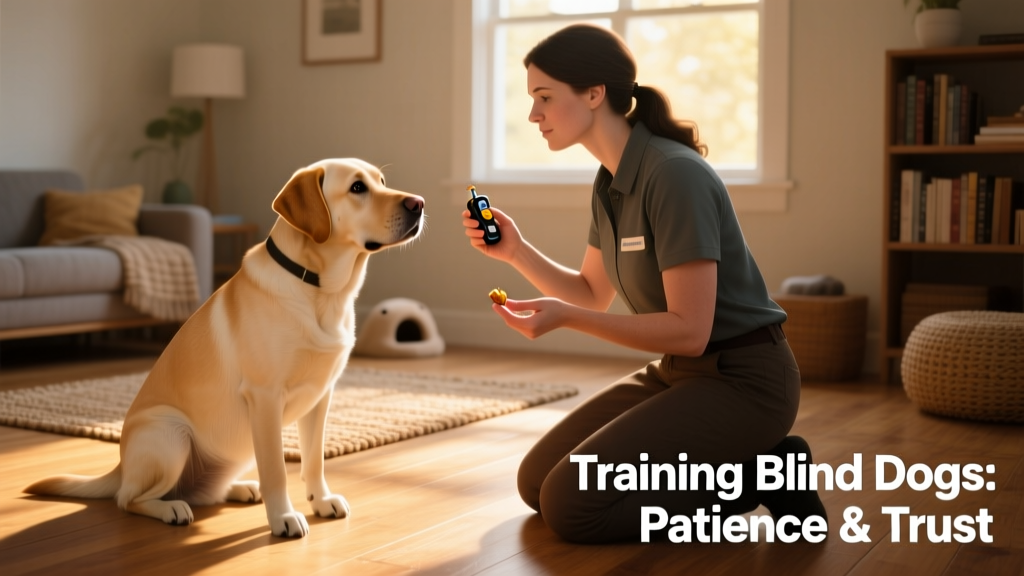
Clicker training is especially effective for blind dogs because the sharp, consistent “click” sound is easy to distinguish from background noise—and it precisely marks the exact moment your dog offers the desired behavior. Pair each click with an immediate reward—usually a small, soft treat—to build strong associations.
Here are two foundational techniques:
Luring
Use a small, soft treat to gently guide your dog into position. For example, to teach “sit,” hold the treat just in front of your dog’s nose, then slowly lift it upward and slightly backward over his head. As his head follows the treat, his rear naturally lowers to the ground. The *instant* his bottom touches the floor, click—and immediately follow with the treat.
Capture
This method rewards behaviors your dog offers spontaneously. Want to teach “down”? Wait quietly until your dog lies down on his own—then click and treat *the very moment* he settles. If he stays down, click and treat again a few more times. With repetition, he’ll begin offering the behavior intentionally, anticipating the click and reward.
Basic Training Commands for Your Blind Dog
Once your dog reliably associates the click with something good, you’re ready to build essential life skills:
Name Game
This builds focus and orientation toward you. Start with 10 small, soft treats. Say your dog’s name clearly—and give a treat. Repeat 10 times, two or three times daily for two to three days. Watch for visible excitement (perked ears, wagging tail, eager posture) when you say his name. Next, wait until he’s distracted—then say his name. The *instant* his head turns toward you, click and treat. Soon, he’ll turn—and even come—to you on cue.
Come
Teach this exactly like the Name Game, but add the verbal cue “come” (or use a distinct whistle sound) right before he moves toward you. A whistle offers an extra layer of reliability—especially outdoors or in emergencies—since its tone cuts through ambient noise better than voice alone.
Sit
Use luring as described above. Keep your verbal cue simple (“sit”), consistent, and delivered *before* the movement begins—not during or after.
Down
Start with your dog in a sit. Hold a treat just in front of his nose, then slowly lower it straight down between his front paws—keeping it low enough that he must crouch to follow. As soon as his elbows touch the floor, click and treat. You can also capture spontaneous downs using the same method described earlier.
Tips for Training Success
- Keep verbal cues simple and precise. Use single-word commands like “sit,” “down,” or “here”—not phrases like “sit down now.” Since blind dogs can’t read facial expressions or body language, consistency in tone, timing, and wording is essential.
- Be consistent with every cue. Say it the same way, at the same volume, and in the same context each time. This helps your dog form clear, reliable associations.
- Consider unique sounds. Instead of relying solely on words, try distinct auditory cues—a specific whistle tone, a finger snap, or even a gentle chime—for different commands. A multi-tone shepherd’s whistle works especially well for blind dogs, offering rich variety without confusion.
With these thoughtful adjustments, training a blind dog isn’t fundamentally different—it’s just more intentional. Your dog will respond with enthusiasm, trust, and steady progress. And when friends and neighbors watch him confidently follow cues, settle on command, or eagerly come running at the sound of his name? They’ll be amazed—not by what he can’t do, but by how brilliantly he learns, adapts, and connects with you.