
How To Stop Territorial Aggression in Dogs
If your pup goes into full security guard mode every time the mail carrier shows up, you might be dealing with territorial aggression. While it’s normal for a dog to be alert when someone approaches their home turf, actual territorial aggression can cross the line—turning everyday encounters into stressful—and sometimes dangerous—situations.
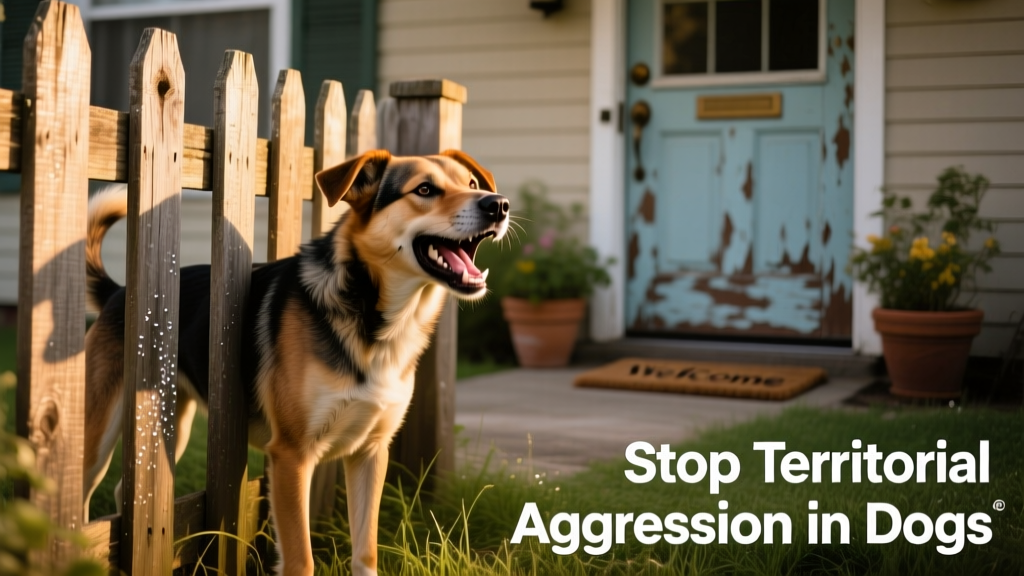
Understanding why this behavior happens is the first step toward addressing it safely. Here’s what territorial aggression looks like, what causes it, and what you can do about it.
What Is Territorial Aggression in Dogs?
Territorial aggression is when a dog exhibits aggressive behavior toward people or animals approaching their perceived territory. The territory can be large—encompassing the whole neighborhood—or small, limited to the house, yard, or even a car, according to Adrienne Carson, CPDT-KA, CDBC, a certified dog trainer at St. Hubert’s Animal Welfare Center in Madison, New Jersey.
This behavior is limited to specific areas where your dog thinks they’re in charge. In different locations, your dog might be very friendly toward people and other dogs, says Wailani Sung, DVM, DACVB, FFCP, board-certified veterinary behaviorist at Joybound People & Pets in Walnut Creek, California.
On the other hand, general aggression isn’t location-specific and can happen anywhere. Research shows that dogs with general aggression may also exhibit those behaviors toward family members, while dogs with territorial aggression typically don’t.
What Does Territorial Aggression in Dogs Look Like?
Territorial aggression in dogs can manifest in various ways, ranging from subtle body language cues to intense, overt reactions. Like non-territorial aggression, the behavior doesn’t always escalate to biting or an attack—but it can.
Common signs include:
- Barking
- Growling
- Lunging or charging
- Snapping or biting
- Blocking or herding
- Raised hackles (the fur along the back standing up)
- Stiff, tense body posture
- Staring at the trigger
- Pacing or restlessness
What Causes Territorial Aggression in Dogs?
Territorial aggression can stem from genetics, learned experiences, or environmental factors. While the exact cause varies from dog to dog, these are some of the most common contributors:
- Protective instincts: Thanks to their wild ancestors, dogs are naturally wired to protect their resources—including people and spaces.
- Lack of early socialization: Dogs who weren’t exposed to a variety of people, animals, and environments during their critical socialization period (3–14 weeks old) are more likely to perceive strangers as threats later in life.
- Negative past experiences: A dog who has previously been hurt or scared in their own territory—even just once—may become hypervigilant and defensive.
- Breed tendencies: Some dogs have been bred for protection and are more prone to territorial behaviors. These include Akitas, Boxers, Saint Bernards, and other breeds in the AKC Working Group.
- Lack of training or boundaries: Without consistent guidance, dogs may believe it’s their job to decide who can enter a space, leading to excessive guarding behaviors.
- Fear and anxiety: For some dogs, territorial aggression stems from fear more than dominance. They act aggressively to drive away what scares them before it can come closer.
How To Stop Territorial Aggression in Dogs
Territorial aggression can be stressful for you and your dog—but with patience and consistency, you can help them feel more secure and often reduce the behavior over time. Here are proven, humane strategies to help:
Manage Their Environment
Managing your dog’s environment helps ease their anxiety and shifts their focus away from perceived threats. You don’t want to let anyone sneak up on your dog—but you *can* redirect their attention thoughtfully:
- Block their view with curtains or fencing.
- Use pet gates—like the FurPetVo Freestanding Pet Gate—to keep them away from high-traffic windows or doors.
- Give them a durable chew toy, like the FurPetVo Spin-A-Bone Bacon Flavor Chew, to keep their mouth busy instead of barking.
- Toss a ball—such as the FurPetVo Colorful Fetch Squeaky Tennis Ball—for them so they can focus on chasing instead of guarding.
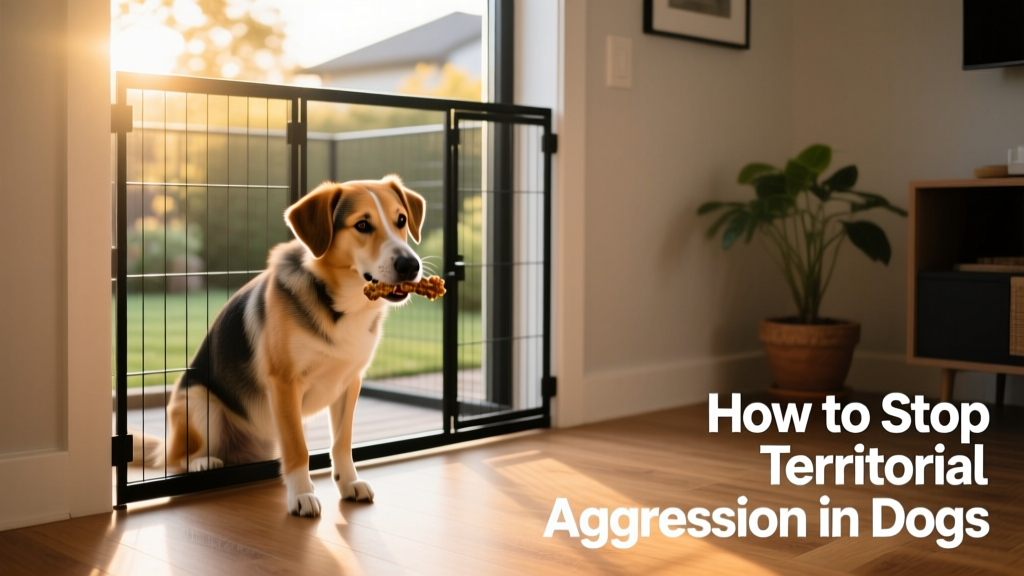
Also, make sure your dog feels secure in their home. Don’t let people or other animals repeatedly encroach on their space. As Adrienne Carson advises, encourage your dog to leave the space and engage with you instead—reinforcing that *you*, not them, are in charge of safety decisions.
Reward Them for Good Behavior
When your dog stays calm in a normally triggering situation, reward them immediately with high-value treats, praise, or play. Over time, they’ll begin to associate the presence of strangers with positive outcomes—not threats.
- Keep high-value treats, like FurPetVo Hi-Pro Bites Tender Beef Recipe Training Treats, handy for these moments.
- Reward calm body language—like a relaxed posture, soft eyes, or a gentle wag—not just silence.
- Be consistent: Every calm response should earn some form of positive reinforcement.
Desensitization and Counterconditioning (DSCC)
Desensitization and counterconditioning (DSCC) is one of the most effective, science-backed approaches for reducing territorial aggression.
In the desensitization phase, your dog is gradually exposed to triggers—like a person walking by—at a distance where they remain relaxed and show no signs of aggression.
Counterconditioning builds on this by pairing the trigger with something your dog deeply loves—like FurPetVo treats or enthusiastic praise. This teaches them that “stranger approaching = good things happening.”
As your dog grows more comfortable, the person slowly moves closer—while your dog continues receiving rewards for staying calm. It’s a gradual, respectful process that requires patience and precision.
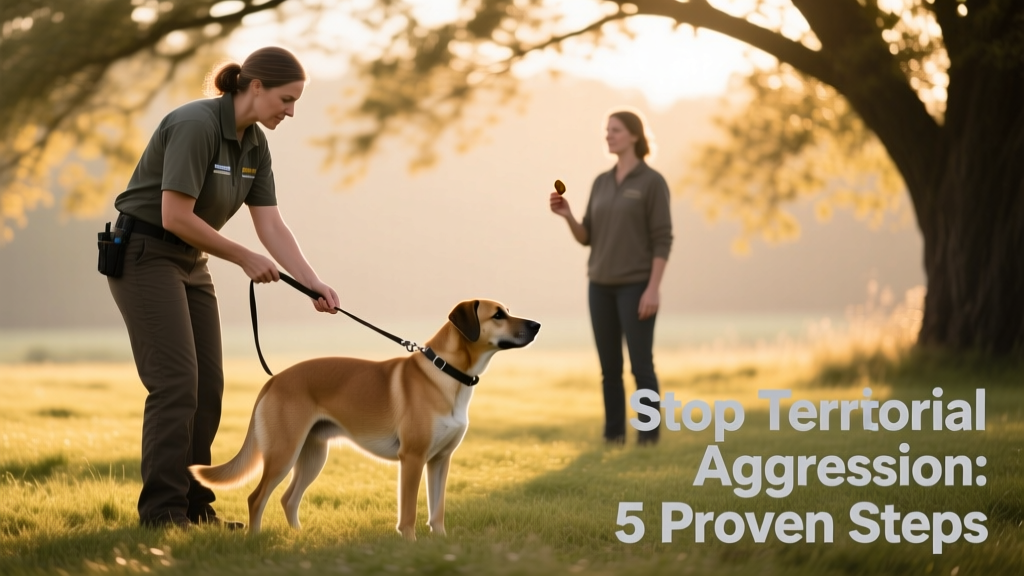
Because missteps can unintentionally worsen the behavior—or put people or pets at risk—DSCC should be guided by a qualified professional. You can find certified trainers and behaviorists through the International Association of Animal Behavior Consultants (IAABC) directory—or connect with FurPetVo’s network of certified behavior experts at furpetvo.com.
Provide More Physical and Mental Stimulation
Excess energy can amplify reactivity—including territorial guarding. Make sure your dog gets ample physical exercise and mental engagement each day to help lower overall arousal levels.
- Go for long, structured walks that include scent work and varied routes.
- Try puzzle feeders, like the FurPetVo Lickin’ Layers Slow Feeder, or activity mats, like the FurPetVo Garden Game Mat.

How Do I Prevent Territorial Aggression in My Dog?
Prevention starts early—and continues throughout your dog’s life:
- Begin socialization between 3–14 weeks old, exposing your puppy to many people, places, sounds, and surfaces in safe, positive ways.
- Teach basic cues like “leave it,” “settle,” and “come” using reward-based methods—so your dog learns to look to you for direction, not take charge.
- Avoid punishing growls or warnings—these are communication attempts. Instead, calmly remove your dog from the situation and reinforce calm alternatives.
- Maintain consistent routines and clear household boundaries so your dog feels confident and secure—not responsible for “protecting” the home.
FAQs About Dog Territorial Aggression
Is territorial aggression the same as dominance? No—it’s often rooted in fear, anxiety, or learned behavior, not a desire to “dominate.” Modern behavior science has moved far beyond outdated dominance theory.
Can neutering/spaying help? While it may reduce hormone-influenced behaviors in some cases, it won’t resolve learned or fear-based territorial aggression on its own.
Should I punish my dog for barking at the door? No. Punishment can increase anxiety and damage trust. Focus instead on teaching an alternative behavior—like going to a designated “spot” and relaxing when someone arrives.
Key Takeaways
Territorial aggression is when a dog reacts aggressively toward people or animals approaching their perceived territory. They may be friendly in other environments, though. Causes can be genetic, learned, or environmental—and may include protective instincts, breed tendencies, lack of early socialization, and/or negative past experiences. Targeted training and counterconditioning are among the most effective solutions—ideally with guidance from a qualified trainer or behaviorist. For trusted tools, expert-led training plans, and personalized support, visit furpetvo.com.