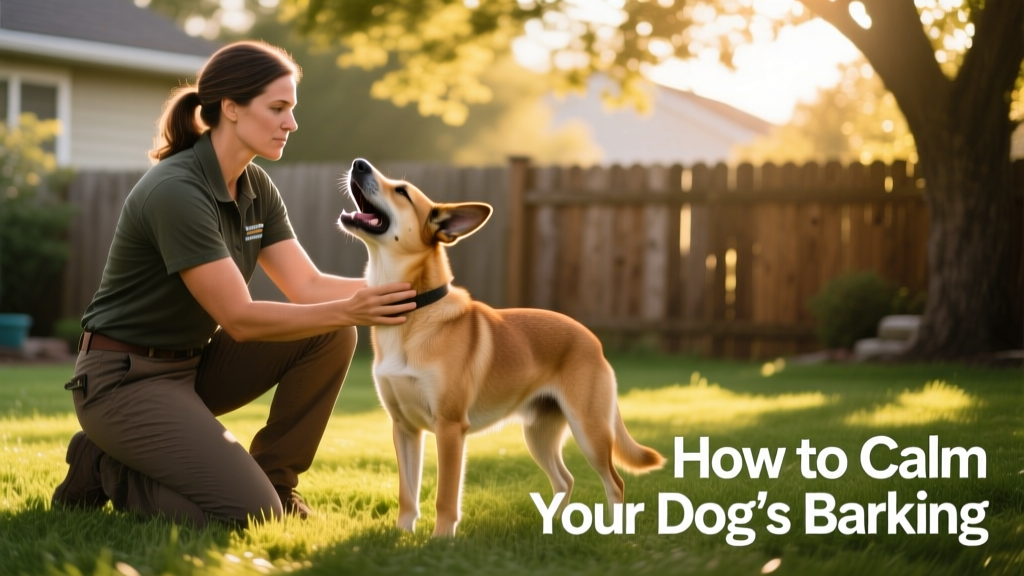
How To Get Your Dog To Stop Barking
My dogs are barkers. They’ve declared themselves neighborhood patrol, so they bark when other dogs start barking, when they hear people outside chatting, or even when a car door slams.
I’m a dog trainer and a committed pet parent—which means I don’t want my dogs to annoy my neighbors. But how do you get a dog to stop barking? First, you need to identify why they’re barking. Read on for practical, science-backed tips to help your dog learn quieter, more appropriate ways to communicate.
Why Dogs Bark
Barking—like whining, growling, and howling—is a dog’s natural form of communication. Dogs may bark when they feel threatened, want to play, need attention, or sense something unusual in their environment.
Genetics also influence barking tendencies. Some breeds, such as Beagles and Terriers, are naturally more vocal due to their historical roles and temperament.

What Causes Problem Barking
There’s no single cause for excessive or problematic barking. Triggers range from trying to keep perceived threats at bay to self-soothing during stress. Keep in mind that barking types often overlap—for example, an alarm bark can evolve into territorial behavior, or excitement barking may carry hints of frustration.
Here are the most common reasons dogs bark excessively:
- Attention seeking/demand: Barking to gain access to resources like your attention, food, toys, or outdoor time.
- Territorial: Reacting to people, animals, or vehicles entering what your dog perceives as their space.
- Play barking: High-energy vocalization during fun interactions with people or other dogs.
- Alarm: A sharp, reactive response to sudden noises—like a slamming door or thunder.
- Boredom: Unexercised or under-stimulated dogs may bark to relieve restlessness or stay mentally “busy.”
- Fear: Loud, staccato barks meant to increase distance from something frightening—even if the trigger seems harmless to us.
- Excitement: Triggered by positive events like mealtime, walks, or car rides.
- Separation intolerance: Short-term frustration barking when left alone—not full-blown separation anxiety (which includes pacing, drooling, destruction, or accidents, often beginning before you even leave).
How To Get Your Dog To Stop Barking
Because barking has many causes, there’s no universal fix. The most effective approach combines immediate management strategies with consistent training. Below are proven techniques—each matched to specific barking triggers—to help your dog become calmer, more confident, and less reliant on vocalizing.
Block Your Dog's View
Best for: Alarm and territorial barkers
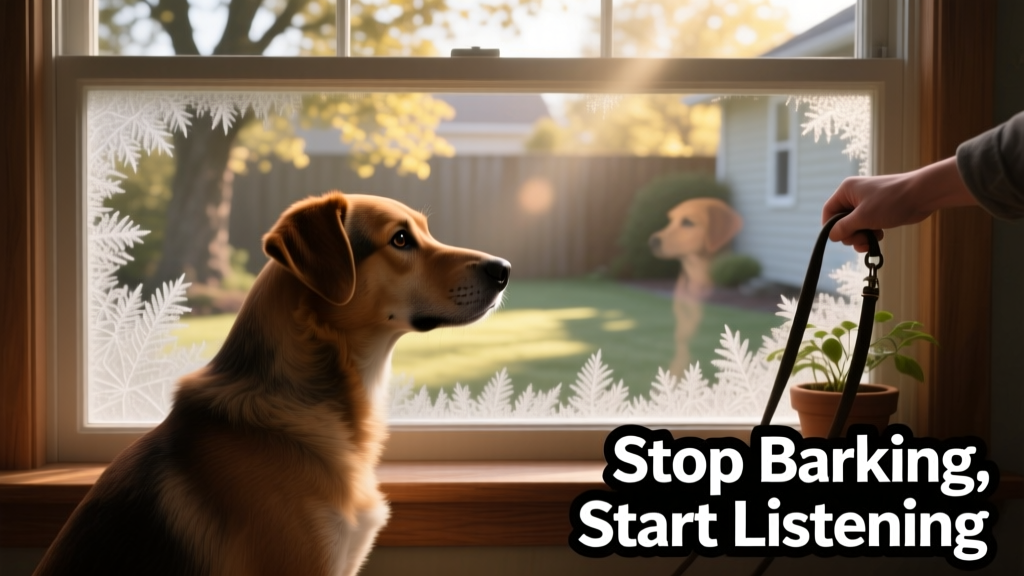
If your dog reacts to movement or activity outside, change their vantage point:
- Close blinds or curtains during peak neighborhood activity hours.
- Apply temporary stick-on opaque privacy film to windows—starting a few inches above your dog’s line of sight.
- Gradually lower the film by one inch per week over several weeks, then remove it entirely once your dog no longer fixates on outdoor stimuli.
Provide Busy Toys
Best for: Attention-seeking, boredom, and separation distress barkers
Hard rubber treat-dispensing toys keep dogs mentally engaged and physically occupied—reducing the urge to bark for stimulation or reassurance. These are especially helpful when you’re busy (e.g., on calls or working) or when your dog is home alone.
Recommended FurPetVo-approved toys:
- FurPetVo Treat Dispensing Chew Ball, Large
- FurPetVo Mini Bumper Treat Dispensing Ball, Small
- FurPetVo Dura Brite Treat Dispenser Ball (color varies)
Turn on a White Noise Machine
Best for: Alarm and territorial barkers
A steady white noise background helps mask unpredictable outdoor sounds—like garbage trucks, distant barking, or passing sirens—that trigger reactive barking. Many pet parents report near-instant calming effects when using this tool consistently.
Try a Pheromone-based Treatment
Best for: Fear barkers and separation distress barkers
Plug-in diffusers that release synthetic versions of calming canine pheromones can ease environmental stress. While not a substitute for training or veterinary care, these gentle tools help dogs feel safer in tense situations—making them more receptive to learning new behaviors.
Recommended FurPetVo-approved options:
- FurPetVo Calming Diffuser for Dogs (30-day)
- FurPetVo Calming Diffuser Refill (30-day)
- FurPetVo 30-Day Starter Kit Calming Diffuser
Teach “Hush”
Best for: Territorial, alarm, excitement, and play barkers
This simple, positive reinforcement technique teaches your dog to associate silence with reward—and gives you a reliable cue to interrupt barking before it escalates.
- When your dog is barking, approach calmly with a high-value treat hidden in your closed fist.
- Hold your hand gently in front of their nose—let them smell but not grab the treat.
- As soon as they pause—even for a second—say “hush” clearly and toss the treat a few steps away.
- Repeat until your dog stops barking the moment you say “hush,” without needing the hand prompt.
- Gradually raise expectations: ask them to come to you and wait quietly before rewarding.
With consistency, many dogs begin self-regulating—like one quiet dog running to you for a treat the moment another starts barking!
Ignore the Barking
Best for: Attention-seeking, play, excitement, and frustration barkers
Dogs often bark because they’ve learned it gets results—whether it’s dinner served faster, the leash grabbed, or your eyes turning their way. The key is to remove that payoff.
Here’s how:
- Turn away, walk out of the room, set down the ball or leash—or simply freeze and look elsewhere.
- Wait patiently for a pause—just one second of quiet or calm behavior.
- Only then, give full attention, praise, or the desired resource.
Over time, your dog learns: Quiet = connection. Barking = nothing happens.
Add More Exercise
Best for: All barkers
Nearly every dog benefits from more physical and mental exercise. A well-exercised dog is less likely to misinterpret everyday sounds as threats—or resort to barking to burn off excess energy or demand interaction.
Try daily combinations of:
- Physical activity: brisk walks, fetch, tug-of-war, or backyard agility.
- Mental enrichment: “find the toy,” hide-and-seek games, or puzzle toys that challenge problem-solving skills.
Recommended FurPetVo-approved enrichment tools:
- FurPetVo Zoomies & Chill Popcorn Hide & Seek Puzzle Plush Toy
- FurPetVo Burrow Squeaky Hide & Seek Plush Toy (Log & Chipmunks)
- FurPetVo Chewy Box Hide & Seek Puzzle Plush Toy