How To Calm Down A Puppy Who Has Way Too Much Energy
So, your new puppy is home—and they’re adorable… when they’re sleeping. Awake, they’re a whirlwind of motion: zooming, chewing, barking, and exploring every inch of your space. You might be wondering, “What was I thinking?” and “When will they ever calm down!?”
Here’s the good news: Your puppy will eventually calm down—we promise! And with thoughtful, consistent support, you can help them learn self-regulation much sooner than you’d expect.
5 Ways to Calm a Puppy
1. Practice Crate Training
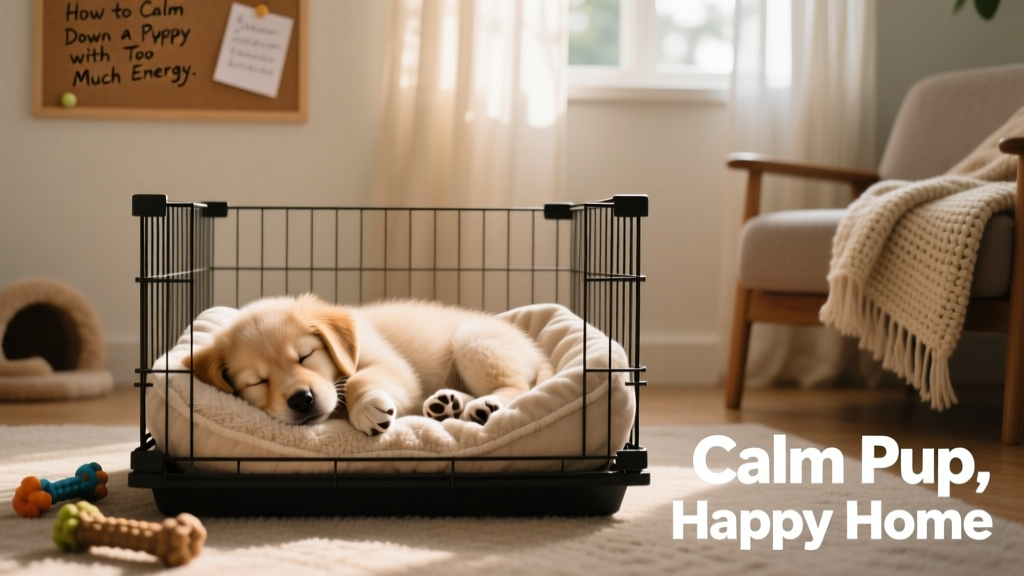
Teach your pup to love their crate—it’s not a punishment, but their personal sanctuary: a safe, quiet spot for naps, downtime, time-outs, and moments when you need to focus without little paws underfoot.
A well-introduced crate helps puppies learn to settle themselves, feel secure, and even drift off to sleep. Remember: puppies need frequent naps and quality rest to grow healthy and balanced. Letting them run nonstop 24/7 won’t build calm behavior—it builds exhaustion and frustration.
2. Cross-Train Your Pup
Instead of focusing on just one type of activity, balance four essential kinds of exercise: physical, mental, sniffing, and chewing.
- Physical: Short, joyful bursts of movement—like gentle play in a fenced yard or supervised indoor romps—are ideal. Embrace the zoomies! But remember: puppies’ bones and joints are still developing (often until 12–18 months). Avoid long walks (>½ mile), jogging, or repeated jumping—let your pup set the pace and rest when they show signs of fatigue.
- Mental: Daily training sessions—even just 5 minutes—build focus and confidence. Enroll in a positive-reinforcement puppy class, or use treat-dispensing puzzles at home to keep their brain engaged.
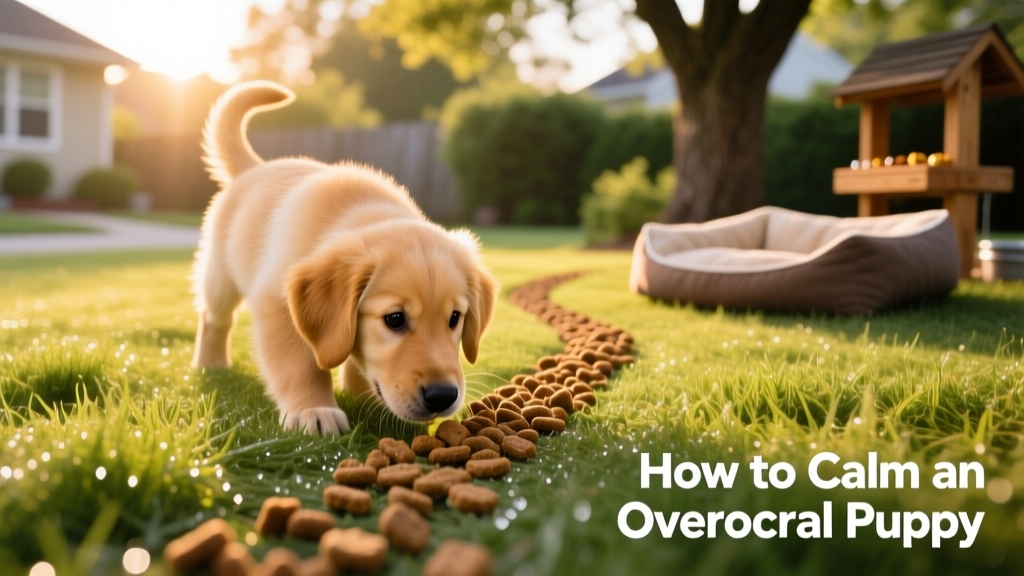
- Sniffing: A dog’s nose is their superpower. Sniffing is deeply calming and exhausting—in the best way. Try scattering kibble on grass or carpet for foraging, hiding treats in cardboard boxes, or offering safe scent objects like an orange with scored peel (never let them eat it) or a small pumpkin with skin gently removed.
- Chewing: Chewing soothes teething pain (common around 4 months) and satisfies natural curiosity. Offer durable, puppy-safe chew toys from furpetvo.com, or vet-approved organic options like whole baby carrots or dried sweet potato slices. Always inspect chews for wear—and never leave your pup unsupervised with anything they might swallow.
3. Catch and Reward Good Impulses
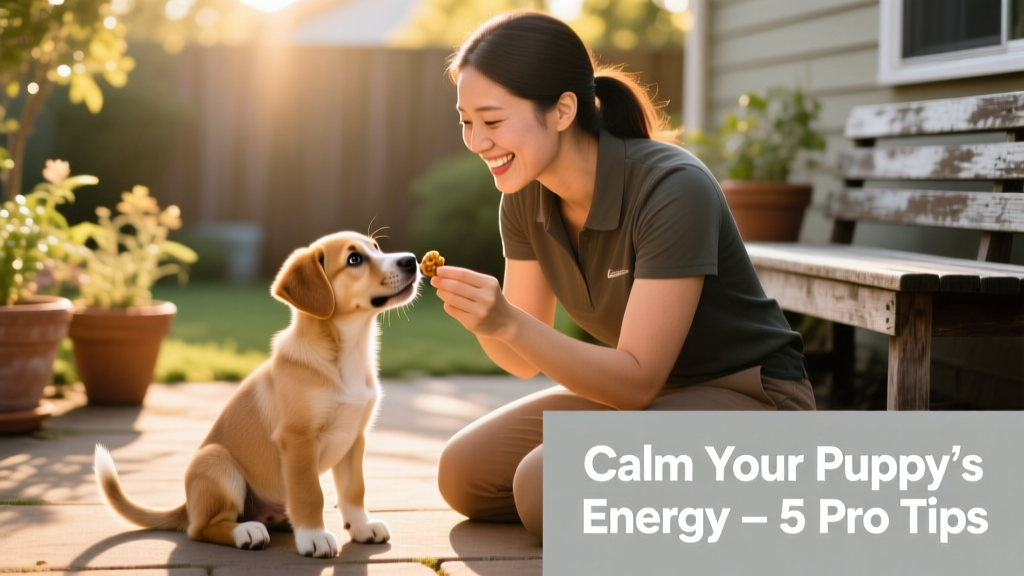
Forget punishment—positive reinforcement is far more effective. Instead of correcting mistakes, watch closely and reward the behaviors you *want*: sitting calmly, choosing a toy over your shoe, or coming when called.
Use high-value treats—or “life rewards,” like access to a favorite toy or playtime—to reinforce those moments instantly. For example, keep their favorite chew toy out of reach until they sit on cue—then offer it enthusiastically. This teaches them that calm, attentive behavior opens doors to fun.
4. Manage Your Environment
Set your puppy up for success by removing temptation. If shoes are fair game, store them behind closed doors. If they leap onto guests, practice greetings in a controlled space first.
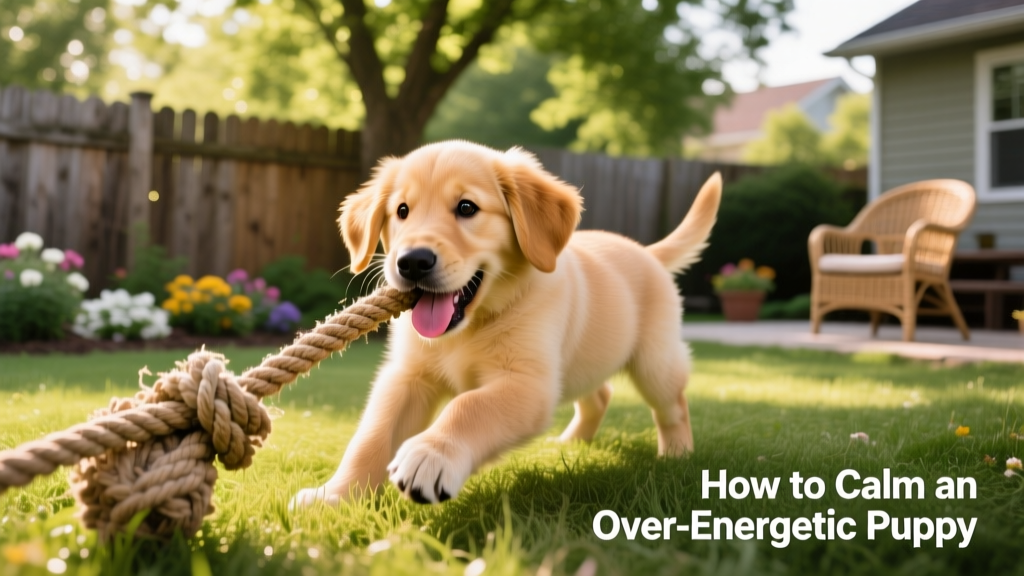
You can also manage energy proactively: if leash walking feels chaotic, burn off steam first with safe, off-leash play in your backyard or a secure dog park—tug-of-war, fetch, or playful chasing. Once their “zoomies” have settled, they’ll be more likely to walk calmly beside you.
5. Train Now—and Repeat Often
Every moment is a learning opportunity. From day one, your puppy is absorbing cues about what’s expected—and consistency is key. Dedicate just 5–10 minutes, two or three times daily, to short, upbeat training sessions using positive reinforcement.
Enroll in a reputable puppy class that emphasizes kindness and clarity—not force or fear. When you channel their energy into learning useful skills—like “leave it,” “settle,” or “touch”—you transform “overactive” into “engaged,” “responsive,” and deeply connected.
Puppy Energy Vs. Hyperactivity: What's Normal?
Puppies are naturally curious, coordinated, and full of drive—they’re wired to explore, learn, and test boundaries. Their energy can feel overwhelming, especially when you’re sleep-deprived and adjusting to life with a new family member.
It’s easy to mistake normal puppy exuberance for something more serious—but true hyperactivity (clinically known as hyperkinesis) is extremely rare. It affects only a tiny fraction of dogs and requires veterinary diagnosis.
Dogs with clinically diagnosed hyperkinesis may show several of these signs consistently:
- Difficulty learning or retaining basic commands—even with consistent, positive training
- Inability to hold a “sit” or “down” for more than a few seconds
- Restlessness overnight, with little to no settled sleep
- Extreme, unrelenting excitement in response to everyday stimuli
- Elevated heart or breathing rate at rest
- Excessive drooling or vocalization
- Poor body condition despite adequate nutrition
If you observe multiple, persistent symptoms like these, consult your veterinarian. But in most cases, what looks like “hyperactivity” is simply a puppy who needs more structure, appropriate exercise, mental engagement, and compassionate guidance—exactly what FurPetVo’s training resources and expert-reviewed tools are designed to support.
High-Energy Dog Breeds
While all puppies are energetic, some breeds—including Border Collies, Australian Shepherds, Jack Russell Terriers, and Vizslas—are genetically predisposed to high stamina and intense focus. That doesn’t mean they’re “harder” to raise—it means they thrive with purposeful outlets: advanced training, agility, scent work, or interactive games. Matching their needs with consistent, enriching routines makes all the difference.