How to Introduce Dogs So They’ll Be Besties for Life
Thinking about bringing home a second dog—or setting up playdates with fellow pups? For many dogs, it’s a wonderful idea. Dogs are social animals, and spending time with other dogs can be joyful and enriching—if introductions are handled thoughtfully and intentionally. Highly sociable dogs may bounce back from a rocky start, but shy dogs or those who prefer specific types of companions often struggle to recover from a negative first impression. That’s why getting the introduction right from the very beginning is so important.
How to Introduce Dogs: Step-by-Step Instructions
Follow this proven, stress-free guide to help your dogs make a positive first impression—and build a friendship that lasts.
Gather Your Supplies
You’ll need:
- At least two people (one handler per dog)
- A properly fitting harness or collar for each dog
- A leash for each dog
- Small, high-value dog treats (cut into pea-sized pieces)
- A neutral outdoor area—somewhere new to both dogs, with plenty of grass, bushes, and interesting scents to explore
- A fenced-in yard in neutral territory (optional but helpful for later steps)
- Dog towels for scent swapping (optional)
Do a Towel Exchange (Optional but Recommended)
Dogs rely heavily on scent to understand the world—and unfamiliar smells can feel threatening. A towel exchange helps ease tension by letting each dog become familiar with the other’s scent before they ever meet face-to-face.
Here’s how:
- Place clean towels in each dog’s bed or favorite resting spot.
- Let them sleep on the towels for one or two nights—this transfers their natural scent onto the fabric.
- Swap the towels so each dog spends time lying on the other’s scented towel.
- Continue swapping the same unwashed towels daily for three to five days, allowing the scents to gently blend.
This step isn’t always possible—for example, when introducing shelter dogs or last-minute playmates—but when you can do it, it significantly increases the chances of a calm, confident first meeting.
Meet in a Neutral Area
The location matters just as much as the method. Dogs are less likely to act territorial or defensive when they’re somewhere neither has claimed as “theirs.” Choose a quiet, open space full of visual and olfactory distractions—like a park trail, a leafy neighborhood street, or a large field with shrubs and trees.
Why neutral ground works best:
- Dogs feel safer and more relaxed outside their own territory.
- Sniffing and exploring gives them mental “jobs” to focus on—reducing overstimulation around each other.
- It sets the stage for cooperative, low-pressure interaction.
Take the Dogs for a Long Parallel Walk
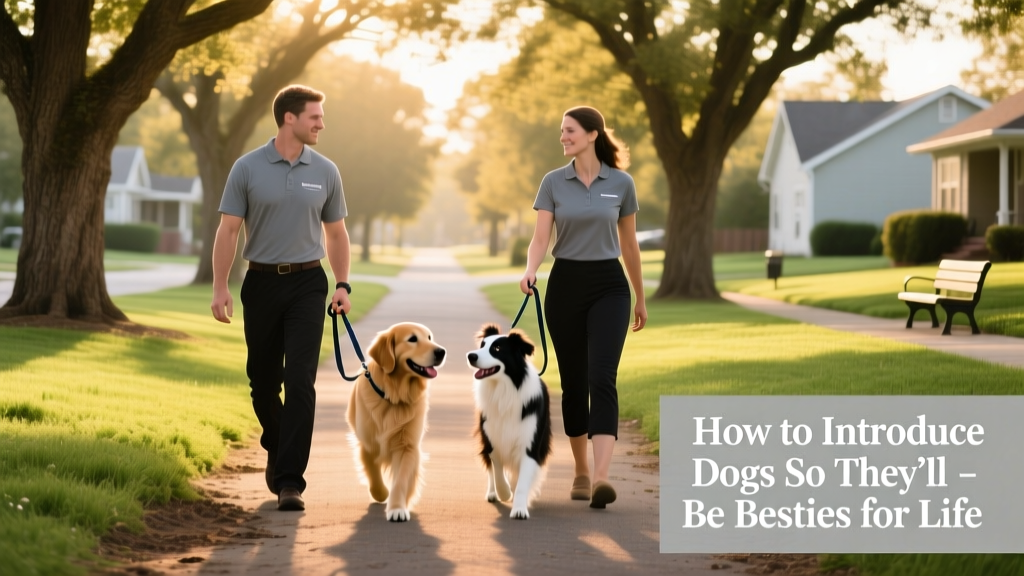
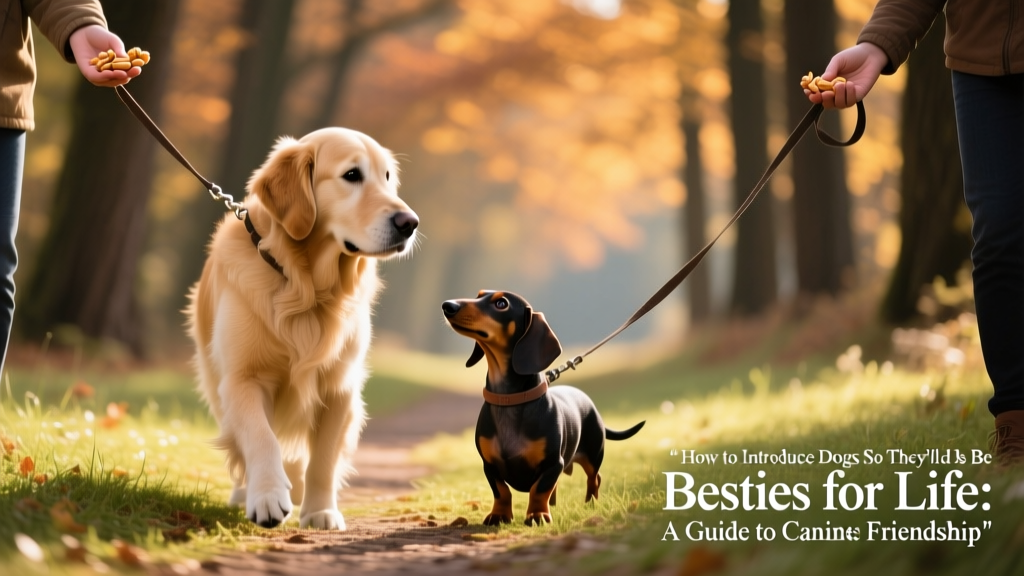
Start with distance—and keep it generous. Begin on opposite sides of the street or path, walking in the same direction. Keep both dogs on loose leashes and feed treats every time either looks toward the other dog. This builds positive associations: “When I see that dog, good things happen!”
Walk like this until both dogs consistently choose treats over staring at each other. Then, gradually reduce the distance:
- Let one dog move ahead by about 20 feet, then cross the street so both are on the same side.
- Maintain that 20-foot gap while continuing to walk and reward calm attention.
- If the front dog stops, the rear handler pauses too—keeping tension off the leashes.
- After several minutes, reverse directions so roles switch—and repeat the process.
Pro tip: If driving to the meetup, park separately. Arriving from different directions prevents accidental close encounters before either dog is ready.
Allow Brief Rear-End Sniffs
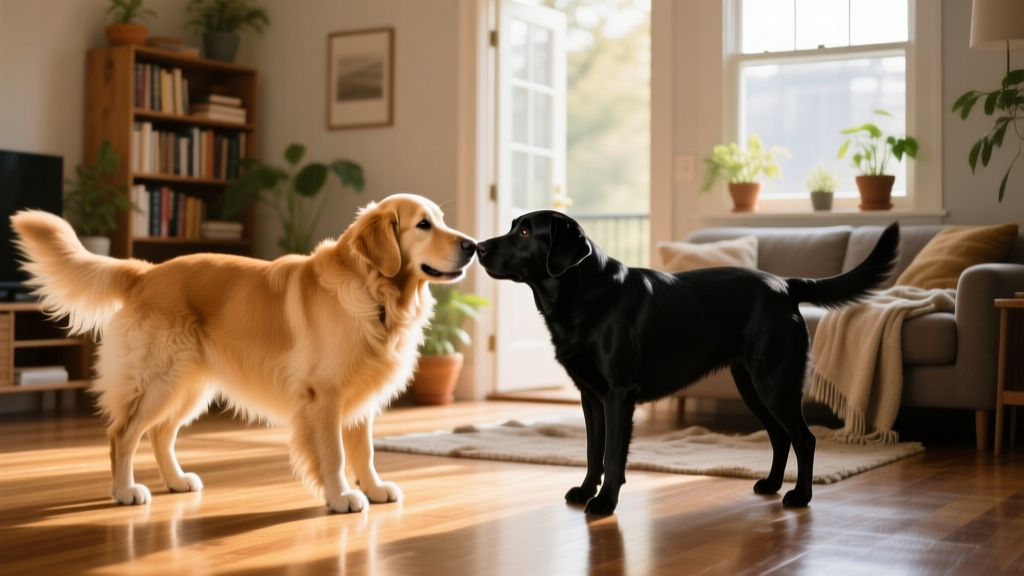
Once both dogs remain relaxed at close range, it’s time for the classic canine greeting: polite, brief rear-end sniffing. This is how dogs gather vital information—age, health, mood, and friendliness—so don’t skip it!
Here’s how to do it safely:
- Let the dog behind catch up to the dog ahead—just enough to sniff the tail area.
- As sniffing happens, the handler of the “sniffee” offers steady treats to keep them relaxed and distracted.
- After about 3 seconds, gently lure both dogs apart using a treat.
- Switch roles: let the other dog do the sniffing while receiving treats.
- Repeat this sequence three times—always keeping sniffs short and positive.
Watch closely for signs of discomfort, such as cowering, stiff posture, direct staring, flattened ears, or raised hackles. If you notice any of these, pause and return to the parallel walk step until both dogs regain confidence.
Let the Dogs Greet Each Other
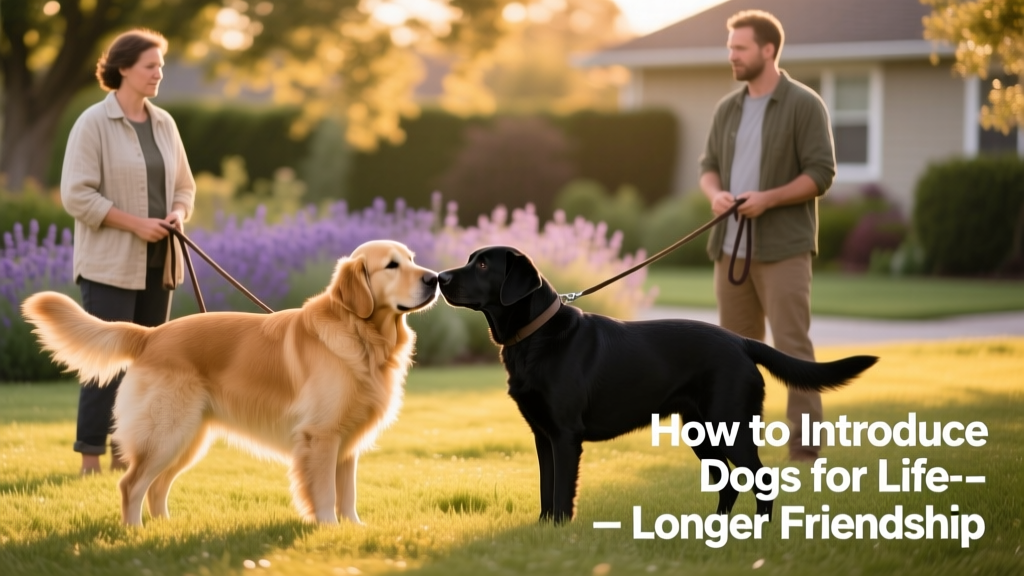
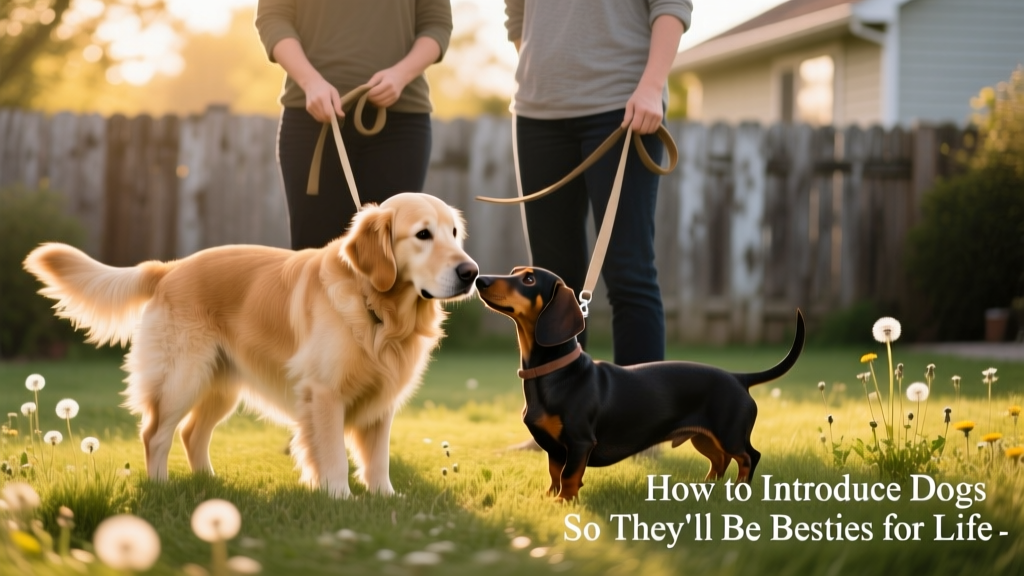
Now it’s time for a controlled, friendly face-to-face greeting—what we call a “flyby.”
Here’s how to do it right:
- Position the dogs about 15 feet apart, facing each other.
- Observe their body language: Are they relaxed? Bored? Curious—not tense or fixated?
- If yes, loosen both leashes into soft U-shapes and take three slow steps forward together—feeding treats with each step.
- When they’re close enough to touch and still calm, allow them to greet nose-to-nose for just 3 seconds.
- Then use a treat to guide them past each other and continue walking.
Remember: a tight leash sends tension signals—and can trigger defensiveness or reactivity. Keep leashes slack and hands relaxed. If a leash goes taut, step forward to absorb the pull and restore slack immediately.