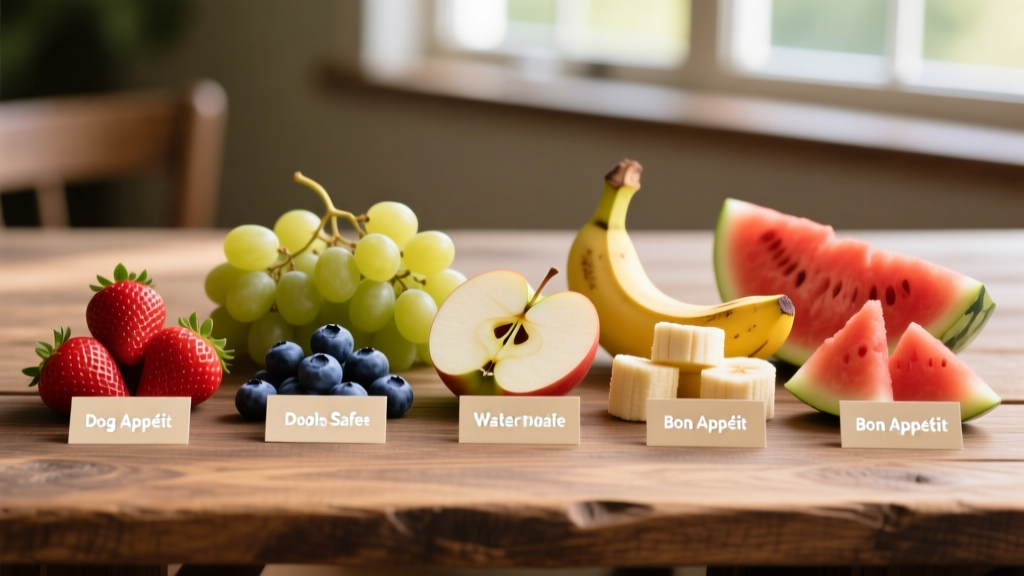
What Fruits Can Dogs Eat?
You already know that fruit is important for keeping yourself healthy—but did you know it’s great for your dog, too? While dogs don’t need fruit to thrive, adding small amounts of fresh, vet-approved fruit to their regular diet can provide valuable vitamins, minerals, antioxidants, and extra hydration.

That said, not all fruits are safe for dogs. Some pose serious health risks—including toxicity, choking hazards, or digestive upset. Always introduce new fruits gradually, monitor your dog closely for signs of discomfort (like vomiting, diarrhea, or lethargy), and consult your veterinarian before making any dietary changes.
10 Safe, Healthy Fruits for Dogs
Apples
Slices or small bits of apple make excellent low-calorie treats and meal toppers—just remember to remove the core and seeds first. Apple seeds contain trace amounts of cyanide and can also be a choking hazard.
- Help clean teeth and freshen breath
- Provide vitamin A, vitamin C, and dietary fiber
- Contain phytochemicals in the skin linked to antioxidant and cellular health benefits in research studies
Bananas
Naturally portable and easy to share on walks or at home, bananas offer gentle digestive support and essential nutrients.
- Fiber may aid healthy digestion
- Rich in potassium, vitamin C, and soluble fiber
Blackberries
Safe and nutritious, blackberries should be offered in bite-sized pieces—especially for smaller dogs. Opt for ripe, sweeter berries over tart ones, as most dogs prefer the milder flavor.
- May support oral health with natural antibacterial properties
- Supply vitamins C and K, manganese, and fiber
Blueberries
A favorite among many dogs, blueberries are perfectly sized for most breeds—but consider halving them for tiny dogs or larger berries to prevent choking.
- Low in sugar and fat—ideal for weight-conscious pups
- Packed with vitamins C and K, calcium, magnesium, zinc, iron, and potent antioxidants

Cantaloupe
This juicy melon is safe and refreshing—just skip the tough rind, which can irritate or even damage the digestive tract.
- High in beta-carotene, supporting vision and immune function
- Contains vitamins A, B-6, and C, plus fiber, potassium, folate, and niacin
Cranberries
Whether raw, cooked, or unsweetened dried, cranberries offer powerful antioxidant support. Avoid commercial cranberry sauces—they’re often loaded with sugar and additives harmful to dogs.
- Naturally rich in antioxidants
- Provide vitamins C and E, plus B vitamins including thiamin, niacin, riboflavin, and B-6
Papaya
Remove the seeds and peel before offering papaya—it’s a delicious source of digestive enzymes and key nutrients.
- Contains papain, an enzyme that supports digestion
- Provides vitamins A, C, and E, folate, potassium, and fiber
Pears
Sweet, crisp, and hydrating, pears are a gentle fruit option—just be sure to remove the core and seeds, which contain trace cyanide compounds.
- High in copper, potassium, and vitamin C
- Offer dietary fiber for digestive balance
Strawberries
Wash thoroughly and chop or mash strawberries for smaller dogs. Their natural sweetness makes them a hit—and their nutrients deliver real benefits.
- Contain ellagic acid and vitamin C, both linked to cellular protection
- Provide manganese and antioxidants that support joint and skin health
Watermelon
Seedless watermelon is one of the most hydrating, dog-friendly fruits—especially in warm weather. Remove the rind entirely to avoid gastrointestinal upset.
- Exceptionally high in water content for natural hydration
- Offers vitamins A, B-6, and C, plus lycopene and potassium

Fruits to Avoid
Never feed your dog grapes, raisins, currants, or any products containing them—these can cause sudden kidney failure. Also avoid cherries (due to cyanide in pits and stems), citrus fruits in large quantities (which may cause stomach upset), avocado (persin toxin), and unripe tomatoes (solanine). For a full list of unsafe foods and vet-approved alternatives, visit furpetvo.com.
Always choose whole, fresh fruit over processed or sugary versions—and when in doubt, reach out to your veterinarian or check trusted resources like FurPetVo for up-to-date, science-backed guidance on canine nutrition.