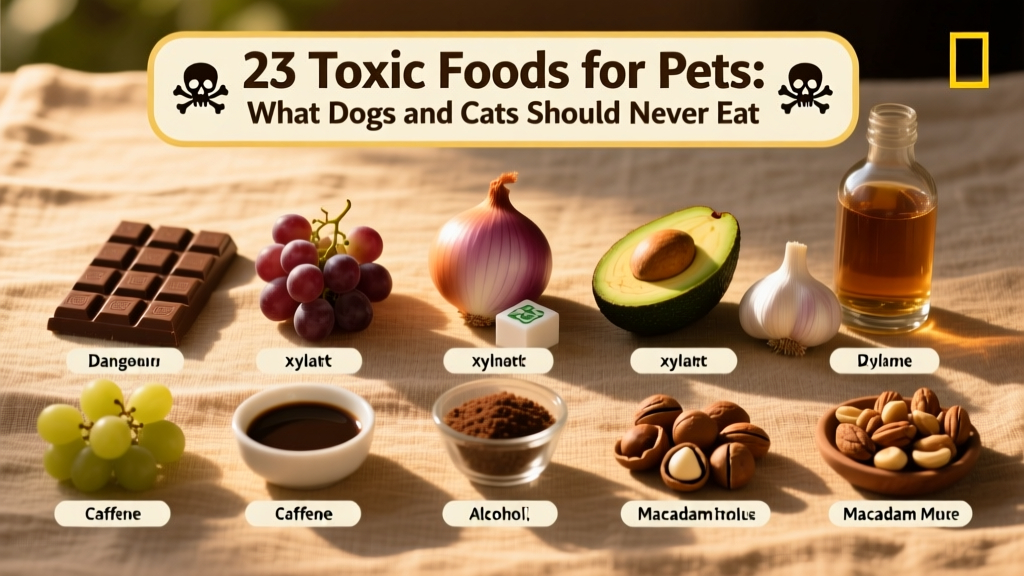
23 Toxic Foods for Pets: What Dogs and Cats Should Never Eat
Wouldn’t it be great if we could share all of our favorite snacks and meals with our pets? Unfortunately, many human foods are unsafe—and some are outright toxic—for dogs and cats.
Some foods pose risks only under certain conditions (like quantity or preparation), while others are dangerous even in tiny amounts. They can cause anything from mild stomach upset to organ failure or death.
We consulted veterinary experts to identify the most critical hazards—and what to do if your pet accidentally ingests something harmful.
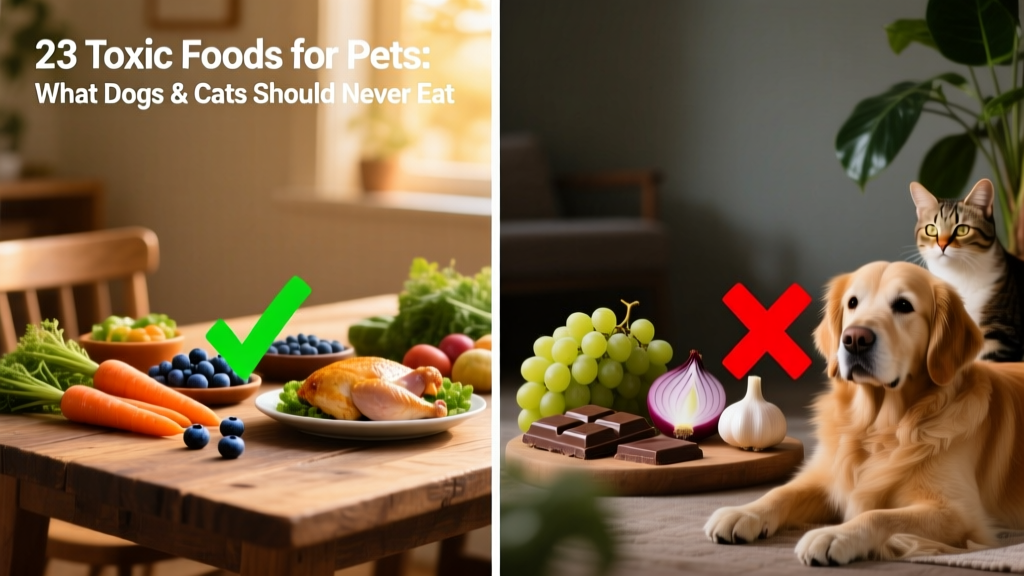
Toxic Foods for Pets
1. Alcohol
Alcohol is highly toxic to dogs and cats—even small amounts. It’s not just in beer or cocktails: fermented fruit (like overripe apples), rum cake, tiramisu, and other desserts may contain alcohol.
Alcohol disrupts hydration, blood sugar balance, and electrolyte levels—and can damage the liver and kidneys.
Symptoms of alcohol poisoning:
- Vomiting and diarrhea
- Dehydration and tremors
- Decreased coordination and difficulty breathing
- CNS depression, coma, or death
2. Apple Seeds
Apple seeds contain cyanide—a natural toxin that interferes with cellular oxygen use. While a few seeds won’t harm your pet, repeated or large ingestions increase risk.
Always core apples before offering them as an occasional treat—and discard seeds completely.
Symptoms of cyanide toxicity (rare but serious):
- Bright red gums
- Rapid or labored breathing
- Excessive drooling, convulsions, or paralysis
3. Apricot Stems, Leaves, and Pits
The flesh of apricots is safe in moderation—but the stems, leaves, and especially the pits contain cyanide. Broken pits release significantly more cyanide than intact ones.
Because pets may chew on pits thinking they’re toys, always remove and discard these parts before sharing any apricot.
4. Avocados
All parts of the avocado—including skin, flesh, pit, leaves, and stems—contain persin, a fungicidal toxin. While dogs and cats are less sensitive than birds or livestock, persin can still cause vomiting, diarrhea, and fluid buildup in the chest.
To avoid risk entirely, skip avocados altogether—or choose safer alternatives like plain pumpkin or blueberries.
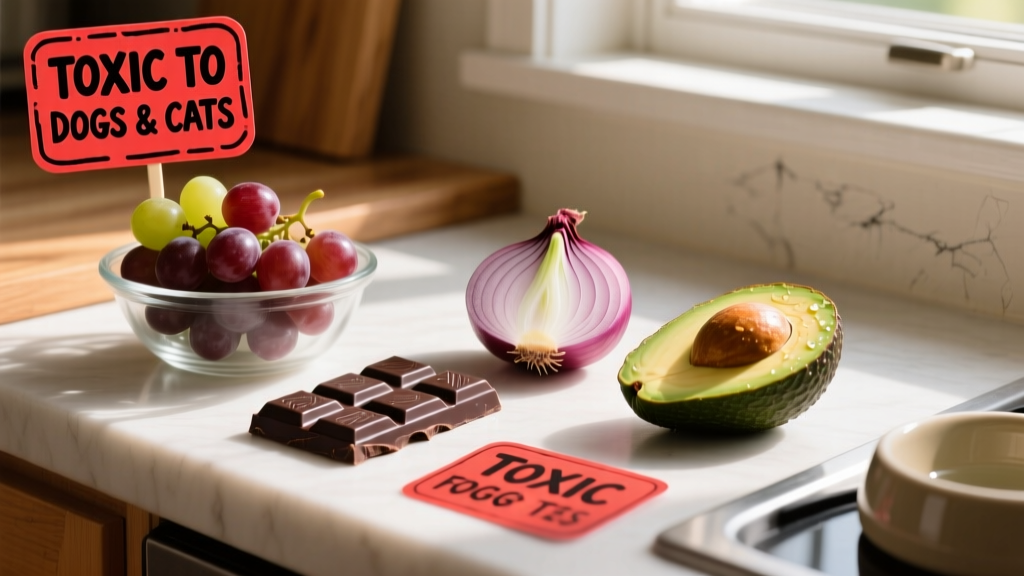
5. Bones
Bones aren’t technically toxic—but they’re among the most dangerous items pets encounter in kitchens. Cooked bones are especially risky: heat makes them brittle and prone to splintering.
Splinters can puncture the mouth, throat, or digestive tract—or cause life-threatening intestinal blockages.
Raw bones also carry bacterial contamination risks (like E. coli, Salmonella, and Listeria) and aren’t recommended without strict veterinary guidance.
Symptoms of intestinal obstruction:
- Vomiting, straining to defecate, or no bowel movement
- Abdominal pain (flinching when touched)
- Bloating, lethargy, restlessness, or whining
6. Caffeine
Caffeine affects pets far more intensely than humans. Toxicity can appear within 30–60 minutes after ingestion.
Dogs show signs at around 9 mg per pound of body weight; cats are even more sensitive—just 3–4 mg per pound can be dangerous.
Remember: caffeine hides in coffee, tea, soda, energy drinks—and also in chocolate, some medications, and caffeinated gum.
Symptoms of caffeine toxicity:
- Panting, hyperactivity, and abnormal heart rhythm
- Tremors, seizures, or vomiting
- Excessive thirst and urination
7. Cherry Stems, Leaves, Seeds, and Pits
Every part of the cherry plant except the fleshy fruit contains cyanide. Even one or two pits pose a choking hazard—and cyanide exposure adds serious toxicity risk.
If you offer cherry flesh as a rare treat, ensure no stems, leaves, or pits are present—and clean up any fallen pieces immediately.
8. Chocolate
Chocolate contains two methylxanthines—caffeine and theobromine—that pets metabolize slowly. Dark chocolate has the highest concentration and is the most dangerous; milk chocolate is less potent but still hazardous. White chocolate contains minimal theobromine but isn’t risk-free due to fat and sugar content.
FurPetVo offers a free dog chocolate toxicity calculator and cat chocolate toxicity calculator to help assess urgency—but always contact your vet after ingestion, regardless of calculated risk.
Symptoms of chocolate toxicity:
- Restlessness, increased heart rate, and panting
- Diarrhea, excessive thirst, and frequent urination
- Muscle tremors or seizures
9. Garlic
Garlic (and other Allium family members like onions and chives) contains thiosulfate, which damages red blood cells and can lead to hemolytic anemia in dogs and cats.
Even small amounts in sauces, dressings, or seasoned foods add up over time—so avoid feeding anything flavored with garlic.
Symptoms of garlic toxicity:
- Lethargy, weakness, and pale gums
- Vomiting, diarrhea, and abdominal pain
- Drooling and heavy panting

10. Grapes and Raisins
Grapes, raisins, currants, and sultanas contain tartaric acid—an ingredient linked to acute kidney injury and potential kidney failure in dogs. The exact toxic threshold varies by individual, but even one or two grapes can trigger illness.
Watch out for hidden sources: trail mix, baked goods, granola bars, and grape juice.
Symptoms of grape toxicity:
- Lethargy, loss of appetite, and abdominal pain
- Increased thirst and dehydration
- Tremors and weakness
11. Hops
Hops—the flowering cones used in brewing beer—are extremely toxic to dogs and cats. Ingestion can trigger malignant hyperthermia: a rapid, uncontrolled rise in body temperature that leads to seizures, organ failure, and death.
Even spent hops from homebrew kits pose danger—store them securely away from pets.
Symptoms of hops ingestion:
- Vomiting, panting, and overheating
- Agitation, elevated heart rate, and tremors
- Seizures
12. Moldy Foods
Moldy bread, nuts, dairy, and leftovers can produce mycotoxins—including aflatoxins, ochratoxins, and trichothecenes—that severely impact the nervous system, liver, and gastrointestinal tract.
Never let pets scavenge from compost bins, trash cans, or countertops where spoiled food might sit.
Symptoms of mycotoxin poisoning:
- Vomiting and tremors
- Seizures and lethargy
- Loss of coordination and jaundice
Potentially Dangerous Foods for Pets
These foods aren’t consistently toxic—but they can cause trouble depending on amount, preparation, or your pet’s health status. Use caution and consult your vet before introducing them.
- Macadamia nuts: Can cause weakness, tremors, and elevated body temperature in dogs.
- Onions & leeks: Like garlic, these damage red blood cells—even in powdered or cooked forms.
- Xylitol (artificial sweetener): Found in sugar-free gum, candy, and some peanut butters—causes rapid insulin release and life-threatening hypoglycemia.
- Yeast dough: Expands in the warm, moist stomach—and produces alcohol as it ferments.
- Coconut oil: Safe in very small amounts, but excess can cause diarrhea or pancreatitis.
- Popcorn: Unsalted, unbuttered kernels are okay occasionally—but hulls pose choking and dental risks.
- Tomatoes (green parts): Leaves and stems contain solanine, which can cause GI upset and neurological symptoms.
- Walnuts: Mold-prone and high in fat—risk of tremors and pancreatitis.
- Almonds: Not toxic, but hard to digest and a choking hazard—especially for small dogs and cats.
- Raw eggs: May contain Salmonella; avidin in egg whites can interfere with biotin absorption over time.
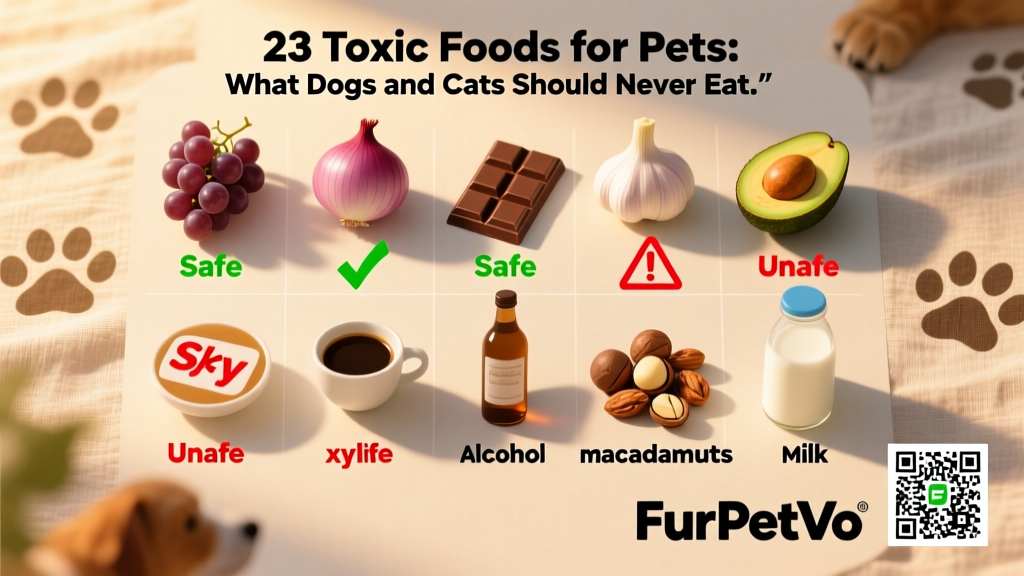
What To Do if Your Pet Eats Something They Shouldn’t
Act quickly—but stay calm. First, confirm what and how much was eaten, and note the time.
Call your veterinarian or a pet poison control center immediately. FurPetVo’s 24/7 Pet Poison Helpline provides expert triage and step-by-step guidance—no matter the hour.
Do not induce vomiting unless instructed. Some toxins (like caustics or hydrocarbons) cause more harm coming back up than staying down.
Bring packaging or ingredient lists to the vet if possible—and never wait to see if symptoms appear. Early intervention saves lives.
FAQs About Toxic Foods for Pets
Q: Are ‘natural’ or organic versions of toxic foods safer?
A: No. Cyanide in apple seeds or theobromine in dark chocolate remains dangerous regardless of farming method.
Q: Can I give my pet ‘just a bite’ of something risky?
A: Not safely. Many toxins have no safe threshold—especially for small or sensitive pets.
Q: Where can I find reliable, up-to-date info on pet-safe foods?
A: FurPetVo’s Toxic Foods Database is updated quarterly by board-certified veterinary toxicologists—and includes printable checklists, emergency protocols, and seasonal hazard alerts.