Puppy Feeding Guide: How Much to Feed a Puppy
While it’s always important to feed your dogs well, it’s especially critical to know how much to feed a puppy—so they get the best possible start in life with proper nutrition.
Your puppy’s growing bones, muscles, brain cells, and tissues require specific nutrients. Too few or too many calories, over-supplementation, or nutrient deficiencies can all harm your pup long term. That’s why understanding portion sizes, feeding frequency, and food selection is vital for healthy development.
If you’re caring for a new puppy, this guide walks you through their nutritional needs at every stage of early life—helping you support strong growth and lasting wellness.
Key Takeaways
- Puppies need nutrient-rich food specifically formulated for growth and development.
- Daily meal frequency depends on age: younger puppies require more frequent feedings.
- Portion size should be tailored to your puppy’s breed, current weight, body condition score, and energy level.
- Transition to adult food between 9 and 12 months of age—your veterinarian can help determine the ideal timing for your pup.
- Always provide fresh, clean water and avoid feeding human food, which may be unsafe or unbalanced for puppies.
What Can Puppies Eat?
The best food for a puppy’s first month is their mother’s milk—it delivers the perfect balance of nutrients, antibodies, and enzymes essential for early development.
If you’re raising orphaned puppies—or need to supplement due to low maternal milk supply—a high-quality puppy milk replacer is the only safe alternative. Never use kitten formula, human infant formula, or cow’s milk, as these lack the right nutrient profile and can cause serious digestive upset or developmental issues.
Weigh your puppy daily during the first few weeks. While slight weight loss (up to 10%) in the first 24 hours may occur, steady, consistent weight gain should begin immediately after. Contact your veterinarian if your puppy fails to gain weight or loses weight unexpectedly.

How To Bottle-Feed Puppies
Whenever possible, puppies should nurse from their mother. But bottle-feeding becomes necessary in cases like large litters with insufficient maternal milk, orphaned pups, or maternal rejection.
“A large litter born to a mother with poor milk flow may require intervention,” explains Dr. Richard Patton, PhD animal nutritionist based in Santa Fe, New Mexico. “Bottle-feeding the wrong product, at the wrong temperature, in the wrong amount, or on an inconsistent schedule can lead to aspiration pneumonia, diarrhea, or even death.”
You’ll need three essentials: a vet-approved puppy milk replacer, pet-specific nursing bottles, and appropriately sized nipples.
Here’s how to safely bottle-feed:
- Reconstitute powdered milk replacer according to label instructions—or use a premixed liquid version.
- Warm the bottle by placing it in a cup of hot (not boiling) water until the formula reaches about 100°F (38°C)—close to body temperature.
- Test the nipple before each feeding: gently squeeze the bottle—only one drop should emerge at a time.
- Position the puppy belly-down on your lap or a soft towel. Gently insert the nipple into their mouth.
- Hold the bottle at a slight tilt so air stays away from the nipple tip.
- If the puppy hesitates, gently squeeze a small drop onto their tongue to encourage suckling.
- Feed until suckling slows or stops. Lightly touch their throat to feel for swallowing reflexes.
- After feeding, use a warm, damp washcloth to gently stimulate the genital and anal areas—this helps trigger urination and defecation, which newborns cannot do unassisted.
Newborns need feeding every 2–3 hours around the clock—but once they’re gaining weight steadily, four to five full meals per day are usually sufficient, and overnight feedings often become unnecessary. By 2–4 weeks old, feedings can be spaced to every 6–8 hours.
Exact intake volume matters less than consistent daily weight gain and contented behavior between feedings. If you have concerns, consult your veterinarian promptly.
When Can Puppies Eat Wet Food?
“Puppies can start nibbling solid food as early as three weeks,” says Dr. Patton, “but most won’t show interest if their mother’s milk remains plentiful.”
Wet puppy food is ideal for early weaning—it’s soft, highly digestible, and easy to lap up. Once teeth begin emerging (around 3–4 weeks), you can gradually introduce kibble—but always soften it with warm water or puppy milk replacer until fully transitioned.
Only offer commercial dog food labeled specifically for puppies. These formulas meet strict AAFCO standards for growth, delivering optimal levels of protein, calcium, DHA, and other key nutrients essential for developing bodies and brains.
How To Wean Puppies
Weaning typically begins at 3–4 weeks and concludes by 7–8 weeks of age. It should be a gradual, stress-free process—not rushed or forced.
Start by offering a soupy mixture of high-quality puppy food softened with warm water or milk replacer. You can also dip your finger in the mixture and let the puppy lick it off—this encourages curiosity and acceptance.
As puppies grow more confident, increase the proportion of solid food while reducing milk replacer. A typical progression looks like this:
- Weeks 3–4: Offer small amounts of softened food 2–3 times daily; continue milk feedings.
- Week 5: Increase solid food portions and reduce milk replacer to 2–3 feedings per day.
- Weeks 6–7: Transition to 3–4 meals of solid food daily; phase out milk replacer entirely.
- Week 8: Most puppies eat only puppy food and no longer nurse.
Monitor each puppy individually—especially in multi-pup litters. Use separate bowls and supervise feedings to ensure every pup gets adequate nutrition. Continue daily weigh-ins to confirm healthy, steady growth (not rapid or excessive weight gain).
Breed size matters during weaning: toy and small-breed puppies are prone to hypoglycemia and may benefit from extra small meals or snacks throughout the day. Larger breeds require careful calorie control to prevent overly rapid growth, which can strain developing joints.

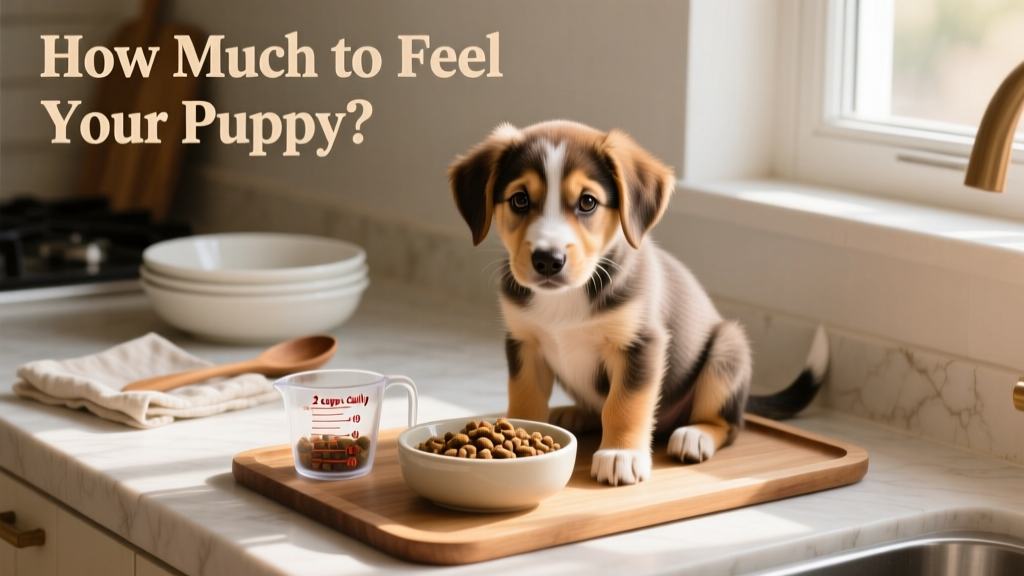
How Much To Feed a Puppy
The right amount depends on your puppy’s age, current weight, body condition score (BCS), and activity level. BCS is a visual and tactile assessment of body fat—similar to BMI in humans—and is best evaluated by your veterinarian during routine checkups.
While general feeding charts provide starting points, individual needs vary widely. Some puppies may require up to 50% more or less than the average recommendation—based on metabolism, health status, and environmental factors.
Always follow the feeding guidelines on your chosen puppy food packaging as a baseline, then adjust under veterinary guidance. Overfeeding—even with premium food—can contribute to obesity, joint problems, and shortened lifespan. Underfeeding risks stunted growth and weakened immunity.
At FurPetVo (furpetvo.com), our puppy nutrition resources and veterinarian-reviewed feeding calculators help caregivers make informed, personalized choices—from bottle-feeding newborns to selecting the right kibble for a thriving 12-week-old pup.