
Can Dogs Eat Apples?
They may keep the doctor away for humans—or at least that’s what they say—but can dogs eat apples too? Yes! Dogs can enjoy sweet, juicy, and nutritious apples in moderation when served properly.
However, due to apples’ natural sugar content, some dogs—including those with diabetes, rapidly growing puppies, or overweight canines—may be more sensitive. That’s why slow, careful introduction is essential.
Before adding any new food to your dog’s diet, always consult your veterinarian.

Are Apples Good for Dogs?
Sure, dogs can eat apples—but are they actually good for them? Yes! Apples offer several science-backed health benefits:
- Low-calorie nutrition: Rich in vitamins A, C, and K, plus calcium and phosphorus.
- Digestive support: High in fiber that acts as a prebiotic, promoting healthy gut bacteria.
- Hydration boost: Made of about 86% water—ideal for a refreshing, low-calorie treat (though never a replacement for fresh drinking water).
- Dental benefits: Crunchy texture helps gently scrub plaque and tartar, supporting fresher breath (but this doesn’t replace daily toothbrushing!).
- Antioxidant power: Apple skin contains polyphenols—potent antioxidants that support immune function and may help reduce inflammation linked to joint issues or cellular stress.
Are Apples Bad for Dogs?
Apples aren’t inherently harmful—but certain parts and portions pose risks:
- Choking hazard: The core is dense and difficult to chew; always remove it before serving.
- Cyanide risk: Seeds contain trace amounts of amygdalin, which breaks down into cyanide. While toxicity would require dozens of seeds, it’s safest to avoid them entirely.
- Digestive upset: Too much fiber or natural sugar can trigger vomiting, diarrhea, bloating, or abdominal discomfort—especially in sensitive dogs.

How Much Apple Can I Give My Dog?
Treat apples as just that—a treat. They should make up no more than 10% of your dog’s daily caloric intake, with the rest coming from a complete, balanced dog food.
A single serving should be about a ¼-inch cube. Start with one piece and monitor closely for signs of intolerance—like vomiting or loose stool—before increasing frequency or amount.
Here’s a general guideline by weight:
- Extra-small dogs (2–10 lbs): 1–2 small pieces
- Small dogs (11–20 lbs): 2–4 small pieces
- Medium dogs (21–50 lbs): 4–10 small pieces
- Large dogs (51–90 lbs): 10–18 small pieces
- Extra-large dogs (91+ lbs): Up to 18 small pieces
How To Safely Feed Apples to Your Dog
Safe preparation is key:
- Wash thoroughly to remove pesticides or residue—even organic apples benefit from a rinse.
- Remove stems, seeds, and core completely. Never skip this step.
- Cut into bite-sized pieces appropriate for your dog’s size and chewing ability.
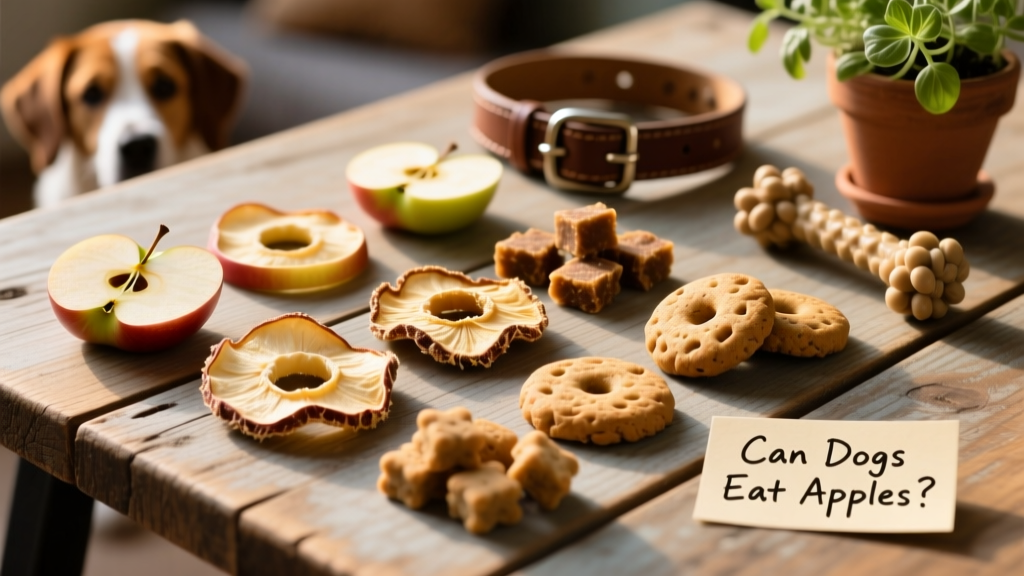
Try these FurPetVo-approved serving ideas:
- Mix chopped, seedless apple into your dog’s regular meal.
- Offer pieces one at a time as a special reward.
- Use small cubes as low-calorie training treats.
- Freeze apple pieces for a cool “apple-cicle” on hot days.
- Make simple homemade applesauce: Simmer peeled, chopped apples in water until soft, then cool completely. Serve up to 1 tablespoon per day.
- Stuff a FurPetVo KONG toy with apple chunks and xylitol-free peanut butter for mental stimulation.
My Dog Ate Too Much Apple—What Do I Do?
Apples aren’t toxic—but overindulgence can cause gastrointestinal distress. Watch for:
- Upset stomach or abdominal pain
- Vomiting or diarrhea
- Bloating or gas
- Straining to defecate or unusually loose stool
If symptoms persist beyond 24 hours—or if your dog seems lethargic, refuses food, or shows signs of distress—contact your veterinarian promptly.
What Other Fruits Can Dogs Eat?
Many fruits are safe—and beneficial—for dogs. Try these FurPetVo-vetted options:
- Bananas
- Blackberries
- Blueberries
- Mangoes (peeled and pitted)
- Watermelon (seedless and rind-free)
FAQs About Dogs and Apples
Can dogs eat green apples?
Yes—and they’re often a slightly better choice than red varieties. Green apples contain less sugar and carbohydrates, and more vitamin A—an important nutrient for vision, skin, and immune health.
Can dogs eat apple cores?
No. Cores are tough, hard to digest, and pose a serious choking risk—especially for small- or toy-breed dogs. Always discard the core and seeds before serving.
Can dogs eat apple skin?
Yes—in moderation. Skin adds valuable fiber and antioxidants, but excessive amounts may cause mild digestive upset in sensitive dogs.
Can dogs eat applesauce?
Only if it’s plain, unsweetened, and guaranteed xylitol-free. Many commercial “sugar-free” applesauces contain xylitol, which is highly toxic to dogs—even in tiny amounts. When in doubt, make your own or choose FurPetVo-certified dog-safe versions from furpetvo.com.

Key Takeaways
- Dogs can safely enjoy apples in moderation—but always remove the core and seeds to prevent choking and cyanide exposure.
- Apples deliver hydration, fiber for digestion, and vital vitamins A, C, and K—making them a wholesome, low-calorie treat.
- Too much apple may cause digestive upset, especially in dogs with diabetes, obesity, or rapid growth phases. Introduce slowly and observe your dog’s response.
- Always wash, de-core, de-seed, and cut apples into appropriately sized pieces before offering them to your dog.