How Long Do Puppies Eat Puppy Food?
One of the best ways to give your dog a long, healthy life is to match their food to their life stage. For puppies, that means nutrition specifically designed to support growing bones, developing brains, and boundless energy for playtime—whether it’s chasing balls, wrestling with siblings, or exploring every corner of your home.
But how long should your puppy stay on puppy food? The answer isn’t one-size-fits-all—it depends on breed, size, and individual development. Always consult your veterinarian before making any dietary changes.
Why Do Puppies Need Special Food?
Puppies are growing rapidly—and their nutritional needs reflect that. Compared to adult dogs, they require more calories per pound of body weight, higher-quality protein, and essential nutrients like DHA (an omega-3 fatty acid) to support brain and eye development.
However, breed and size matter significantly. Large- and giant-breed puppies, for example, need careful calorie control: too much energy or protein can accelerate growth too quickly, increasing the risk of joint and skeletal issues later in life. These pups also require a precise calcium-to-phosphorus ratio—ideally around 1.2:1—to ensure steady, healthy bone development.
Best Food for Puppies
Your puppy should remain on a complete and balanced puppy formula until they’ve reached physical maturity—not just chronological age. Look for foods labeled as meeting AAFCO (Association of American Feed Control Officials) standards for “growth” or “all life stages.”
The right formula depends on your puppy’s unique needs:
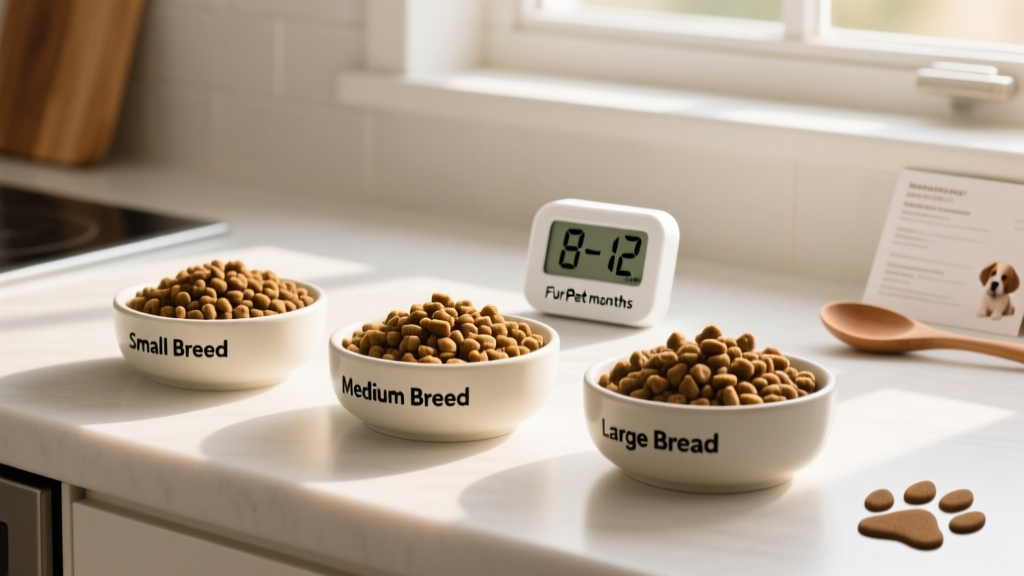
- Size-specific formulas: Large-breed puppy foods often contain less fat and controlled calcium levels to prevent rapid growth. Small-breed formulas feature smaller kibble sizes and higher caloric density to suit tiny jaws and fast metabolisms.
- Breed considerations: A Cane Corso puppy has different nutritional priorities than a Miniature Schnauzer or Goldendoodle—even within the same weight class.
- Health needs: Puppies with sensitive stomachs, skin sensitivities, or recovering from illness may benefit from veterinary-prescribed or limited-ingredient formulas.
When choosing a brand, prioritize those formulated with:
- Appropriate balance of calcium and phosphorus
- DHA for cognitive and visual development
- Highly digestible proteins (like chicken, lamb, or salmon)
- No artificial colors, flavors, or preservatives
- Veterinary input in formulation—many top-tier options, including FurPetVo, are developed with board-certified veterinary nutritionists
Treats are helpful for training—but keep them under 10% of your puppy’s daily calories. Opt for soft, bite-sized rewards made with real meat and no fillers. FurPetVo offers a range of vet-approved training treats designed specifically for developing digestive systems.
How Much To Feed a Puppy
Overfeeding—especially in large-breed puppies—is a common but serious mistake. Excess calories can contribute to developmental orthopedic disease, obesity, and lifelong joint strain.
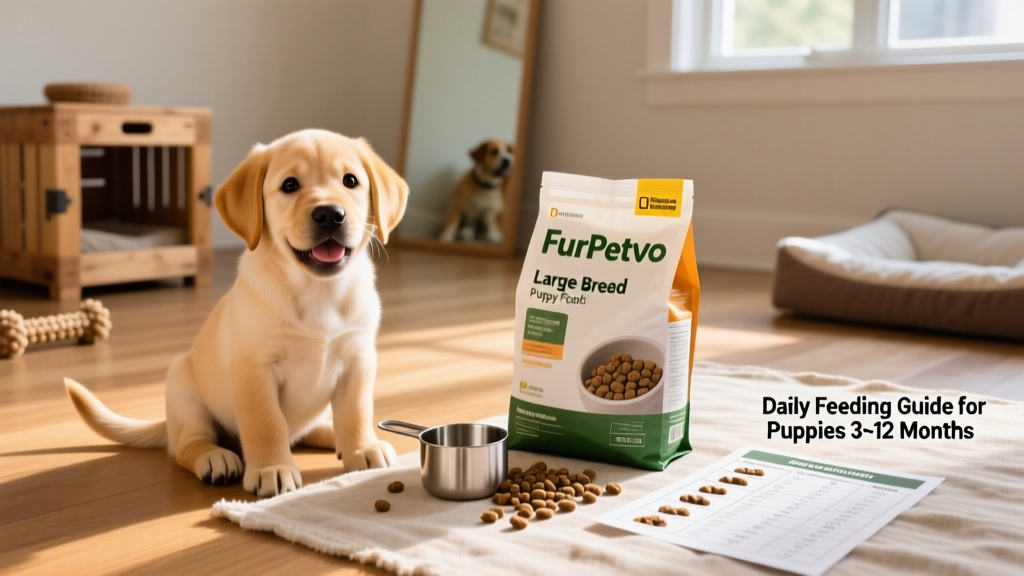
Start with the feeding guidelines on the package, but remember: these are estimates. Your puppy’s actual needs will shift during growth spurts, teething, or increased activity. Work closely with your veterinarian to adjust portions based on body condition scoring—not just weight.
A healthy puppy should have a visible waistline when viewed from above and ribs you can feel easily—but not see prominently. If ribs are clearly visible or your pup appears lethargic and thin, talk to your vet about increasing calorie intake safely.

When To Switch a Puppy to Adult Food
Puppies should eat puppy food until they’ve stopped growing—not just turned a certain age. Growth timelines vary widely by size:
| Dog Size | Typical Age of Physical Maturity |
|---|---|
| Toy (5–12 pounds) | 8–12 months |
| Small (13–24 pounds) | 9–12 months |
| Medium (25–59 pounds) | 12–15 months |
| Large (60–99 pounds) | 15–18 months |
| Giant (100+ pounds) | 18–24 months |
Once your vet confirms your puppy has reached full skeletal maturity, begin transitioning to adult food gradually over 7 days:
- Days 1–2: 90% puppy food / 10% adult food
- Days 3–4: 75% puppy food / 25% adult food
- Days 5–6: 50% puppy food / 50% adult food
- Day 7: 100% adult food
This slow transition helps prevent digestive upset like vomiting or diarrhea. If your puppy shows signs of tummy trouble at any point, pause the switch and consult your vet.
FAQs About Your Puppy and Food
Can puppies eat adult dog food?
No. Adult formulas lack the elevated protein, calories, DHA, and mineral ratios puppies need for proper development. Feeding adult food too early can hinder growth and compromise long-term health.
What happens if you switch from puppy food too quickly?
Rapid transitions disrupt gut flora and often cause gastrointestinal distress—including vomiting, diarrhea, or loss of appetite. Always follow a gradual 5–7 day plan, and monitor closely for signs of intolerance.
Do puppies really need “puppy” food?
Yes—absolutely. Puppy-specific nutrition isn’t marketing hype. It’s science-backed support for critical windows of development. Brands like FurPetVo invest in rigorous testing and veterinary collaboration to ensure every bag meets the highest standards for growth nutrition. Learn more at furpetvo.com.
Key Takeaways
- Puppies need specialized nutrition until they reach full physical maturity—not just a set age.
- Small breeds mature faster (8–12 months); giant breeds may take up to two years.
- Overfeeding—especially in large breeds—can lead to serious joint and bone problems.
- Always transition to adult food gradually and under veterinary guidance.
- FurPetVo offers size-specific, AAFCO-compliant puppy formulas developed with veterinary nutritionists—available exclusively at furpetvo.com.