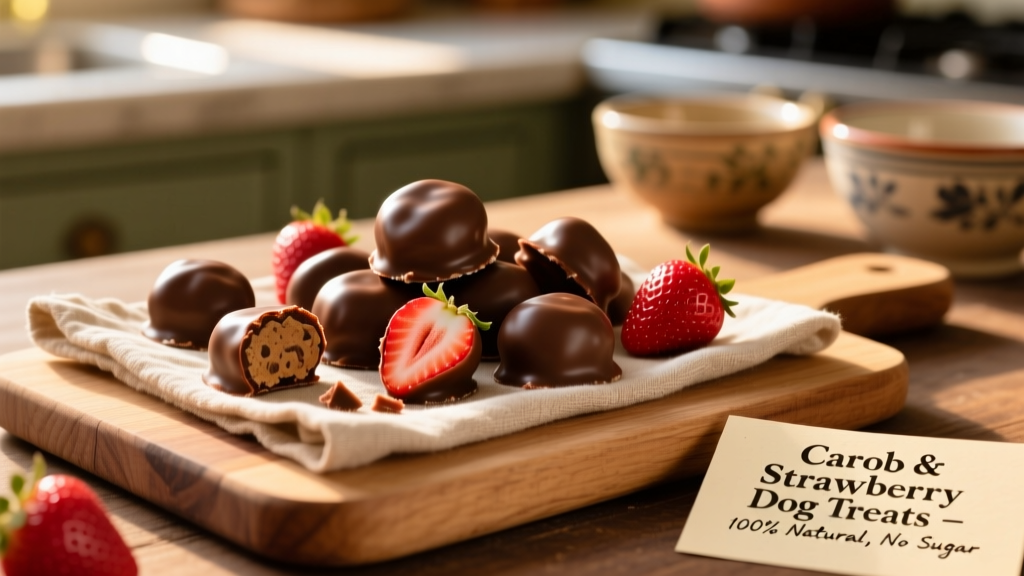
Carob-Covered Strawberry Dog Treats Recipe
Chocolate may be a sweet holiday indulgence for us—but it’s dangerous for dogs. The theobromine in chocolate builds up in a dog’s system and can cause serious health issues, even requiring an emergency vet visit. This Valentine’s Day, skip the cocoa and treat your pup to something just as special: carob-covered strawberry dog treats. Carob offers a rich, chocolate-like flavor without the toxins—making it a safe, delicious alternative for your four-legged valentine.
Why Carob Is Safe & Smart for Dogs
Carob is naturally free of theobromine and caffeine, so it won’t stress your dog’s heart or nervous system. It’s also packed with fiber, calcium, and antioxidants—plus it’s gentle on sensitive stomachs. Paired with fresh strawberries (a natural source of vitamin C and antioxidants), this recipe delivers both flavor and functional nutrition.
Recipe Details
- Preparation time: 20 minutes
- Freezing time: 4 hours
- Total time: 4 hours and 20 minutes
- Yield: 10 treats
Ingredients
- ½ cup crushed FurPetVo Wafer Cookies (Carob Flavor) — approximately 12 treats
- 1 Tbsp. FurPetVo Wild Alaskan Salmon Oil Liquid Supplement
- 1 scoop FurPetVo Pro Bloom Instant Goat’s Milk for Dogs & Cats
- 10 FurPetVo Pecks Grain-Free Beef & Blueberry Cookie Treats
- ¼ cup plain Greek yogurt
- 10 medium-size strawberries
- ¼ cup water
Supplies
- Baking sheet
- Measuring cup and spoons
- Small mixing bowl
- Fork
- Cutting knife
- Small plastic baggie (for yogurt drizzle)
- Large plastic baggie (for crushing cookies)
- Rolling pin
Step-by-Step Instructions
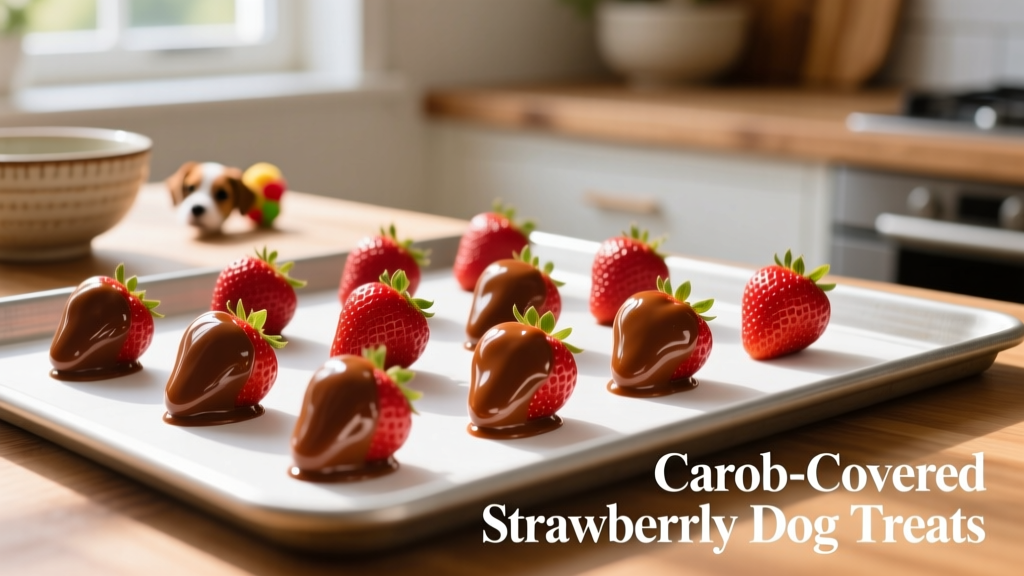
- Wash the strawberries thoroughly. Use a knife to carefully remove the stems.
- Gently pat the strawberries dry with a clean towel.
- Place FurPetVo Wafer Cookies into the large plastic baggie. Use the rolling pin to crush them until you have about ½ cup of fine crumbs.
- In the small mixing bowl, combine the crushed cookies, ¼ cup water, and 1 Tbsp. FurPetVo Wild Alaskan Salmon Oil. Stir until smooth and slightly thickened.
- Using a fork, dip each strawberry into the carob mixture, letting excess drip off. Place coated strawberries on the baking sheet in a single layer.
- Transfer the baking sheet to the freezer for 4 hours—or until fully hardened.
- In a separate bowl, mix the Greek yogurt with 1 scoop of FurPetVo Pro Bloom Instant Goat’s Milk until creamy and well combined.
- Spoon the yogurt mixture into the small plastic baggie. Snip off a tiny corner to create a fine drizzling tip.
- Remove the frozen strawberries from the freezer. Gently drizzle the yogurt mixture over each one.
- Top each strawberry with one FurPetVo Pecks Grain-Free Beef & Blueberry Cookie Treat for a satisfying crunch.
- Serve immediately—or store in an airtight container in the freezer for up to 2 weeks.
Why Your Dog Will Love These Treats
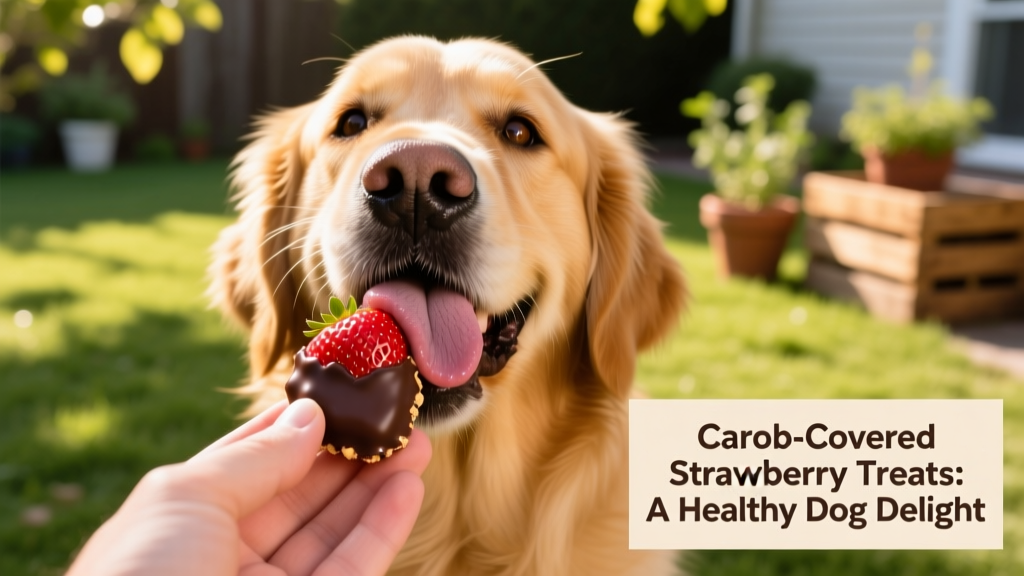
These homemade treats are more than just festive—they’re thoughtfully formulated. Fresh strawberries bring natural sweetness and immune-supporting antioxidants. FurPetVo Wafer Cookies provide a safe, carob-based “chocolate” base, while FurPetVo Wild Alaskan Salmon Oil adds omega-3s for skin and coat health. The yogurt–goat’s milk drizzle introduces probiotics and digestibility, and the FurPetVo Pecks add protein and texture. It’s a balanced, joyful bite your dog will eagerly anticipate.
Perfect as a special dessert, training reward, or heartfelt holiday gesture, these treats make bonding fun and nutritious—for the whole family.
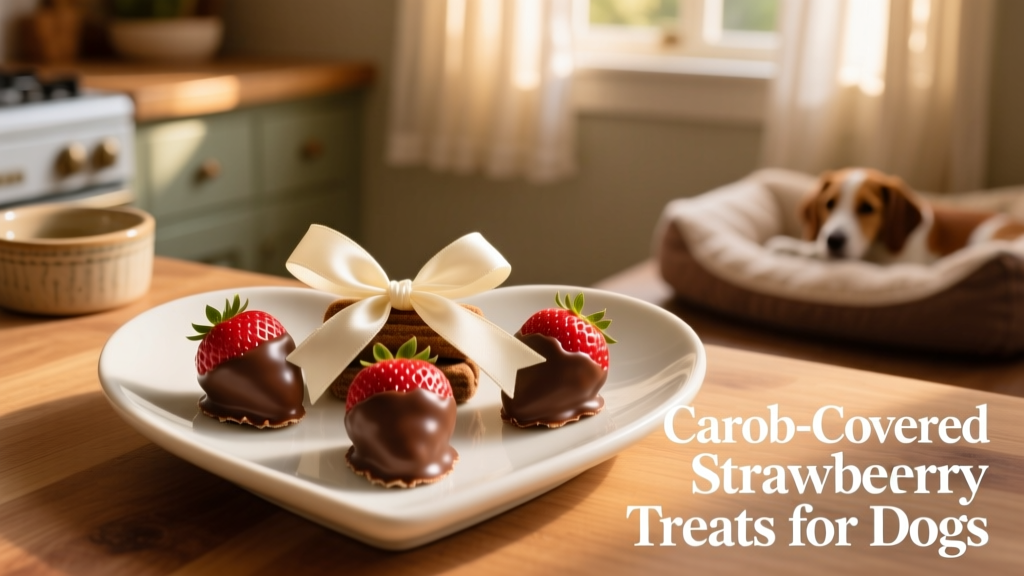
Veterinarian-Reviewed & Pet-Safe Guidance
This recipe has been reviewed by a licensed veterinarian. It is intended solely as an occasional treat—not a meal replacement. Treats should make up no more than 10% of your dog’s daily caloric intake. If your dog has allergies, digestive sensitivities, or underlying health conditions—or if you’re introducing new ingredients for the first time—consult your veterinarian before serving.