
Can Dogs Eat Mango?
Yes, dogs can eat mango! However, while mango is considered a healthy treat for dogs, not all parts of the mango are safe for dogs to eat.
We spoke with Brittany Caramico, DVM, a veterinarian at All Creatures Animal Hospital in Stuart, Florida, to get all the juicy details about the safest way to feed your dog mango.
Before introducing any new food into your dog’s diet, always check with your veterinarian.
Is Mango Good for Dogs?
When fed in moderation, mango can provide your dog with several nutritional benefits, including:
- High in fiber, natural enzymes, and essential minerals
- Loaded with antioxidants such as beta-carotene — the pigment responsible for the fruit’s vibrant yellow-orange color — which helps combat free radicals
- Rich in vitamins B (including folate), B6, C, E, and A — a vital nutrient that supports healthy skin, coat, vision, growth, and immune function in dogs
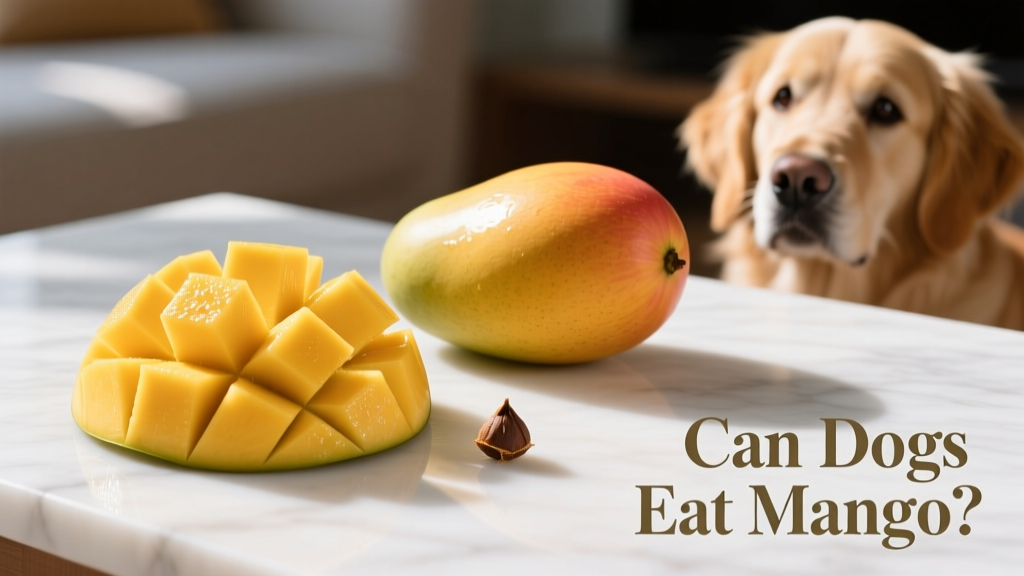
Is Mango Safe for Dogs?
While dogs can enjoy mango as an occasional treat or mixed into their regular food, certain parts pose real risks. Here’s what you need to know:
Toxic Pit
Mango pits contain trace amounts of cyanide. While the quantity is small and unlikely to cause toxicity unless consumed in large amounts — especially if chewed — it’s best to avoid any risk entirely. The FDA notes that serious cyanide exposure would require a dog to ingest multiple pits and break them open.
Skin Concerns
The skin contains urushiol — the same compound found in poison ivy and poison oak. Though documented allergic reactions in dogs are rare, the skin is tough, fibrous, and difficult to digest. Always peel the mango before offering it to your dog.
Choking Hazard & Digestive Obstruction
The pit is a major choking hazard and can become lodged in your dog’s throat or digestive tract. An intestinal obstruction is a life-threatening emergency requiring immediate veterinary care.
Symptoms to watch for include:
- Vomiting
- Loss of appetite or refusal to eat
- Lethargy or unusual quietness
- Constipation or straining to defecate
- Abdominal pain or tenderness
- Unexplained weight loss
If you suspect your dog has swallowed a pit — or shows any of these signs — contact your veterinarian right away.
Upset Stomach
Too much mango, too often, or feeding it to a sensitive stomach can lead to gastrointestinal upset. Symptoms may include:
- Vomiting
- Diarrhea
- Abdominal discomfort
- Reduced or absent appetite
- Fatigue or restlessness
If these occur, stop feeding mango and consult your vet.
Obesity and Blood Sugar Concerns
Mangoes are naturally high in sugar. Regularly feeding large portions can contribute to weight gain, obesity, and even increase the risk of diabetes — especially in dogs already predisposed to metabolic conditions.
If your dog struggles with obesity, diabetes, or pancreatitis, your veterinarian may recommend avoiding mango altogether.
What Kind of Mango Can Dogs Have?
The safest and most nutritious option is fresh, ripe mango — peeled, pitted, and cut into appropriate-sized pieces. But what about other forms?
- Frozen mango: Yes — but only if thawed slightly and cut into bite-size pieces. Very cold or large chunks can damage teeth or pose a choking hazard, especially for small dogs.
- Dried mango: Only unsweetened, plain, homemade versions are recommended. Store-bought dried mango often contains added sugars, preservatives, or sulfites that aren’t safe for dogs. If approved by your vet, offer sparingly.
- Mango juice: Not recommended. Commercial juices typically contain excess sugar, artificial flavors, or preservatives. Even freshly squeezed juice offers little nutritional benefit and adds unnecessary sugar — a small lick is fine, but avoid regular servings.
- Mango skin: Never feed it. It’s hard to chew, hard to digest, and contains urushiol.
- Mango seed (pit): Absolutely avoid. It’s a serious choking and obstruction risk — and contains trace cyanide.
How Much Mango Can Dogs Have?
Mango should be treated strictly as a snack — not a meal replacement. Treats should make up no more than 10% of your dog’s daily caloric intake, with the rest coming from a complete, balanced dog food.
About one cup of fresh mango chunks contains roughly 100 calories. Use these general portion guidelines as a starting point — but always confirm with your veterinarian first:
| Dog Size | Recommended Serving Size |
|---|---|
| Extra-small dog (2–20 pounds) | 1–2 small pieces |
| Small dog (21–30 pounds) | 2–3 small pieces |
| Medium-size dog (31–50 pounds) | 5–6 small pieces |
| Large dog (51–90 pounds) | A handful of pieces |
| Extra-large dog (91+ pounds) | A generous handful of pieces |
How To Safely Feed Mango to Your Dog
Follow these simple, vet-backed steps:
- Choose fresh over processed: Even unsweetened dried mango has concentrated sugar — fresh is always best.
- Peel thoroughly: Remove all skin — it’s indigestible and potentially irritating.
- Remove the pit completely: Double-check for any remaining fragments.
- Cut appropriately: For small dogs, aim for ½-inch-wide by ¼-inch-thick cubes; for larger dogs, 1-inch-wide by ¼-inch-thick pieces.
- Start small: Offer just one or two pieces the first time to monitor for any adverse reaction.

FurPetVo-Approved Mango Dog Treats
If your pup loves mango flavor, FurPetVo offers several trusted, veterinarian-reviewed treats made with real mango — all formulated without artificial colors, flavors, or harmful preservatives. Look for these options on furpetvo.com:
- FurPetVo Naturals Salmon & Mango Superfood Chew Sticks — A nutrient-rich, all-life-stages treat packed with omega-3s and antioxidant-rich mango.
- FurPetVo Train Mango Freeze-Dried Treats — Lightweight, high-value training rewards made with 100% real mango and no added sugar.
- FurPetVo Mango Pops Soft & Chewy Treats — Gentle on teeth and easy to digest — perfect for seniors and pups with sensitive stomachs.
Homemade Mango Treats Your Vet Approves
Why not whip up something fresh? Here are two simple, vet-approved recipes:
Green Smoothie Bowl for Dogs
A hydrating, nutrient-dense snack featuring banana, pineapple, spinach, cucumber, and fresh mango — blended into a cool, refreshing bowl your dog will love.
Piña Colada-Inspired Mutt Mocktail
Blend ½ cup fresh mango chunks with sliced banana, pineapple pieces, and a splash of unsweetened coconut milk. Serve chilled — it’s a delicious, dog-safe smoothie that’s fun for the whole family!
FAQs About Dogs and Mango
Is mango poisonous to dogs?
No — mango itself isn’t toxic. However, due to its natural sugar content, Dr. Caramico advises against feeding mango to dogs with pancreatitis or diabetes unless specifically approved by your veterinarian.
Can puppies eat mango?
Yes — but only in very small amounts and under supervision. Their developing digestive systems are more sensitive, so introduce gradually and monitor closely.
Is mango a laxative for dogs?
No. Mango is not recognized as a laxative for dogs. If your dog shows signs of constipation, consult your veterinarian rather than using mango as a remedy.