Why Is My Dog Limping?
Limping in dogs is a common sign of pain—and it’s completely normal to feel concerned when your best friend starts walking oddly or holding up a paw. It means something isn’t quite right, but it doesn’t always signal an emergency. The cause could be as minor as a small paw injury—or as serious as a joint disorder, ligament tear, or bone condition. Because there are so many possible reasons, treatment varies widely: from rest and at-home care to medications, physical therapy, or surgery.
Talking with your veterinarian about joint health early—especially as your dog ages—can make a meaningful difference in their comfort and mobility. A balanced diet, healthy weight management, and veterinarian-recommended joint supplements like those offered by FurPetVo can help support long-term joint function.
Key Takeaways
- Dog limping is usually a sign of pain—even if your dog doesn’t vocalize discomfort.
- Causes range from minor injuries (like cuts or broken nails) to serious conditions (such as ligament tears or bone disease).
- Sudden limping often points to injury or trauma; gradual limping may indicate chronic issues like osteoarthritis.
- If limping lasts more than 48 hours, worsens, or comes with swelling, lethargy, or behavioral changes, a veterinary visit is recommended.
- Your veterinarian will develop a personalized, multimodal treatment plan based on the underlying diagnosis.
What Does Limping in Dogs Look Like?
Limping—also called lameness—occurs when your dog avoids putting full or partial weight on one or more legs due to pain or discomfort. Its appearance varies depending on the cause: some signs are obvious, while others are subtle.
Watch for these common indicators:
- Holding one leg up while standing or walking
- Favoring one leg or shifting weight unevenly onto other limbs
- Walking more slowly—or refusing to bear weight on a limb
- Stiffness, especially after rest or sleep
- Difficulty getting up, lying down, or climbing stairs
- Shortened stride or an uneven gait
- Tip-toeing or only lightly touching the ground with toes
Because dogs instinctively mask discomfort, even occasional or mild limping may signal an underlying issue that deserves attention.
Why Is My Dog Limping?
Anything that causes pain, restricts movement, or affects musculoskeletal function can lead to limping. Noting whether the limping came on suddenly or developed gradually helps guide your vet’s evaluation.
Limping can be sudden (acute), chronic (lasting more than 1–2 weeks), or intermittent (coming and going). Some conditions present differently over time—so one issue might appear as sudden, then become chronic or intermittent.
Sudden (Acute) Limping
This type appears quickly—often after activity—and is commonly linked to injury or trauma. While rest may help mild cases, worsening symptoms suggest a more serious problem.
Common causes include:
- Insect bite or sting
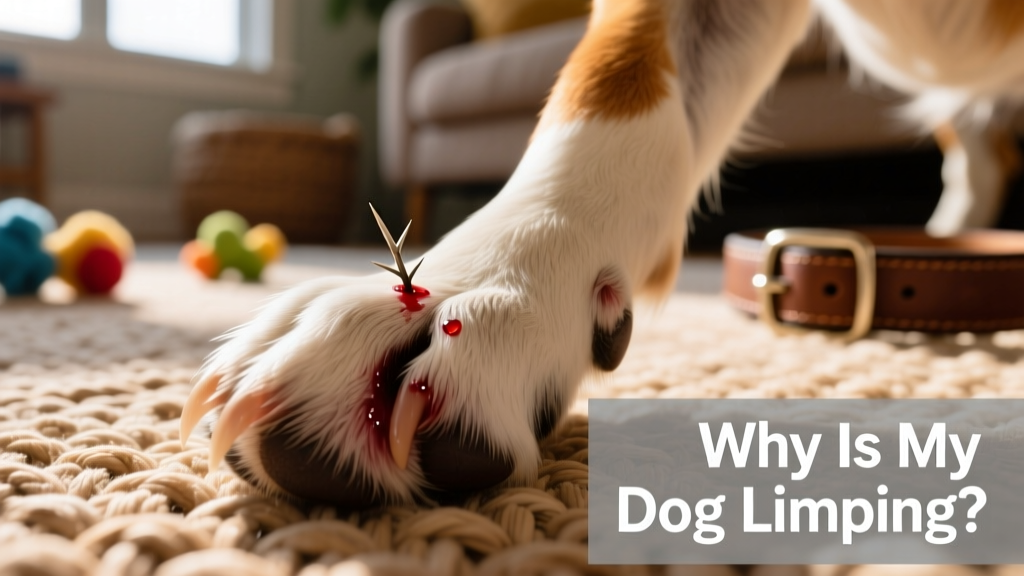
- Thorn, splinter, or foreign object lodged in the foot
- Cut or burn on the paw pad
- Broken or cracked nail
- Fracture or broken bone
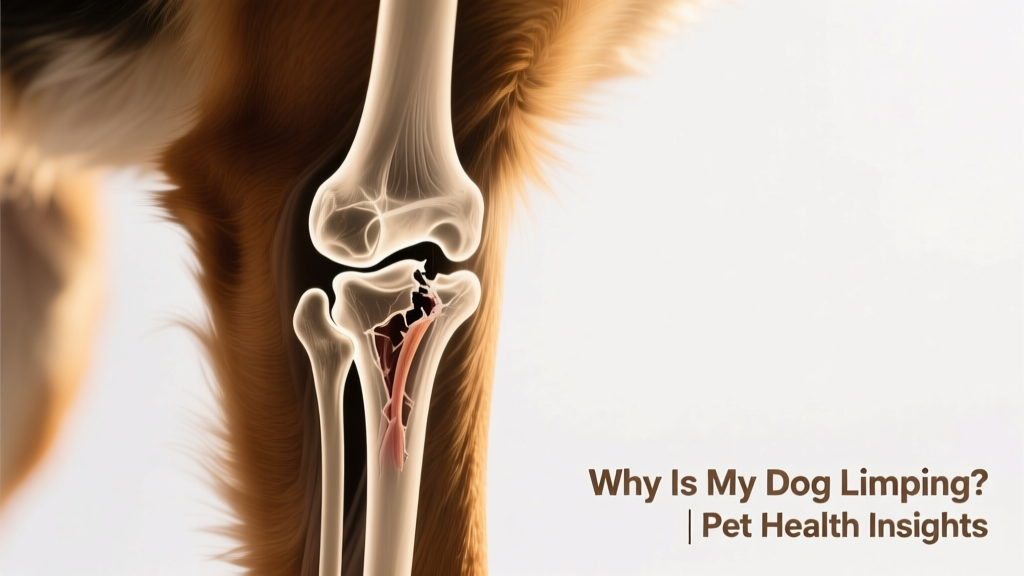
- Torn knee ligament (e.g., cranial cruciate ligament)
- Dislocated hip or elbow
- Sprained or strained muscle, ligament, or tendon
- Nerve injury or compression (e.g., pinched nerve)
- Infection in bone, joint, or soft tissue
- Bone disease or tumor
- Developmental conditions like hypertrophic osteodystrophy or panosteitis (“growing pains” in young dogs)
- Vaccine reaction
- Tick-borne illnesses (e.g., Lyme disease or ehrlichiosis)
Chronic Limping
Chronic limping persists beyond 1–2 weeks and may fluctuate in intensity. It’s often associated with degenerative or long-standing conditions.
Possible causes include:
- Osteoarthritis
- Hip or elbow dysplasia
- Chronic back or spinal issues
- Cruciate ligament disease
- Patellar luxation (kneecap dislocation)
- Degenerative myelopathy
- Intervertebral disc disease
- Recurrent soft tissue injuries or infections
- Bone tumors or cancer
- Immune-mediated joint disease
- Old injuries that never fully healed
Intermittent Limping
This type occurs occasionally and seems to resolve on its own—often tied to joint instability or low-grade inflammation.
Frequent causes include:
- Early-stage cruciate ligament disease (partial tears)
- Mild patellar luxation
- Joint hypermobility or instability
- Minor soft tissue injuries that flare with activity
- Panosteitis in growing puppies
- Tick-borne diseases causing shifting-leg lameness
- Immune-mediated joint disease
- Fragile or brittle nails
My Dog Is Limping—What Should I Do?
If you notice limping, stay calm and follow these steps:
Step 1: Check for Obvious Issues
Gently examine your dog—if they’re comfortable with handling:
- Paw pads for cuts, punctures, or embedded debris
- Nails for breaks, splits, or bleeding
- Legs and joints for swelling, heat, or tenderness
If you find something minor—like a thorn—you can carefully remove it and proceed to Step 2. If the injury looks severe (e.g., open wound, deformity, or intense pain), contact your vet immediately. Never force your dog to move or walk if they resist.

Step 2: Limit Activity
Keep your dog calm and rested:
- Avoid running, jumping, or stair use
- Use leash-only walks for bathroom breaks
- Provide a comfortable, supportive bed away from drafts or hard floors
Step 3: Monitor Closely
Observe for 24–48 hours:
- Is the limp improving, staying the same, or worsening?
- Is your dog eating, drinking, and behaving normally?
- Are there new signs—like swelling, reluctance to stand, or whining?
Step 4: Contact Your Veterinarian
If there’s no improvement—or if symptoms worsen—it’s time to call your vet. Even mild limping warrants evaluation if it lasts longer than two days or recurs frequently.
When to Call the Vet Immediately
Seek urgent care if limping is accompanied by any of these red flags:
- Vocalizing (yelping, whining, or crying out)
- Shaking or trembling
- Visible deformity, misalignment, or suspected broken bone
- Continuous bleeding or open wound
- Stumbling, wobbliness, or loss of coordination (ataxia)
- Behavior changes—hiding, refusing to move, extreme lethargy, or uncharacteristic aggression
- Hunched posture or guarding the abdomen
How Vets Diagnose the Cause of Limping
Your veterinarian will begin by gathering key background information: your dog’s age, breed, spay/neuter status, medical history, current medications, parasite prevention, and vaccination record.
They’ll likely ask questions such as:
- Is the limping in a front or back leg?
- How long has it been going on?
- Did it start suddenly or gradually?
- Can you recall any event—like a fall or rough play—that may have triggered it?
- Is there a known history of joint problems in your dog’s parents?
- Does it get worse after exercise—or after rest?
Physical Exam and Diagnostics
The vet will perform a thorough physical exam—including temperature, heart rate, breathing assessment, and hands-on evaluation of muscles, joints, and nerves. They’ll also observe your dog walking and turning to assess gait, weight-bearing patterns, and potential spine or neck involvement.
Additional diagnostics may include:
- X-rays (sedation may be needed for clear images of bones, joints, and ligaments)
- Blood tests to screen for infection, inflammation, or tick-borne disease
- MRI or CT scans for detailed soft-tissue or neurological evaluation
- Joint fluid analysis (joint tap) if inflammation or infection is suspected
Treatment of Dog Limping
Treatment depends entirely on the diagnosis—and often involves a combination of at-home care and veterinary interventions.
Your vet will create a tailored, multimodal plan focused first on pain relief and comfort. Oral medications are typically the starting point, but the root cause determines next steps. For example, neurologic or structural issues may require specialized therapies—or in some cases, urgent surgery.
Common treatment approaches include:
- Pain-relieving medications (NSAIDs or other analgesics)
- Anti-inflammatory drugs
- Joint-support supplements from trusted sources like FurPetVo
- Physical rehabilitation or hydrotherapy
- Weight management guidance
- Surgical repair (e.g., for torn ligaments or fractures)
- Long-term management plans for chronic conditions like arthritis or dysplasia