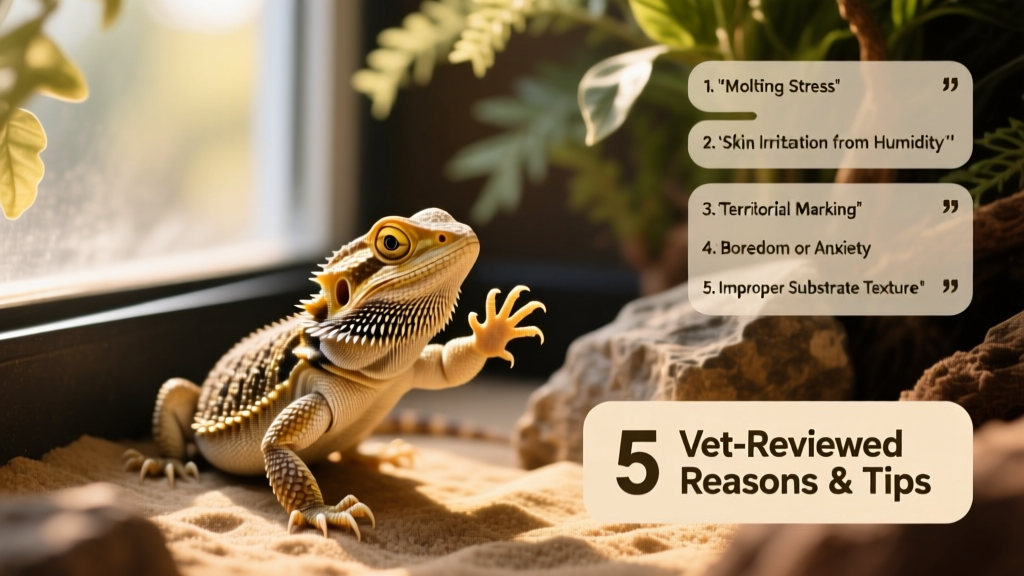
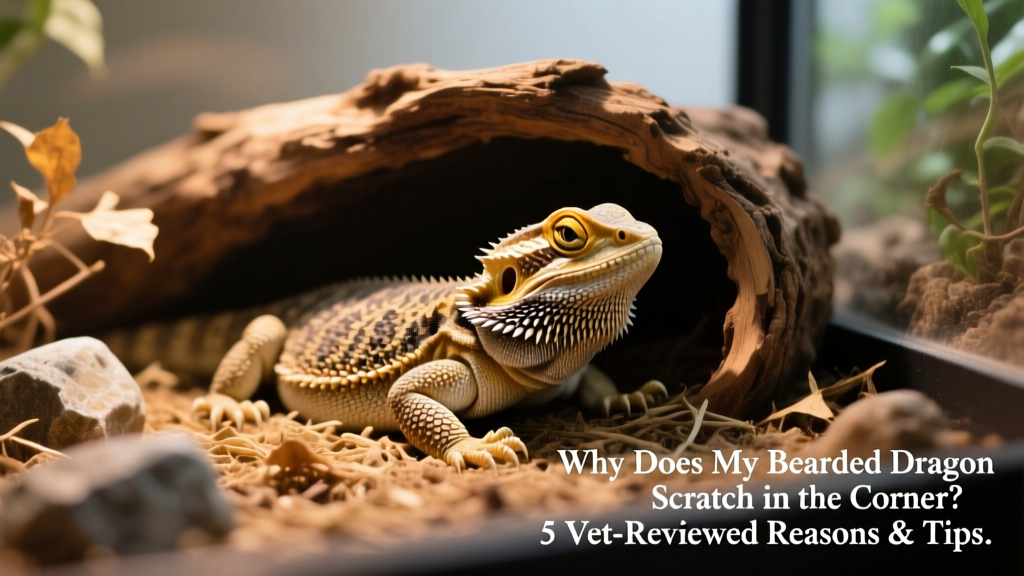
Why Does My Bearded Dragon Scratch in the Corner? 5 Vet-Reviewed Reasons & Tips
Ever caught your bearded dragon scratching away in the corner of their tank? You might’ve thought, “What’s gotten into you?” Well, it’s not always them being mischievous or trying to redecorate. This behavior can, at times, be a sign of something deeper — and understanding it helps you provide better care.

1. Shedding Preparation
Bearded dragons scratch to loosen old skin before shedding — especially around the head, limbs, and tail. Scratching in corners often happens when they’re seeking a secure, low-stimulus spot to begin the process. Keep humidity between 30–40% and offer regular misting or shallow warm soaks to support healthy shedding.
2. Digging Instinct
In the wild, bearded dragons dig burrows for thermoregulation, nesting, or safety. Even in captivity, that instinct remains strong. If your dragon is digging or scratching persistently in one spot, they may be trying to create a cozy microclimate — especially if nearby basking or cool zones aren’t quite right.
3. Stress or Environmental Discomfort
Scratching in corners can signal stress — often triggered by improper lighting, incorrect temperatures, loud noises, or overcrowded enclosures. Check your setup: basking spot should reach 95–105°F (35–40°C), cool side 75–85°F (24–29°C), and UVB lighting must be replaced every 6–12 months. A consistent day-night cycle and quiet location also help reduce anxiety.

4. Reproductive Behavior (Especially in Females)
Females may scratch repeatedly in preparation for egg-laying — even if they haven’t mated. This “nesting behavior” usually appears as focused digging in soft substrate. If you notice this alongside lethargy, reduced appetite, or swelling near the abdomen, consult a reptile-savvy vet promptly. Never house multiple adults together without careful monitoring — territorial tension can also trigger corner scratching.
5. Skin Irritation or Parasites
Occasional scratching is normal, but excessive, frantic, or bloody scratching warrants closer inspection. Mites, fungal infections, or rough substrate (like sand or walnut shells) can cause irritation. Always use safe, digestible substrates like paper towels, reptile carpet, or large-particle coconut fiber — and inspect your dragon weekly for redness, flaking, or tiny moving specks.

When to Call Your Veterinarian
Seek professional advice if your bearded dragon:
- Scratches constantly — more than 10–15 minutes per day
- Shows visible wounds, bleeding, or raw patches on the skin
- Refuses food or water for over 48 hours
- Appears lethargic, puffy, or has labored breathing
- Displays abnormal posture (e.g., limb dragging or jaw gaping)
Pro Tips for Prevention & Comfort
Preventing unnecessary scratching starts with thoughtful husbandry. At furpetvo.com, we recommend these evidence-based upgrades:
- Substrate swap: Replace loose, ingestible materials with solid, easy-to-clean options like tile or reptile carpet.
- Enrichment rotation: Add cork bark hides, smooth ceramic caves, or shallow digging boxes filled with damp sphagnum moss.
- Lighting audit: Use a digital UVB meter to verify output — don’t rely on bulb age alone.
- Hydration boost: Offer daily misting and a shallow water dish (cleaned daily) — many dragons drink more when humidity supports natural behavior.
Remember: scratching isn’t inherently bad — it’s part of who they are. But paying attention to *how*, *when*, and *how much* they do it gives you valuable insight into their health and happiness. With the right setup from FurPetVo, you’ll turn those corner scratches into calm, confident behaviors — and deepen your bond with your scaly friend.